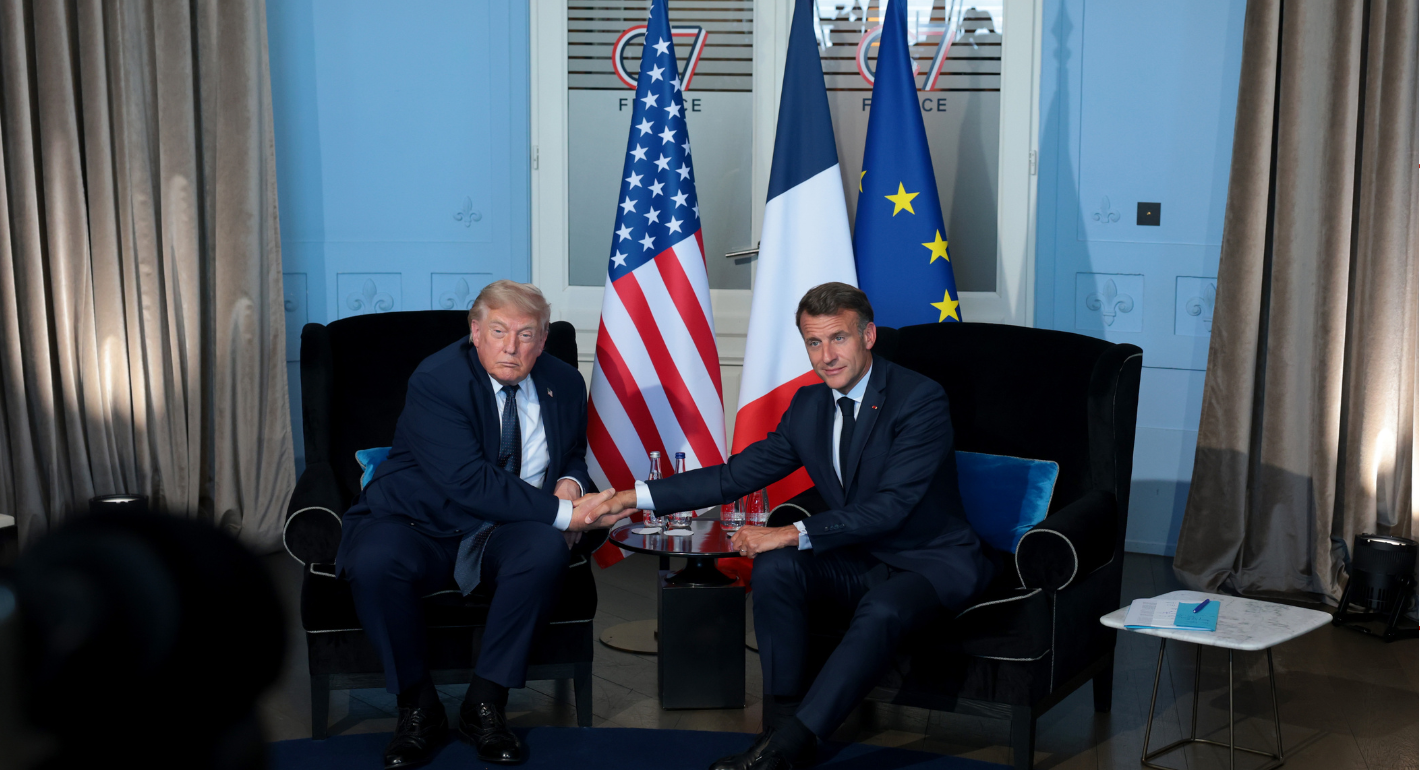
In Donald Trump’s second term in office, the transatlantic relationship that helped define the postwar European project and global order appears broken. Is it time for Brussels to chart its own path?
Nathalie Tocci, Jan Techau
{
"authors": [],
"type": "pressRelease",
"centerAffiliationAll": "dc",
"centers": [
"Carnegie Endowment for International Peace"
],
"collections": [],
"englishNewsletterAll": "",
"nonEnglishNewsletterAll": "",
"primaryCenter": "Carnegie Endowment for International Peace",
"programAffiliation": "NPP",
"programs": [
"Nuclear Policy",
"Middle East"
],
"projects": [],
"regions": [
"Middle East",
"Iran"
],
"topics": [
"Nuclear Policy"
]
}REQUIRED IMAGE
WASHINGTON, Oct 30—The International Atomic Energy Agency (IAEA) faces a critical test this November when it will issue its latest report on Iran’s nuclear activities. Since 2003, the IAEA has been unable to conclude that Iran does not have undeclared nuclear materials and activities. A condemning report by the IAEA, addressing the elements of Iran’s nuclear program that seem intended for military, rather than civilian purposes, could induce UN Security Council (UNSC) sanctions and prompt Iran to end all cooperation with the IAEA. Yet a falsely reassuring report by the IAEA could seriously damage the credibility of the nonproliferation regime, argues Pierre Goldschmidt, former deputy director general of the IAEA and a visiting scholar with the Carnegie Endowment for International Peace, in a speech today at Harvard University.
Arguing that Iran has shown no inclination to convince the world that it is not seeking nuclear weapons, Goldschmidt says that the Iranians have most likely made a cost-benefit analysis of the situation, concluding that time is on their side and that Russia and China will oppose severe sanctions by the UNSC. He suggests an alternative approach would be a two-month grace period protecting Iran in case it makes new revelations on its nuclear program. He also outlines other key factors that could prompt Iran to shift its stance:
“The Agency, recipient of the 2005 Nobel Peace Prize, has a well deserved reputation of objectivity and sound technical judgment. It cannot let itself be perceived as being manipulated by Iran to help buy time or as providing an unwarranted excessively positive picture of the situation in Iran, thereby raising the suspicion that its objective might be to make it more difficult for the UNSC to adopt any new resolution sanctioning Iran. After five years of unsuccessful efforts by the Agency to ‘close the Iranian file,’ there is no room for complacency, only for undisputable objectivity and clarity in reporting facts and findings in sufficient detail,” concludes Goldschmidt.
###
NOTES
Carnegie does not take institutional positions on public policy issues; the views represented herein are those of the author(s) and do not necessarily reflect the views of Carnegie, its staff, or its trustees.
In Donald Trump’s second term in office, the transatlantic relationship that helped define the postwar European project and global order appears broken. Is it time for Brussels to chart its own path?
Nathalie Tocci, Jan Techau
The debate on the future of European deterrence has intensified, as NATO allies seek to balance three key aims. Going forward, they will need to cooperate more deeply to craft a coherent strategy for confronting new threats.
Sophia Besch, Jamie Kwong
Erdoğan and Trump’s meeting served both leaders’ domestic and personal agendas. For Europe, it highlights how America’s transactional approach risks sidelining allies and empowering authoritarians.
Marc Pierini
The EU’s new Pact for the Mediterranean aims to reshape the bloc’s relations with its Southern neighborhood. But the initiative lacks concrete measures to address societal divides and the region’s pressing challenges.
Richard Youngs
As the EU prepares a new pact for its Southern neighborhood, the union should balance economic and security interests with support for civil society, political reforms, and inclusive governance.
Hussein Baoumi