Source: Indian Express
With the Lokpal bill meeting the fate of the women's reservation bill, the lokayukta remains, in many states of the Indian Union, the only ombudsman in charge of fighting corruption among the politicians and the functionaries. But this most useful institution remains fragile, as its trajectory in Gujarat testifies.
The Gujarat Lokayukta Act introduced it in the state in 1986 (15 years after Maharashtra, which played a pioneering role in that domain). According to this act, the lokayukta is appointed by the governor after consulting the chief justice of the state high court. The first lokayukta of Gujarat, S.M. Soni, resigned in 2003. Three years later, in 2006, the chief justice of the Gujarat High Court approved the candidature of Justice K.R. Vyas, whose name had been suggested by the government of Gujarat. The year after, Justice Vyas was appointed chairman of the Maharashtra State Human Rights Commission. In September 2009, the governor of Gujarat returned the file recommending the appointment of Justice Vyas as lokayukta, claiming that the man was not available for the job. In November 2009, Kamla Beniwal took charge as the new governor and soon asked the chief justice to put together a panel of personalities qualified for selecting the names of people who could become lokayukta.
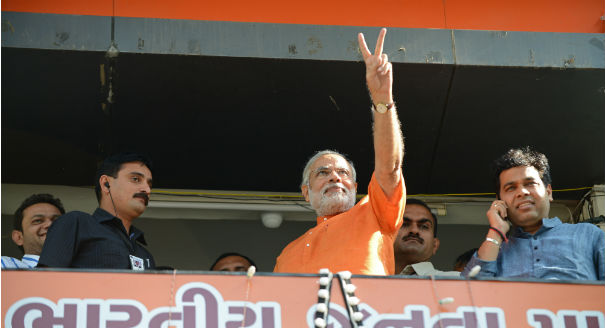
The Gujarat government went to the court, claiming that the governor could not take any initiative in this matter, but only follow the recommendations of the council of ministers. The court agreed and Narendra Modi, therefore, in February 2010, asked the chief justice to suggest four names. Among them, the council of ministers supported the name of Justice J.R. Vora. Opponents of the chief minister objected that Vora had been preferred because, as a member of a division bench of the Gujarat High Court, he had upheld the verdict of the Vadodara fast-track court acquitting all the accused involved in the Best Bakery case of 2002 — many of whom were to be sentenced to years of jail after the Supreme Court transferred the case to Mumbai.
Then the governor asked the attorney general whether the procedure that had been followed was right and the latter objected that only one name should have been recommended, something the government of Gujarat rejected, but that the SC upheld. Then, Beniwal asked the chief justice who was the best candidate between Justice R.P. Dholakia, the president of the Gujarat Consumer Disputes Redressal Commission, and Justice Vora. The chief justice opted for the former, but the governor, instead of appointing him, asked the chief justice to recommend only one name. The then chief justice of the Gujarat High Court, S.J. Mukhopadhyay, recommended the name of Justice (retired) S.D. Dave in December 2010. The governor submitted this name to the government of Gujarat, which rejected it and suggested instead the name of Justice Vora. The chief justice replied that the man was not available any more, since he had been appointed director of the Gujarat State Judicial Academy. But Justice Dave said that he was not interested in the post.
Then the chief justice suggested the name of Justice (retired) R.A. Mehta. The governor asked Narendra Modi to appoint him. But the chief minister objected that Justice Mehta was too old (he was 75) and that he had displayed an antagonistic attitude vis-à-vis the state government. The chief justice responded in August 2011 that he had investigated the case personally and considered that Justice Mehta had "a high reputation, great integrity and his neutrality is well acclaimed, besides the fact that he has not shown any aspiration to any government post whether Central or state". The state government filed a writ petition in the high court challenging Justice Mehta's appointment. In October, a two-member bench delivered a judgment with differing views. The matter went to a third judge, Justice V.M. Sahai, who declared that the "pranks of the chief minister demonstrate destruction of our democracy and the questionable conduct of stonewalling the appointment of Justice Mehta as lokayukta threatened the rule of law". For him, "[o]pen resistance of the council of ministers headed by the chief minister in not accepting the primacy of the opinion of the chief justice of the Gujarat High Court in the matter of appointment of lokayukta has created a crisis situation". The Gujarat government then moved the SC, whose verdict came in early 2013. The court upheld the appointment of Justice Mehta and later dismissed the review petition filed by the state government. One month after, in April 2013, the Gujarat assembly passed the new Gujarat Lokayukta Aayog Bill.
This bill dilutes the role of the governor and the chief justice. If this bill becomes law, the lokayukta will be selected by a seven-member panel headed by the chief minister and comprising of a minister chosen by the chief minister, the speaker of the state assembly (also from the ruling party or at least the majority), the leader of the opposition, a high court judge appointed by the chief justice of the high court and the state vigilance commissioner.
A few months after this bill was voted by the Gujarat assembly, Justice Mehta announced that he refused the charge as Gujarat lokayukta after new criticisms had come from the BJP side. In his resignation letter, Justice Mehta said: "How can I take up the responsibility and become the Lokayukta when my objectivity and credibility are not accepted by the government and by the public functionaries whose conduct the Lokayukta may have to investigate? Findings and recommendations — for or against a public functionary — will always be under a question mark... I humbly withdraw my consent for the appointment as the Gujarat Lokayukta and decline to assume the office." Earlier in the letter, he pointed out, "The highest courts in the state and in the country have upheld the appointment and repeatedly negatived all contentions (including that of bias) against my appointment as the Lokayukta... Forty-five crores of public money is said to have been spent by the Gujarat government in this litigation. Humongously disproportionate figure by any standard."
Earlier this month, Governor Beniwal returned the Lokayukta Aayog Bill for review to the government of Gujarat. Last year, the state ruled by the BJP for the largest number of years has established another record: no other Indian state, having passed a lokayukta act, has remained more than 10 years without appointing someone to the post.
But the future may be worse than the past if the Gujarat Lokayukta Aayog Bill becomes law, simply because the independence of the lokayukta will be significantly reduced. Obviously, chief ministers have become afraid of their lokayukta after one of them, B.S. Yeddyurappa, had to resign after he was indicted in a graft case by the Karnataka lokayukta. But instead of allowing state leaders to emasculate them, these ombudsmen should now be given equal strength across India. Not only because that would be good for democracy, but also because the country has traditionally administered justice in an even manner on its territory. If centrifugal forces prevail, eventually this process will result in a federalisation of justice that may create some inequality before the law.