• Research
  • Strategic Europe
  • About
  • Experts
Carnegie Europe logoCarnegie lettermark logo
EUUkraine
  • Donate
{
  "authors": [
    "Cory McKenzie",
    "William Ossoff"
  ],
  "type": "legacyinthemedia",
  "centerAffiliationAll": "dc",
  "centers": [
    "Carnegie Endowment for International Peace"
  ],
  "collections": [
    "Iranian Proliferation",
    "The United States and Japan in Asia"
  ],
  "englishNewsletterAll": "asia",
  "nonEnglishNewsletterAll": "",
  "primaryCenter": "Carnegie Endowment for International Peace",
  "programAffiliation": "AP",
  "programs": [
    "Asia",
    "Nuclear Policy"
  ],
  "projects": [],
  "regions": [
    "East Asia",
    "Japan"
  ],
  "topics": [
    "Nuclear Policy"
  ]
}

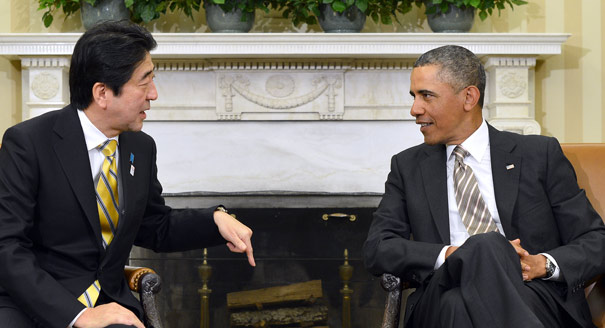
Source: Getty

In The Media

Tokyo-Tehran Ties and the U.S.-Japan Alliance

While Japan is not a party to the Iran nuclear deal, it played an important role in its conclusion and could prove influential in its implementation.

Link Copied
By Cory McKenzie and William Ossoff
Published on May 4, 2016

Source: Diplomat

While Japan is not a party to the Joint Comprehensive Plan of Action (JCPOA), popularly known as “the Iran nuclear deal,” it played an important role in the conclusion of this international agreement and could be influential in its implementation. The global sanctions regime that helped drive Iran to the negotiating table depended upon the participation of major economic players like Japan. In concert with its U.S. ally and the rest of the international community, Japan endured economic costs in pursuit of shared nuclear nonproliferation principles and broader national interests. The JCPOA is an underappreciated example of cooperation between the United States and Japan on this front.

However, as the one-year anniversary of the JCPOA approaches in July, U.S. and Japanese interests are showing signs of divergence. Japan is expanding investment in Iran’s energy sector while the United States remains at odds with Iran over non-nuclear issues. How will Japan’s deepening economic partnership with Iran impact international nonproliferation efforts and the U.S.-Japan Alliance?...

Read the full article at the Diplomat.

About the Authors

Cory McKenzie

Former Junior Fellow, Asia Program

William Ossoff

Former Junior Fellow, Nuclear Policy Program

Authors

Cory McKenzie
Former Junior Fellow, Asia Program
William Ossoff
Former Junior Fellow, Nuclear Policy Program
Nuclear PolicyEast AsiaJapan

Carnegie does not take institutional positions on public policy issues; the views represented herein are those of the author(s) and do not necessarily reflect the views of Carnegie, its staff, or its trustees.

More Work from Carnegie Europe

  • Commentary
    Strategic Europe
    Europe on Iran: Gone with the Wind

    Europe’s reaction to the war in Iran has been disunited and meek, a far cry from its previously leading role in diplomacy with Tehran. To avoid being condemned to the sidelines while escalation continues, Brussels needs to stand up for international law.

      Pierre Vimont

  • Commentary
    Strategic Europe
    Macron Makes France a Great Middle Power

    France has stopped clinging to notions of being a great power and is embracing the middle power moment. But Emmanuel Macron has his work cut out if he is to secure his country’s global standing before his term in office ends.

      • Rym Momtaz

      Rym Momtaz

  • Commentary
    Can Europe Trust the United States Again?

    In Donald Trump’s second term in office, the transatlantic relationship that helped define the postwar European project and global order appears broken. Is it time for Brussels to chart its own path?

      Nathalie Tocci, Jan Techau

  • Commentary
    Strategic Europe
    Unpacking Europe’s Deterrence Dilemmas

    The debate on the future of European deterrence has intensified, as NATO allies seek to balance three key aims. Going forward, they will need to cooperate more deeply to craft a coherent strategy for confronting new threats.

      Sophia Besch, Jamie Kwong

  • Europe Iran nuclear talks
    Commentary
    Strategic Europe
    The Small Window for an EU-U.S. Diplomatic Push on Iran

    To turn U.S. strikes on Iran’s nuclear program into a long-term resolution, Washington should seize the moment and cooperate with France, Germany, and the UK on diplomatic talks.

      • Rym Momtaz

      Rym Momtaz

Get more news and analysis from
Carnegie Europe
Carnegie Europe logo, white
Rue du Congrès, 151000 Brussels, Belgium
  • Research
  • Strategic Europe
  • About
  • Experts
  • Projects
  • Events
  • Contact
  • Careers
  • Privacy
  • For Media
  • Gender Equality Plan
Get more news and analysis from
Carnegie Europe
© 2026 Carnegie Endowment for International Peace. All rights reserved.