

{
  "authors": [
    "Alexander Gabuev",
    "Myong-Hyun Go"
  ],
  "type": "commentary",
  "centerAffiliationAll": "",
  "centers": [
    "Carnegie Endowment for International Peace",
    "Carnegie Russia Eurasia Center"
  ],
  "collections": [],
  "englishNewsletterAll": "",
  "nonEnglishNewsletterAll": "",
  "primaryCenter": "Carnegie Endowment for International Peace",
  "programAffiliation": "",
  "programs": [],
  "projects": [],
  "regions": [],
  "topics": []
}
Source: Getty
Podcast: What’s In Store for North Korea After U.S. Elections?
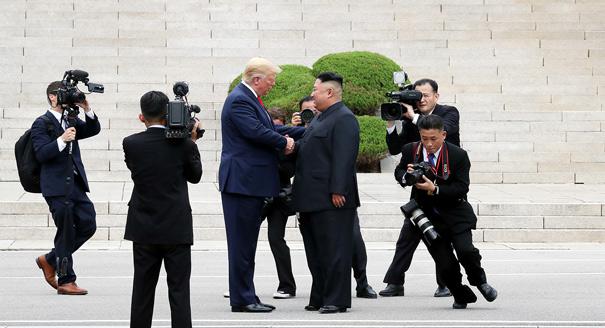
Podcast host Alex Gabuev and Myong-Hyun Go, a research fellow at the Asan Institute for Policy Studies, examine the situation on the Korean Peninsula and possible impact there of the U.S. presidential election.
It’s been relatively quiet on the Korean Peninsula for the past two years, but is this the calm before the storm? What will North Korea do to ensure it remains a U.S. foreign policy priority if Joe Biden wins the U.S. election? What impact has the coronavirus pandemic had on Kim Jong Un’s regime? And how have North Korea’s relations with China gone from rock bottom to best of friends in just three years? Carnegie Moscow Center’s English-language podcast host Alex Gabuev talks to Myong-Hyun Go, a research fellow at the Asan Institute for Policy Studies, about where North Korea is headed.
Listen or download: SoundCloud | Subscribe: iTunes, Google Podcasts, Google Play, Spotify, RSS
This publication was made possible by a grant from the Korea Foundation.
About the Authors

Director, Carnegie Russia Eurasia Center
Alexander Gabuev is director of the Carnegie Russia Eurasia Center. Gabuev’s research is focused on Russian foreign policy with particular focus on the impact of the war in Ukraine and the Sino-Russia relationship. Since joining Carnegie in 2015, Gabuev has contributed commentary and analysis to a wide range of publications, including the Financial Times, the New York Times, the Wall Street Journal, and the Economist.
Myong-Hyun Go
Dr. Go Myong-Hyun is a research fellow at the Asan Institute for Policy Studies.
Carnegie does not take institutional positions on public policy issues; the views represented herein are those of the author(s) and do not necessarily reflect the views of Carnegie, its staff, or its trustees.