• Research
  • Strategic Europe
  • About
  • Experts
Carnegie Europe logoCarnegie lettermark logo
EUUkraine
  • Donate
REQUIRED IMAGE

REQUIRED IMAGE

Article

India Anticipates a "Winning Combination"

The United States and India have revived military-to-military ties for the first time since they were severed in the aftermath of India's nuclear tests in May 1998. For India, these ties reflect the country's growing global status, confirmed by President Bush in his State of the Union address, when he praised relations with India in the same breath as relations with Russia and China.

Link Copied
Published on Feb 5, 2002

The United States and India have revived military-to-military ties for the first time since they were severed in the aftermath of India's nuclear tests in May 1998. For India, these ties reflect the country's growing global status, confirmed by President Bush in his State of the Union address, when he praised relations with India in the same breath as relations with Russia and China.

From the early days of the Bush administration, the Pentagon had indicated that it was keen to restart defense ties with India. The first stage of deepening defense ties began February 4 with a meeting of the Joint Army Steering Committee. This committee is headed by Major General James Campbell and by India's Director General of Military Operations, Lieutenant General S.S. Chahal. As Campbell expressed U.S. gratitude for India's "prompt and whole-hearted support" after September 11, Chahal looked forward to a "winning combination," given the U.S. technological superpower status and India's "exceptional experience" in combating terrorism.

On February 5 a Joint Naval Executive Steering Committee met, headed on the American side by the commander of the U.S. 7th fleet and on the Indian side by the deputy chief of Naval Staff. The Air Force joint meeting is scheduled for Hawaii between February 18-21.

Indian policy-makers are eagerly anticipating the "winning combination" of expanding Indo-U.S. ties, beginning with counter-terrorism and intelligence sharing. The high praise for Pakistan's President Mussharef notwithstanding, President Bush endeared himself to India in his State of the Union address when he referred to the Pakistan-based Jaish-e-Mohammed, responsible for a foiled terrorist attack on India's parliament, as part of the "terrorist underworld."

The president's next reference to India was even more welcome to New Delhi: "In this moment of opportunity, a common danger is easing old rivalries. America is working with Russia and China and India in ways we never have before to achieve peace and prosperity…." The Times of India editorialized that Bush's statement is "bound to be interpreted as a very significant victory for Indian diplomacy." New Delhi sees this as a signal that the United States now views India in the same league as Russia and China. These two countries have what India wants: status embodied by a permanent veto-holding seat in the UN Security Council - and accepted nuclear arsenals.

South Asia

Carnegie does not take institutional positions on public policy issues; the views represented herein are those of the author(s) and do not necessarily reflect the views of Carnegie, its staff, or its trustees.

More Work from Carnegie Europe

  • Article
    Learning to Do No Harm to Democracy in Engagement With Authoritarian States

    The ways in which democracies interact with autocracies can also play a role in sustaining repressive regimes. Democratic governments must adopt more holistic approaches that offset the negative implications of international engagement.

      Nic Cheeseman, Marie-Eve Desrosiers

  • Article
    Development Assistance in Different Political Regime Contexts

    In the last decade, nondemocratic regimes have received more development assistance than democratic countries. This reveals how donors struggle with autocratization despite a rhetorical commitment to democracy.

      Marc de Tollenaere

  • Article
    Democratic Innovations From Around the World: Lessons for the West

    Countries around the world are struggling to bridge the gap between citizens and political elites. Innovative practices outside the West, while far from ideal, should be considered in debates about democratic renewal in Europe.

      Richard Youngs, Ken Godfrey

  • Research
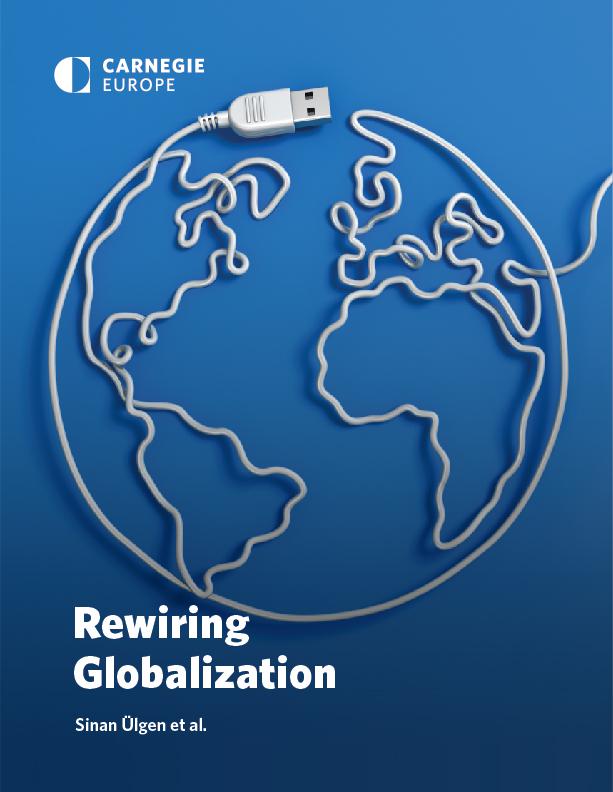
    Rewiring Globalization

    Dissatisfaction with globalization has turned into a powerful force, with unchecked globalism increasingly seen as a threat to the integrity of democratic rule. Policymakers must reframe globalization to mitigate its negative consequences while keeping its core growth-enhancing dynamics intact.

      Sinan Ülgen

  • REQUIRED IMAGE
    Commentary
    Asia, Europe, And Global Democracy: Beyond The Summit For Democracy

    The European democracies might help activate more Asian engagement in the summit process to the extent that they can show this process is not about a uniquely U.S. assault on China. In return, Asian democracies can help re-energize European democracy policies by showing that democracy support is not Western-centric.

      Richard Youngs

Get more news and analysis from
Carnegie Europe
Carnegie Europe logo, white
Rue du Congrès, 151000 Brussels, Belgium
  • Research
  • Strategic Europe
  • About
  • Experts
  • Projects
  • Events
  • Contact
  • Careers
  • Privacy
  • For Media
  • Gender Equality Plan
Get more news and analysis from
Carnegie Europe
© 2026 Carnegie Endowment for International Peace. All rights reserved.