

Article
Frederic Grare

REQUIRED IMAGE
Source: Carnegie Endowment
Summary
A new conflict is emerging in Baluchistan, a vast yet sparsely populated Pakistani province, straddling three countries: Pakistan, Iran, and Afghanistan. This instability has potential implications for the United States, as it is a launching pad for U.S. military operations against Islamic terrorism.
In a new Carnegie Paper, Pakistan: The Resurgence of Baluch Nationalism, Visiting Scholar Frédéric Grare provides insight to the numerous factors that have led to the complex struggle between the Pakistani government and the Baluch population’s fight for independence. Were Baluchistan to become independent, Pakistan would lose a major part of its natural resources and Baluchistan would become a new zone of instability in the region.
Click on link above for the full text of this Carnegie Paper.
About the Author
Frederic Grare is a visiting scholar with the Global Policy Project at the Carnegie Endowment. He has written extensively on security issues, Islamist movements, and sectarian conflict in Pakistan and Afghanistan.

Former Nonresident Senior Fellow, South Asia Program
Frédéric Grare was a nonresident senior fellow at the Carnegie Endowment for International Peace, where his research focuses on Indo-Pacific dynamics, the search for a security architecture, and South Asia Security issues.
Recent Work
Frederic Grare
Frederic Grare
Carnegie does not take institutional positions on public policy issues; the views represented herein are those of the author(s) and do not necessarily reflect the views of Carnegie, its staff, or its trustees.
The ways in which democracies interact with autocracies can also play a role in sustaining repressive regimes. Democratic governments must adopt more holistic approaches that offset the negative implications of international engagement.


Nic Cheeseman, Marie-Eve Desrosiers
2014 was a year of crisis. Ebola, ISIS, and Donbas are now part of the global lexicon. Eurasia Outlook experts weigh in on how crises on Russia’s periphery affected the country, and what these developments mean for Moscow in 2015.


Thomas de Waal, Maxim Suchkov, Balázs Jarábik, …
Irrespective of how Afghanistan's coming security transition pans out, one country may be on a surprising course to a major strategic defeat: Pakistan.
Ashley J. Tellis
The Nuclear Suppliers Group should take time to consider the implications of India's possible membership before deciding.


Mark Hibbs, Toby Dalton
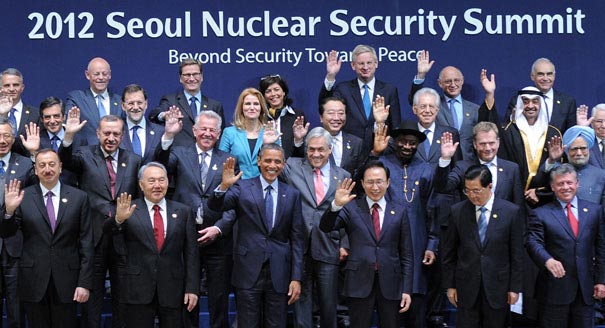
With anxieties over the nuclear activities of North Korea and Iran looming large, heads of state from 53 countries convened in Seoul this week to reaffirm and intensify their commitment to prevent nuclear materials from getting into the hands of terrorists.
Mark Hibbs