• Research
  • Strategic Europe
  • About
  • Experts
Carnegie Europe logoCarnegie lettermark logo
EUNATO
  • Donate
Has Fereydoun Abbasi Been Called to Order?

Source: Getty

Article

Has Fereydoun Abbasi Been Called to Order?

The latest statements made by the head of Iran's Atomic Energy Organization regarding the country's willingness to cooperate with the International Atomic Energy Agency do not bode well for the success of the recent Russian initiative to reinvigorate multilateral nuclear talks.

Link Copied
By Pierre Goldschmidt
Published on Sep 9, 2011

At the end of August it was reported1  that Fereydoun Abbasi, the head of Iran’s Atomic Energy Organisation, had suggested that “Iran is ready for increased cooperation with the IAEA on the condition the U.N. watchdog limit the number of points it wants clarified,” adding “As long as we don’t receive these questions in an official manner, we cannot respond.”
On September 5 Dr. Abbasi told the semi-official ISNA news agency, “We propose that the agency [IAEA] keep Iran’s nuclear program and activities under full supervision for five years provided that sanctions against Iran are lifted.”2 However, he didn’t explain what he meant by “full supervision.”
 
The day after ISNA published a short and little noticed message3 quoting Fereydoun Abbasi as saying “Iran has fully cooperated with the IAEA so far and would accept no more obligations” and “our cooperation is limited to the regulations and standards of the IAEA, providing that it respects Iran’s rights and does not include the implementation of additional protocol cooperation.”
 
The change of tone in a week’s time is quite remarkable. First Dr. Abbasi suggests that Iran’s cooperation with the IAEA could be increased  (admitting thereby that it is far from perfect) and that he would be prepared to clarify a number of points raised by the IAEA as long as they are limited and in writing. A week later he declares that Iran has fully cooperated with the IAEA so far, and would accept no more obligations, likely meaning not even answering the questions raised by the IAEA concerning “possible military dimensions” of Iran’s nuclear activities.
 
Dr. Abbasi suggested on September 5 that Iran would accept full IAEA supervision of its nuclear activities during five years provided sanctions against Iran are lifted. This again acknowledges that Iran is not fully cooperating with the IAEA and doesn’t meet the repeated requests of the IAEA Board of Governors that Iran “implement transparency measures which extend beyond the formal requirements of the Safeguards Agreement and Additional Protocol, and include access to individuals, documentation relating to procurement, dual use equipment, certain military owned workshops and research and development locations.”4 
 
The day after, the same Dr. Abbasi rejects the idea of accepting more obligations and the implementation of the Additional Protocol.
 
What has happened internally in the meantime will likely remain a mystery, but it doesn’t bode well for the future and the chances of success of the recent Russian initiative. 
 
 
1. “Iran atomic chief says fuel swap talks finished, will deal with IAEA”, The Daily Star of Lebanon, 30 August 2011. http://www.dailystar.com.lb/News/Middle-East/2011/Aug-30/147546-iran-atomic-chief-says-fuel-swap-talks-finished-will-deal-with-iaea.ashx#axzz1XRpS5zru
 
2. “Iran proposes full IAEA supervision of its nuclear program for 5 years if sanctions lifted”, AP, 5 September 2011. http://ca.news.yahoo.com/iran-proposes-full-iaea-supervision-nuclear-program-5-194212521.html
 
3. “Iran’s cooperation with the IAEA has exceeded the standards limit : Abbasi », ISNA, 6 September 2006.
 
4. IAEA Board Resolution adopted on 24 September 2005, GOV/2005/77. http://isna.ir/isna/NewsView.aspx?ID=News1841312&Lang=E

About the Author

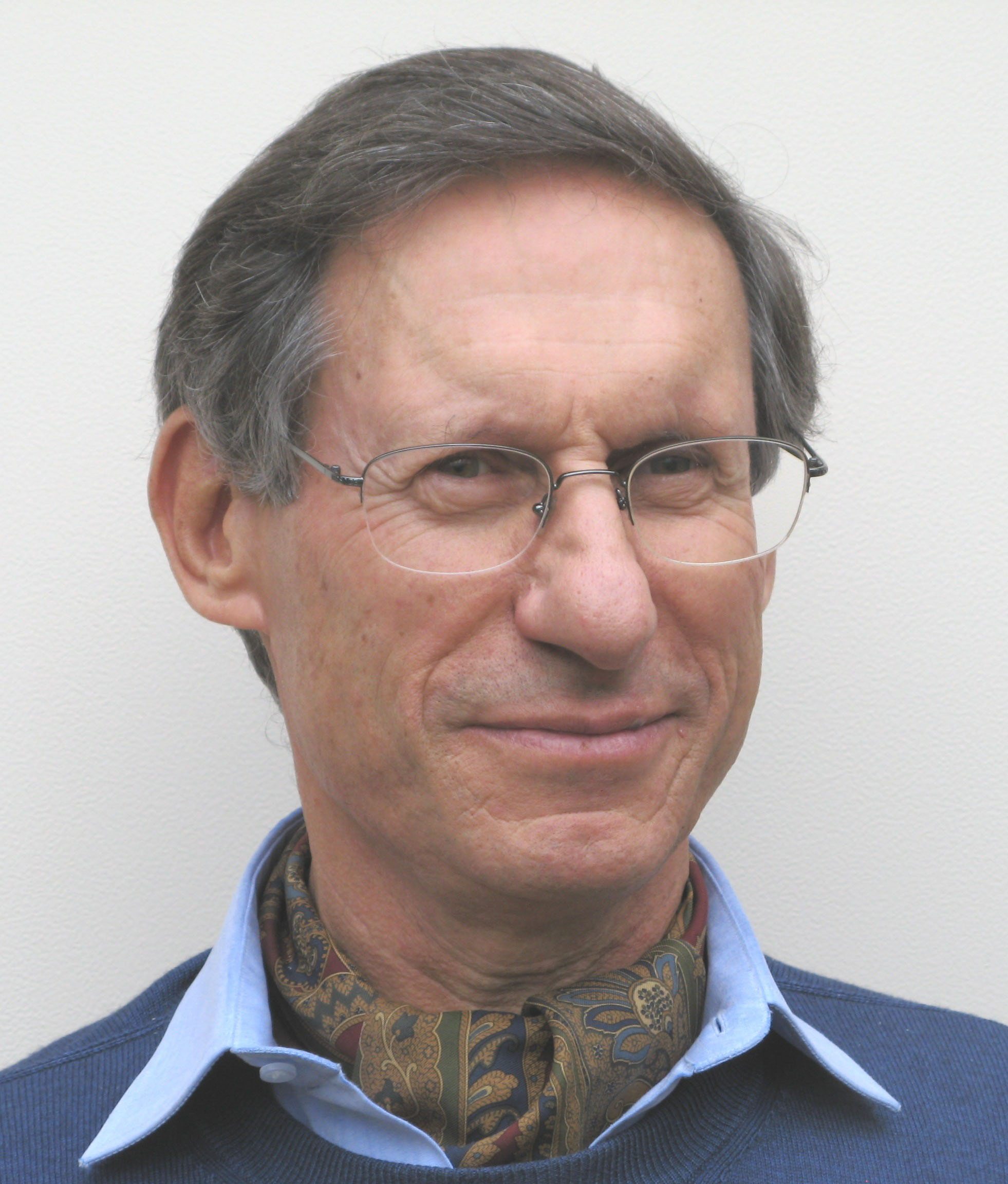
Pierre Goldschmidt

Former Nonresident Senior Associate, Nuclear Policy Program

Goldschmidt was a nonresident senior associate at the Carnegie Endowment.

    Recent Work

  • Article
    A Realistic Approach Toward a Middle East Free of WMD

      Pierre Goldschmidt

  • Article
    Serious Deficiencies Exposed by Latest IAEA Safeguards Implementation Report

      Pierre Goldschmidt

Pierre Goldschmidt
Former Nonresident Senior Associate, Nuclear Policy Program
Pierre Goldschmidt
Middle EastIranNuclear Policy

Carnegie does not take institutional positions on public policy issues; the views represented herein are those of the author(s) and do not necessarily reflect the views of Carnegie, its staff, or its trustees.

More Work from Carnegie Europe

  • Commentary
    Strategic Europe
    France, Italy, and Spain Should Use Force in Lebanon

    Europe has been standing by while its Southern neighborhood is being redrawn by force. To establish a path to peace between Israel and Lebanon, it’s time for Europeans to get involved with hard power.

      • Rym Momtaz

      Rym Momtaz

  • Commentary
    Strategic Europe
    The Fog of AI War

    In Ukraine, Gaza, and Iran, AI warfare has come to dominate, with barely any oversight or accountability. Europe must lead the charge on the responsible use of new military technologies.

      Raluca Csernatoni

  • Commentary
    Strategic Europe
    Taking the Pulse: Can NATO Survive the Iran War?

    Donald Trump has repeatedly bashed NATO and European allies, threatening to annex Canada and Greenland and deploring their lack of enthusiasm for his war of choice in Iran. Is this latest round of abuse the final straw?

      • Rym Momtaz

      Rym Momtaz, ed.

  • Commentary
    Strategic Europe
    Taking the Pulse: Is it NATO’s Job to Support Trump’s War of Choice?

    Donald Trump has demanded that European allies send ships to the Strait of Hormuz while his war of choice in Iran rages on. He has constantly berated NATO while the alliance’s secretary-general has emphatically supported him.

      • Rym Momtaz

      Rym Momtaz, ed.

  • Commentary
    Strategic Europe
    Russia’s Imperial Retreat Is Europe’s Strategic Opportunity

    The war in Ukraine is costing Russia its leverage overseas. Across the South Caucasus and Middle East, this presents an opportunity for Europe to pick up the pieces and claim its own sphere of influence.

      William Dixon, Maksym Beznosiuk

Get more news and analysis from
Carnegie Europe
Carnegie Europe logo, white
Rue du Congrès, 151000 Brussels, Belgium
  • Research
  • Strategic Europe
  • About
  • Experts
  • Projects
  • Events
  • Contact
  • Careers
  • Privacy
  • For Media
  • Gender Equality Plan
Get more news and analysis from
Carnegie Europe
© 2026 Carnegie Endowment for International Peace. All rights reserved.