• Research
  • About
  • Experts
Carnegie India logoCarnegie lettermark logo
AI
Podcast Episode
Carnegie India

Deciphering the “Mother of All Trade Deals”: The India–EU FTA

In this episode of Interpreting India, Dinakar Peri is joined by Mohan Kumar, former Indian Ambassador to France and a veteran trade negotiator, to unpack the newly concluded India–EU Free Trade Agreement and why he describes it as the “mother of all trade deals” for India. Kumar explains why the agreement is strategically significant, why the timing matters, and what it signals about India’s trade posture, competitiveness, and broader alignment between trade, technology, and security.

Link Copied
By Dinakar Peri and Mohan Kumar
Published on Feb 3, 2026

Subscribe on

SpotifyApple PodcastsAmazon MusicYoutube
Project hero Image

Project

Security Studies

India’s evolving role in regional and global security is shaped by complex dynamics. Experts in the Security Studies Program examine India’s position in this world order through informed analyses of its foreign and security policies, focusing on the relationship with China, the securitization of borders, and the geopolitics of the Indo-Pacific. 

Learn More

Episode Summary

In this episode of Interpreting India, Dinakar Peri is joined by Mohan Kumar, former Indian Ambassador to France and a veteran trade negotiator, to unpack the newly concluded India–EU Free Trade Agreement and why he describes it as the “mother of all trade deals” for India. Kumar explains why the agreement is strategically significant, why the timing matters, and what it signals about India’s trade posture, competitiveness, and broader alignment between trade, technology, and security.

Why is the India–EU FTA seen as India’s most consequential trade deal to date? Why did it take so long to conclude, and what explains the timing now? How do EU regulations shape market access, and what does “meeting standards” really require for Indian exporters? What is included in the deal, what is left out, and why were those exclusions important to getting it across the line?

Episode Notes

Kumar frames the India–EU FTA as a deal India needed, not one it merely chose, arguing that with the multilateral trade system weakened, FTAs have become the practical route to secure market access and signal openness to investment. He places the EU among India’s “$100 billion club” trading partners and explains why this agreement fills a gap India cannot realistically close with China, and cannot replicate with the United States in the form of a full FTA.

On timing, he calls the early 2010s a missed opportunity but notes that current geopolitical conditions have raised India’s value for Europe, including Europe’s push to de-risk from China and the absence of an EU–U.S. FTA. A major thread is regulation: Kumar acknowledges the EU’s regulatory intensity, but argues India must adapt to global technical and sanitary standards, using the agreement’s timelines and technical assistance to reduce friction and help industry upgrade over time.

He clarifies the trade-offs that made the deal viable: core agriculture and dairy are left out due to political sensitivities on both sides; government procurement is excluded due to India’s constraints and federal realities; and investment protection and geographical indications are kept on separate tracks to avoid a more complex EU-wide ratification path. He also describes how negotiations manage domestic sensitivities through consultation with industry, transition periods, tariff-rate quotas, and product thresholds, particularly in sectors like autos, aiming to expose firms gradually to competition while pushing manufacturing to become more competitive.

In closing, Kumar argues the hard work starts after signing. He stresses that Indian industry must actually use the agreement’s tariff concessions, pointing to historically low utilization of FTAs—and that domestic reforms cannot be postponed if India wants the deal to deliver results. He highlights reforms in agriculture, labor implementation, power, and land acquisition, and ties this to a broader shift he sees globally: trade policy and security policy are increasingly moving into alignment, especially in a world of dual-use technology and tighter strategic partnerships.

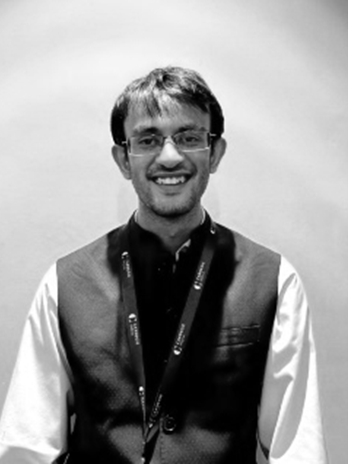
Hosted by

Dinakar Peri
Fellow, Security Studies Program
Dinakar Peri

Featuring

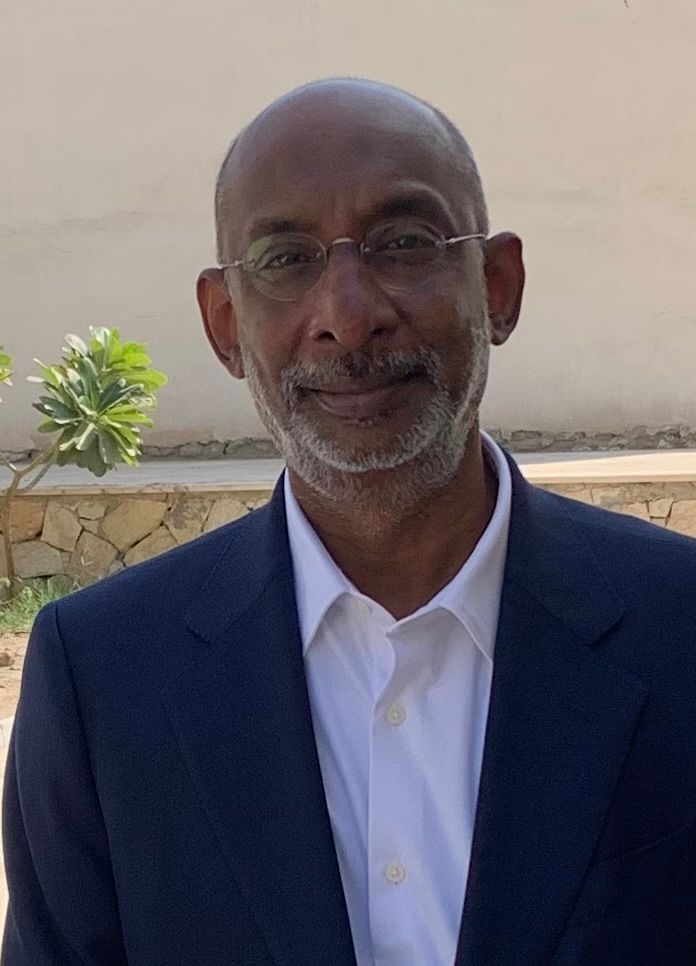
Mohan Kumar
Former Indian ambassador to France
Mohan Kumar

Carnegie India does not take institutional positions on public policy issues; the views represented herein are those of the author(s) and do not necessarily reflect the views of Carnegie, its staff, or its trustees.

More Work from Interpreting India

  • Podcast Episode
    Data, AI, and the Laws Trying to Keep Up

    In this episode of Interpreting India, Nidhi Singh is joined by Nikhil Narendran, Partner at Trilegal, for a conversation on two of the most pressing issues shaping India's digital future: data protection and AI governance. From the nuts and bolts of India's Digital Personal Data Protection Act to deeper questions about regulating artificial intelligence, Nikhil brings the perspective of a technology lawyer who is not just advising on these issues but actively living them.

      Nidhi Singh, Nikhil Narendran

  • Podcast Episode
    Inside the Iran Conflict: Power, Strategy, and India’s Balancing Act

    In this episode of Interpreting India, Srinath Raghavan speaks with Gaddam Dharmendra, Nonresident Senior Fellow, Carnegie India and India’s former Ambassador to Iran about the ongoing U.S.-Israel conflict with Iran and what it means for the region. The conversation looks at Iran’s response to sustained attacks, the wider impact on energy markets and regional stability, and the changing relationships between Iran, the Gulf countries, and global powers. It also reflects on India’s position as it balances its ties across West Asia while navigating strategic and economic pressures, and what lies ahead as the conflict continues to shape the region.

      Srinath Raghavan, Gaddam Dharmendra

  • Podcast Episode
    Recalibrating BRICS: India’s Moment in a Fragmented World

    In this episode of Interpreting India, Vrinda Sahai is joined by Ana Garcia, Associate Professor at PUC-Rio and Coordinator at the BRICS Policy Center, to discuss the evolving direction of BRICS as India assumes the 2026 presidency. The conversation reflects on Brazil’s 2025 chairship, the bloc’s continued focus on reforming global financial governance, and the cautious progress on issues such as local currency trade, financial coordination, and institutional reform. Ana Garcia also highlights the limits of BRICS as a unified geopolitical actor and outlines key priorities for India, including strengthening financial mechanisms, advancing climate and health cooperation, and consolidating the expanded BRICS membership.

      Vrinda Sahai, Ana Garcia

  • Podcast Episode
    AI Adoption Journey for Population Scale: The UCAF Framework

    In this episode of Interpreting India, Nidhi Singh is joined by Shalini Kapoor, chief strategist for Data and AI at the EkStep Foundation, and Tanvi Lall, director for strategy at People+ai. They unpack why so many AI initiatives get stuck after impressive demos, and what it takes to move from pilots to real, sustained adoption. Drawing on research spanning 1,000+ use cases across 25 countries, the guests introduce the Use Case Adoption Framework (UCAF) and explain how India can translate AI ambition into population-scale impact—especially across public services, agriculture, health, and other high-priority sectors.

      Nidhi Singh, Shalini Kapoor, Tanvi Lall

  • Podcast Episode
    Scarcity, Sovereignty, Strategy: Mapping the Political Geography of AI Compute

    In this episode of Interpreting India, Adarsh Ranjan is joined by Zoe Jay Hawkins, co-founder and deputy executive director of the Tech Policy Design Institute. They explore the evolving idea of AI sovereignty, the geopolitics of compute, and how countries are navigating access to the foundational infrastructure that powers artificial intelligence. Drawing from her research at the Oxford Internet Institute, Zoe unpacks the political geography of AI compute, the rising concentration of AI chips and data centers, and what this means for both developed and developing economies.

      Adarsh Ranjan, Zoe Jay Hawkins

Get more news and analysis from
Carnegie India
Carnegie India logo, white
Unit C-4, 5, 6, EdenparkShaheed Jeet Singh MargNew Delhi – 110016, IndiaPhone: 011-40078687
  • Research
  • About
  • Experts
  • Projects
  • Events
  • Contact
  • Careers
  • Privacy
  • For Media
Get more news and analysis from
Carnegie India
© 2026 Carnegie Endowment for International Peace. All rights reserved.