

Report
- +2
George Perkovich, Jessica Tuchman Mathews, Joseph Cirincione, …
{
  "authors": [
    "Jon Wolfsthal"
  ],
  "type": "legacyinthemedia",
  "centerAffiliationAll": "dc",
  "centers": [
    "Carnegie Endowment for International Peace"
  ],
  "collections": [
    "U.S. Nuclear Policy",
    "Korean Peninsula"
  ],
  "englishNewsletterAll": "ctw",
  "nonEnglishNewsletterAll": "",
  "primaryCenter": "Carnegie Endowment for International Peace",
  "programAffiliation": "NPP",
  "programs": [
    "Nuclear Policy"
  ],
  "projects": [],
  "regions": [
    "North America",
    "United States",
    "East Asia",
    "South Korea",
    "North Korea"
  ],
  "topics": [
    "Foreign Policy",
    "Nuclear Policy"
  ]
}
REQUIRED IMAGE
U.S.-South Korean relations will be put to the test this week as South Korean President Kim Dae-Jung visits Washington. Kim’s recent summit with Russian President Putin produced a joint statement effectively opposing U.S. plans to deploy national missile defenses, complicating President Bush’s first foray into East Asian security affairs.
Source: Carnegie
The following Issue Brief by Associate Jon B. Wolfsthal appeared in the March 7 edition of the Los Angeles Times.
U.S.-South Korean relations will be put to the test this week as South Korean President Kim Dae-Jung visits Washington. Kim’s recent summit with Russian President Putin produced a joint statement effectively opposing U.S. plans to deploy national missile defenses, complicating President Bush’s first foray into East Asian security affairs. This potential conflict adds to the concerns sparked by recent North Korean statements hinting at a restart of their missile and nuclear programs. By moving to engage North Korea and end their missile program, as Kim is expected to push for, Bush can quickly move to secure the future of the U.S.-South Korean alliance and improve the overall security outlook for the region.
North Korea’s development and export of long-range missiles continues to top the U.S.-North Korean agenda and will occupy much of the discussions between Kim and Bush. North Korea has signaled it is willing to eliminate this program if the United States will arrange for North Korean satellites to be launched by other countries. The United States rightfully opposed a suggestion that North Korea be given space launchers, which are virtually identical to long-range missiles. But the broader agenda of improved relations between the two states, as part of a larger opening up by North Korea must also be pursued if the security picture in East Asia is to improve.
The risk of war on the Korean peninsula has existed almost unchanged for decades. Moves over the past two years by North and South Korean leaders, however, offer a radically different future on the peninsula. The historic summit last year has been followed up by symbolic, but important steps to reunite families and establish rail links between the two countries. Key to continuing this process is improved U.S.-North Korea relations, which requires a resolution of the missile and conventional military picture on the peninsula.
North Korean officials recently showed their growing impatience with the slow pace of U.S. diplomatic moves, stating that "[w]e promised not to test-fire long-range missiles during the duration of talks on the missile issue, but we cannot do so indefinitely." Long time observers of North Korea know such language well and know it is part of North Korea’s attempt to maintain U.S. interest in improving relations.
North Korea could reasonably interpret the lack of ongoing dialogue since President Bush took office as a sign that the winds in the United States have changed. Even analysts in the United States have been left to wonder what direction the new administration will take, so it’s not surprising that the hermit kingdom might also feel a little confused. President Bush can quickly put these fears to rest by declaring his desire to pursue a comprehensive settlement with North Korea.
For all of the campaign criticism, progress can be made with the North if President Bush picks up where Clinton left off. The major components of a missile deal were all but completed after Madeleine Albright’s visit last year, and further steps could be implemented if the Bush team decides to pursue closer ties. Elements of a broader deal include:
The potential payoffs of engaging North Korea are enormous. North Korea continues to pose the major military challenge to peace in the region. Negotiating a comprehensive peace agreement, including the elimination of North Korea’s long-range missile and nuclear weapon programs, and a reduction in conventional forces on both sides of the demilitarized zone would reinforce positive trends on the peninsula, and reduce the tensions felt in Seoul, Pyongyang, Tokyo, and even Beijing. It would also allow both sides to redirect major budget resources toward economic pursuits, helping the local and regional economic outlook.
Domestically, such a settlement could free up considerable resources for Bush’s military reform agenda. Ending North Korea’s missile program would reduce the need to rapidly deploy missile defenses and buy more time for researching more effective and less costly alternatives. Moreover, reducing the conventional military threat from North Korea would help free up Bush’s hand in reshaping the U.S. military into a lighter, more mobile fighting force, saving additional billions of dollars per year.
Some critics of Clinton-era engagement will surely push President Bush to maintain a hard line attitude toward North Korea, and condemn such proposals as appeasement -- encouraging more saber rattling by the North. But reaching a package deal with the North offers Bush several things he wants and needs, including stability in the region, greater freedom of action at home and one thing all new presidents want - foreign policy success to strengthen their image as a strong leader.

Former Nonresident Scholar, Nuclear Policy Program
Jon Wolfsthal was a nonresident scholar with the Nuclear Policy Program.
Recent Work



George Perkovich, Jessica Tuchman Mathews, Joseph Cirincione, …
Jon Wolfsthal
Carnegie India does not take institutional positions on public policy issues; the views represented herein are those of the author(s) and do not necessarily reflect the views of Carnegie, its staff, or its trustees.

India and the United States are close to concluding a Reciprocal Defense Procurement Agreement (RDPA) that will allow firms from the two countries to sell to each other’s defense establishments more easily. While this may not remedy the specific grievances both sides may have regarding larger bilateral issues, an RDPA could restore some momentum, following the trade deal announcement.

Konark Bhandari

On the last day of the India AI Impact Summit, India signed Pax Silica, a U.S.-led declaration seemingly focused on semiconductors. While India’s accession to the same was not entirely unforeseen, becoming a signatory nation this quickly was not on the cards either.
Konark Bhandari

This piece examines India’s response to U.S. sanctions and tariffs, specifically assessing the immediate market consequences, such as alterations in import costs, and the broader strategic implications for India’s energy security and foreign policy orientation.

Vrinda Sahai
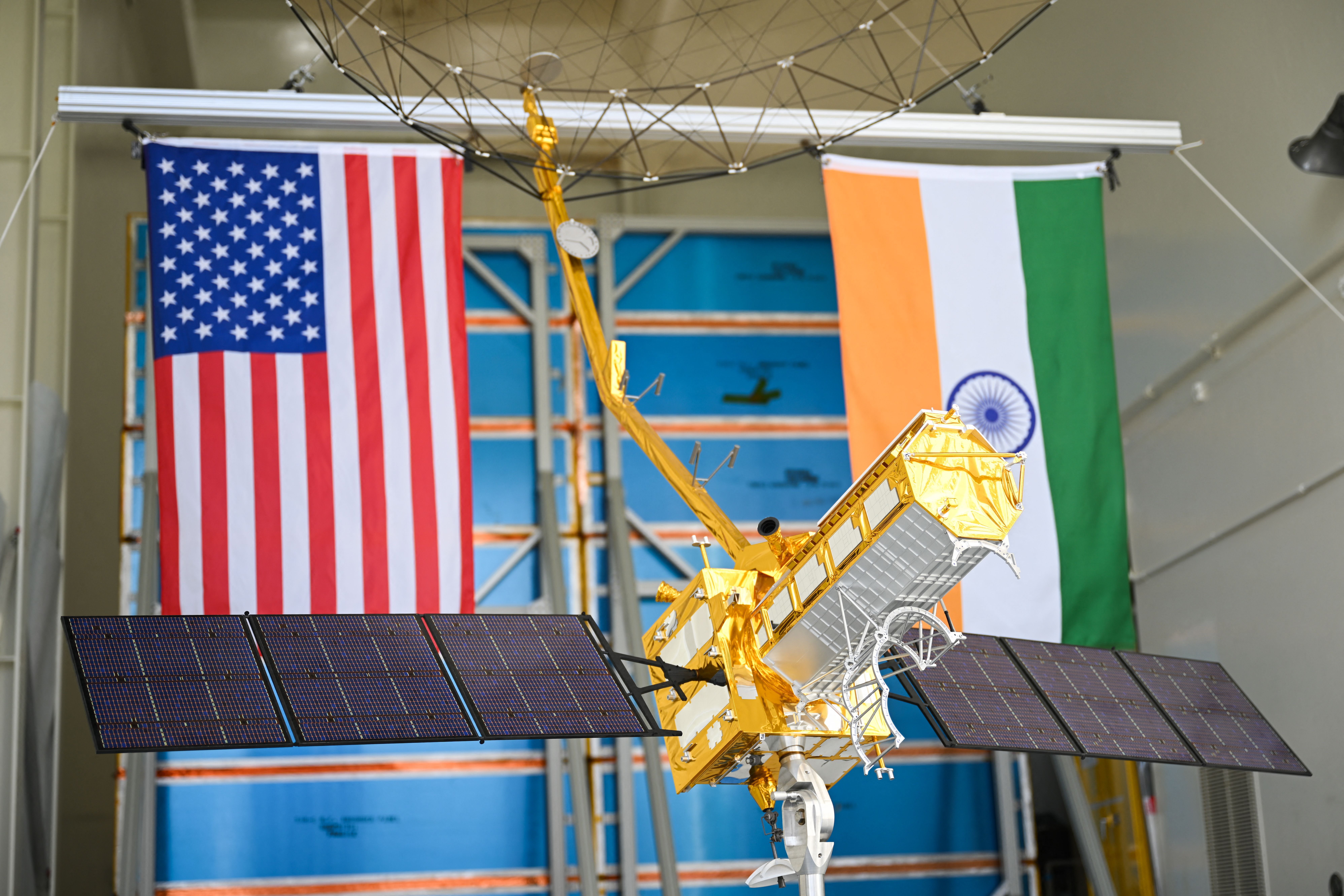
On July 30, 2025, the United States announced 25 percent tariffs on Indian goods. While diplomatic tensions simmered on the trade front, a cosmic calm prevailed at the Sriharikota launch range. Officials from NASA and ISRO were preparing to launch an engineering marvel into space—the NASA-ISRO Synthetic Aperture Radar (NISAR), marking a significant milestone in the India-U.S. bilateral partnership.

Tejas Bharadwaj
The India-U.S. relationship currently appears buffeted between three “Ts”—TRUST, Tariffs, and Trump.

Arun K. Singh