

Paper
- +1
Mr. Lee Feinstein, James Clad, Lewis Dunn, …
{
  "authors": [
    "Lee Feinstein"
  ],
  "type": "legacyinthemedia",
  "centerAffiliationAll": "dc",
  "centers": [
    "Carnegie Endowment for International Peace"
  ],
  "collections": [
    "U.S. Nuclear Policy"
  ],
  "englishNewsletterAll": "ctw",
  "nonEnglishNewsletterAll": "",
  "primaryCenter": "Carnegie Endowment for International Peace",
  "programAffiliation": "NPP",
  "programs": [
    "Nuclear Policy"
  ],
  "projects": [],
  "regions": [
    "United States",
    "Caucasus",
    "Russia"
  ],
  "topics": [
    "Military",
    "Nuclear Policy"
  ]
}
REQUIRED IMAGE
Source: Carnegie
Reprinted with permission of The Baltimore Sun, Monday Aug. 6, 2001
Don't believe all the tough talk.
The recent opening of simultaneous "consultations" in Moscow between the United States and Russia on nuclear cutbacks and missile defense is the latest sign the Bush administration prefers engaging Russia on nuclear issues rather than going it alone.
Until now, the administration said negotiating reductions with Moscow, which was cutting its forces anyway, was unnecessary, and administration officials had questioned the need for a binding agreement to overhaul or replace the 1972 ABM treaty.
Officially, the president's senior advisers are still holding to that position. National Security Advisor Condoleezza Rice has been careful to describe the bargaining not as negotiations but as "consultations" - the same term used by the Clinton administration in its pursuit of a compromise with Moscow on these issues.
But whatever word is used to describe the talks, it's clear the administration is embarked on a high-profile exchange in which mutually agreed nuclear cuts would be the payoff for Russian agreement to permit the administration to move ahead on missile defense.
Russian President Vladimir Putin can claim the U.S. agreement to discuss nuclear reductions and defense together as a significant victory. Russia has sought to link offense and defense discussions since the Clinton administration. The Bush team is evidently betting that handing Mr. Putin this tactical victory now will make it easier for him to cut a missile defense deal down the road.
Critics of the ABM treaty in the administration and Congress have also publicly criticized the beginning of U.S.-Russia talks. In recent testimony, the State Department's chief arms control adviser, John Bolton, reasserted that the administration's first choice is mutual withdrawal from the ABM treaty, not a replacement agreement.
But U.S. officials also indicated they would be prepared to accept a "political declaration" with Moscow. This could leave a lot of room for maneuver on both sides - if they want it.
Many important agreements over the years, including, for example, the 1975 Helsinki accords, which created what is now the Organization for Security and Cooperation in Europe, were not treaties but politically binding agreements not subject to ratification in the U.S. Senate.
Although the outlines of a deal with Russia are evident, closing one will not be easy, as the Clinton administration learned.
On arms cuts, Presidents Clinton and Boris Yeltsin had reached basic agreement to reduce their nuclear forces to 2,500 long-range weapons each. But Moscow later said it wanted cutbacks to 1,500 or lower before it would consider even very limited changes to the ABM treaty.
The Joint Chiefs of Staff and many members of Congress balked at cutting U.S. nuclear forces more deeply. President Bush has called for deep nuclear reductions without assigning any number, and hopefully he will have a better time getting domestic support for further cuts than his predecessor.
On defenses, many administration officials want to avoid enforceable limits on the U.S. ability to test and deploy a missile system, including on space-based weapons, a particular concern of Moscow's.
Another scenario is that Russia and the United States might agree to disagree. In this case, the United States might violate rather than abrogate the ABM Treaty and Russia might protest the violation but keep the door open to further discussions, despite the breach.
In the United States, conducting a missile test that might violate the ABM treaty would be applauded by those who believe the accord has outlived its usefulness and might afford the administration additional flexibility to cut a deal with Moscow after the violation. Mr. Putin might also see some benefit domestically in protesting an American violation, and later reaching an agreement with the United States that he could sell as placing limits on the American program.
If the United States and Russia cannot agree on a more or less cooperative approach, then the administration would have to decide whether to scale back its missile defense ambitions or face the music in the Senate and internationally and go it alone.
Judging by the recent actions of the new administration, as opposed to some of its words, alone seems to be a place it would rather not be.
Former Visiting Scholar
Recent Work
Mr. Lee Feinstein, James Clad, Lewis Dunn, …
Carnegie India does not take institutional positions on public policy issues; the views represented herein are those of the author(s) and do not necessarily reflect the views of Carnegie, its staff, or its trustees.

In any defense establishment, change is an ongoing process. However, despite the best of intentions, existing bureaucracies, bound by habit and years of socialization, have their limits in implementing transformative change.

Anit Mukherjee

How is AI reshaping space security, creating governance challenges, and where does international diplomacy stand today?


Tejas Bharadwaj, Almudena Azcárate Ortega

This piece argues that India’s central challenge is not managing a single flashpoint but resolving the underlying tension between expansion and institutional coherency of the BRICS grouping.

Vrinda Sahai

The U.S.–India semiconductor cooperation story is well-stocked with top-level strategic intent. What remains unresolved, however, are some underlying challenges that will determine whether the cooperation actually functions. Three such friction points stand out.

Shruti Mittal
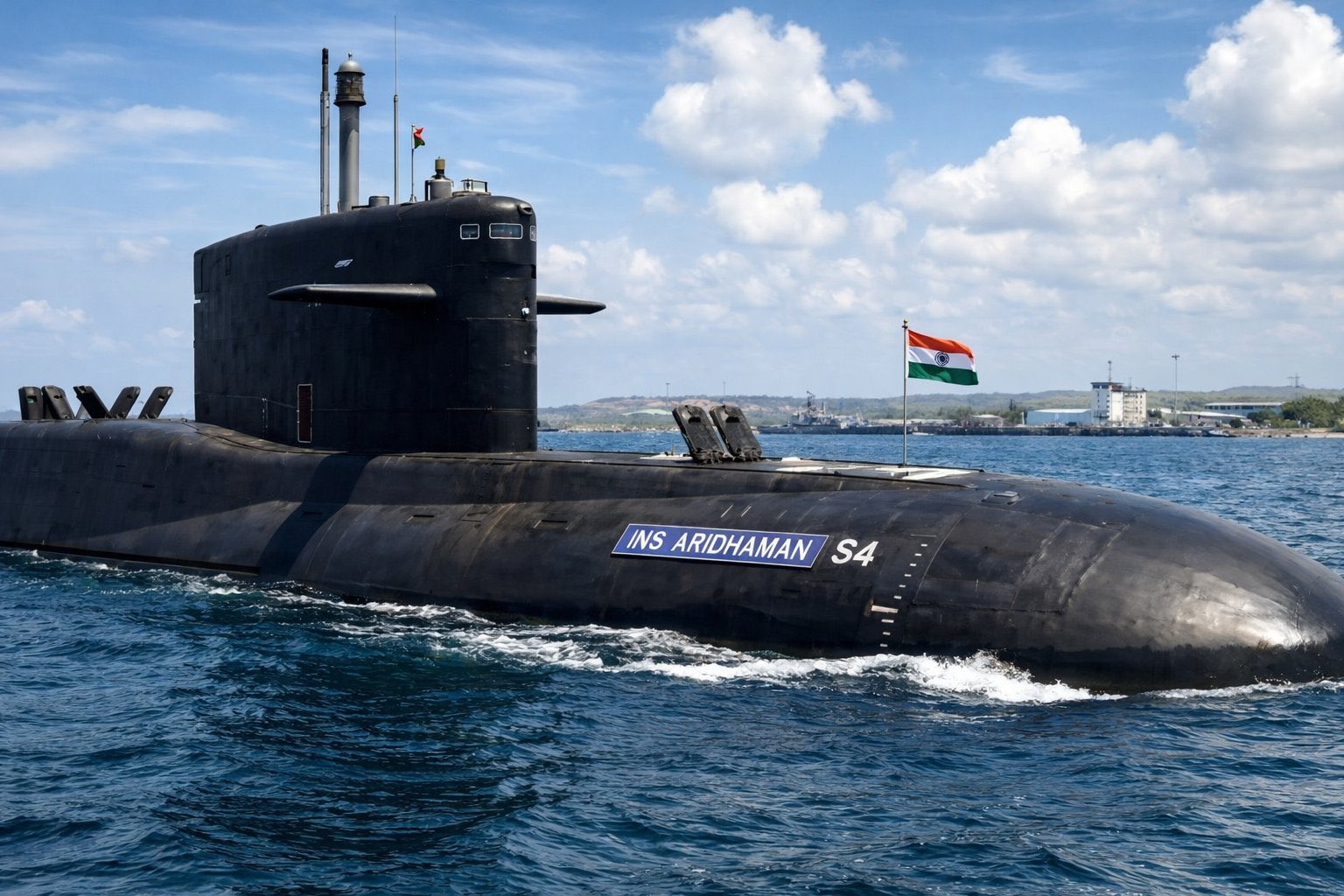
The induction of INS Aridhaman, which features several technological enhancements, now gives India the third nuclear ballistic missile submarine to ensure continuous at-sea deterrent.

Dinakar Peri