

Article
Леонид Гозман, Michael McFaul
{
  "authors": [
    "Michael McFaul"
  ],
  "type": "legacyinthemedia",
  "centerAffiliationAll": "dc",
  "centers": [
    "Carnegie Endowment for International Peace"
  ],
  "collections": [],
  "englishNewsletterAll": "ctw",
  "nonEnglishNewsletterAll": "",
  "primaryCenter": "Carnegie Endowment for International Peace",
  "programAffiliation": "russia",
  "programs": [
    "Russia and Eurasia"
  ],
  "projects": [],
  "regions": [],
  "topics": [
    "Economy",
    "Security"
  ]
}
REQUIRED IMAGE
Source: Carnegie
Strike at the Root : Deploying Our Full Arsenal
By Michael McFaul, Linda McGinnis
San Francisco Chronicle, reprinted with
permission
OUR COUNTRY'S leaders have rightly stated that we must be prepared to use the full arsenal of our capabilities, defensive and offensive, to respond to the heinous acts of terrorism directed against the United States and the world.
We have also been cautioned not to expect a massive, one-time military response but rather a longer, and at times invisible, diplomatic and financial campaign aimed at crippling terrorists.
Good words and pragmatic thinking. But there are weapons in our arsenal that are not being sufficiently emphasized. In addition to military force, and measures designed to better protect the homeland, we must include weapons of economic and political opportunity if we are truly to win this war on terrorism. Donkeys, seed, water, money, books and ideas may prove more effective than cruise missiles, Special Forces and new banking laws in prevening the cancer of terrorism from spreading further.
If we attack Afghanistan, we attack a wasteland already bombed into the Stone Age by 22 years of brutal war. Life expectancy is 44 years. Afghanistan has the highest number of widows and orphans in the world. The majority of Afghanistan's 11 million children below the age of 15 are sick, hungry and illiterate. Over 2 million Afghanis are maimed. Afghanistan is the most densely land-mined country in the world, with 10 million mines. Per capita income is less than $200 a year.
Instead of B-52s raining bombs on this devestated land -- and incurring even greater wrath and violent retaliation from those ideologically disposed to hate us -- is there not economic weaponry that might be put to better use?
Let's start with a crazy idea. In return for helping to hand over Afghani- based terrorists, the Afghan people would receive direct cash payments from the United States government to spend however they wanted. Not traditional aid going through government or NGO (non-governmental organization) channels, but cash in the hands of desperately poor people. Some $600 for each Afghan citizen -- equivalent to the Bush administration's tax rebate -- would provide years of personal income. We would also have to provide goods and services on which to spend the money. It would be expensive, the problems enormous, but no more enormous than full-scale war.
Obviously, a one-time -- let's call it a bribe -- to the Afghan people would neither end poverty there nor root out the extremist elements of Islamic fundamentalism in the region. The United States will have to invest in economic, social and political development in Afghanistan and elsewhere in the Islamic world for many years to come -- as we did in Western Europe and the Korean Peninsula during the Cold War.
In providing economic opportunities, we also must foster outlets for political dissent in the region. The United States must work to strengthen the voice of moderate Muslim political, religious and intellectual leaders. It is no accident that every sworn enemy of America is a dictatorship. Dictatorships foster extremism; democracies don't.
These are huge, costly and prolonged tasks that will demand a fundamental rethinking of our strategy in the war on terrorism. But do we have any alternative? A Delta Force strike against Osama bin Laden's camps will make us feel better for a while. But without employing these economic and political weapons, we will find ourselves revisiting the military option over and over again, and probably, enduring ever greater retaliation on our own soil.
To prepare for this truly comprehensive campaign, American political leaders must develop a new language that articulated the enormity and necessity of this challenge to the American people. Just as we launched the Marshall Plan after World War II, just as we willingly subsidized South Korean,
Japanese, German, French and Italian development in the postwar fight against communism, Americans should be primed to assume this new burden.
Paltry budgets for international aid over the last decade suggested to the world that it's problems were not ours. We thought we could live our lives insulated from the needs of others. The terrorists' strike on Sept. 11, 2001, gruesomely demonstrated that we were wrong.

Former Senior Associate
In addition to his role at Carnegie, McFaul is Peter and Helen Bing Senior Fellow at the Hoover Institution and associate professor of political science at Stanford University.
Recent Work
Леонид Гозман, Michael McFaul
Michael McFaul, Sanja Tatic

After the chill in ties between 2020 and 2024 that brought India–China relations to their lowest point in several decades, the two countries have engaged each other afresh. This paper argues that there are predominantly four imperatives guiding India’s approach to China, and they exist in an order of priority.

Saheb Singh Chadha

On March 10, 2026, India’s Union Cabinet approved amendments to Press Note 3, a regulation that mandated government approval on all foreign direct investment (FDI) from countries sharing a land border with India. This amendment raises questions primarily about whether its stated benefits will materialize and if the risks have been adequately weighed. This piece will address the same.

Konark Bhandari

This piece argues that the present Indian strategy, based on opportunistic diversification and utilization of limited strategic reserves, remains inadequate when confronting supply disruptions. It evaluates India’s options in the short, medium, and long terms.

Vrinda Sahai

This piece examines India’s response to U.S. sanctions and tariffs, specifically assessing the immediate market consequences, such as alterations in import costs, and the broader strategic implications for India’s energy security and foreign policy orientation.
Vrinda Sahai
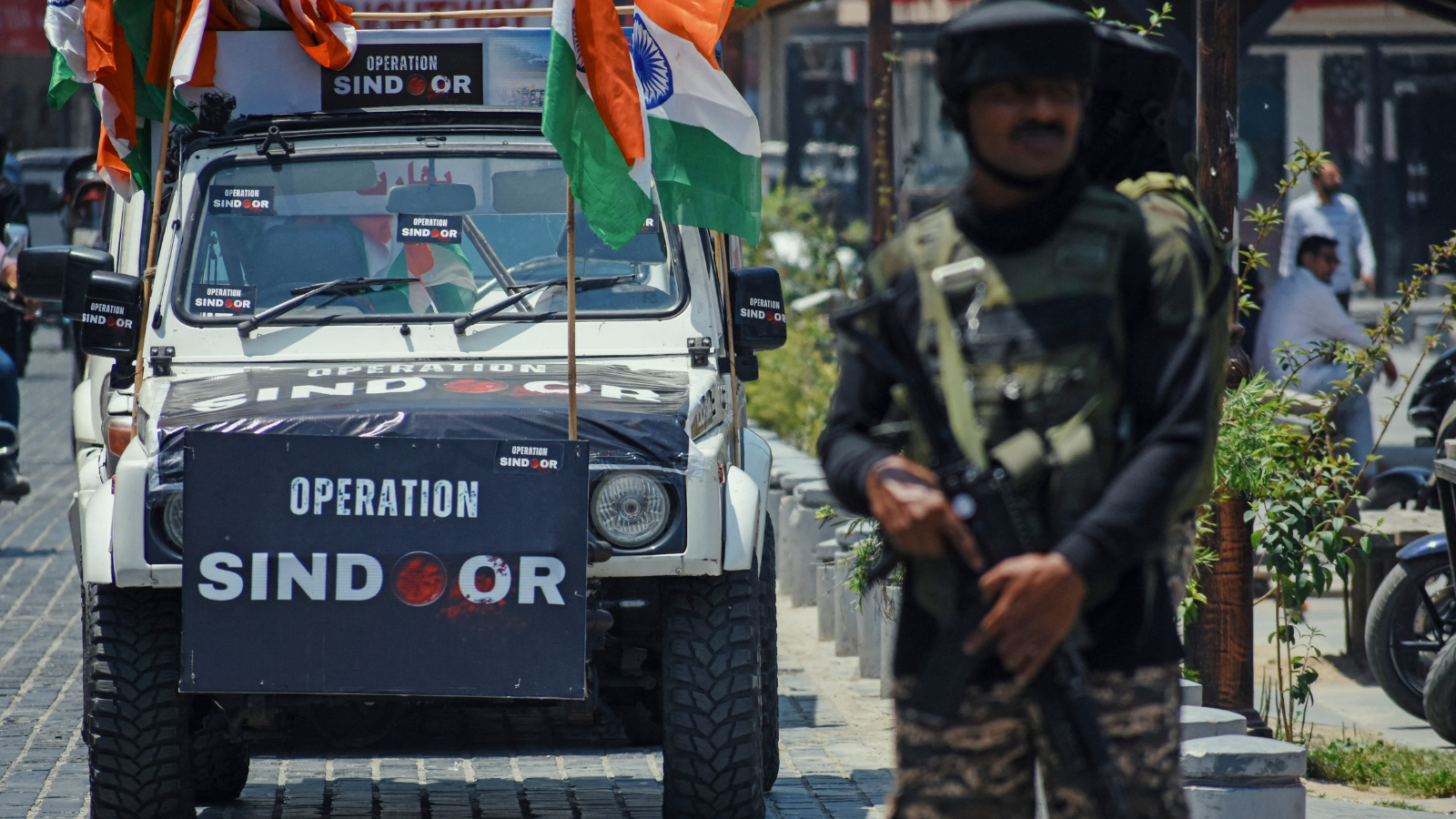
The India-Pakistan conflict that played out between May 6 and May 10, 2025, offers several military lessons. This article presents key takeaways from Operation Sindoor and breaks down how India’s preparations shaped the outcome and what more is needed to strengthen future readiness.

Dinakar Peri