

Other
Fiona Hill, Anatol Lieven, Thomas de Waal
{
  "authors": [
    "Anatol Lieven"
  ],
  "type": "other",
  "centerAffiliationAll": "dc",
  "centers": [
    "Carnegie Endowment for International Peace"
  ],
  "collections": [],
  "englishNewsletterAll": "ctw",
  "nonEnglishNewsletterAll": "",
  "primaryCenter": "Carnegie Endowment for International Peace",
  "programAffiliation": "russia",
  "programs": [
    "Russia and Eurasia"
  ],
  "projects": [],
  "regions": [
    "Central Asia"
  ],
  "topics": [
    "Security"
  ]
}
REQUIRED IMAGE
By Western standards, the business premises of Hajji Sher Agha, the Peshawar-based Afghan carpet wholesaler, would belong in the lower depths of a slum.
Source: Carnegie
By Western standards, the business premises of Hajji Sher Agha, the Peshawar-based Afghan carpet wholesaler, would belong in the lower depths of a slum. His office is a bleak concrete shack in a compound set amidst the reeking chaos of Peshawar's downtown, on the edge of the Old City. As we drove up to its gates, a youth, apparently crippled, scurried away from the heap of rubbish where he had been scavenging.
But all things are relative, and by the wretched standards of contemporary Afghanistan Sher Agha is a major business figure, with dozens of employees in Afghanistan, a turnover of tens of thousands of dollars each month, and customers in Europe and the Far East. He is a man of considerable natural authority, clearly respected by his community and supporting many Afghan refugees. He himself left Kabul for Peshawar in 1985, during the Soviet occupation. A shortish, massive figure with an enormous beard, he has something of the look of a dwarf king in a fable. Though at 42 only a year older than myself, he looks very much older. A huge photograph of Mecca hangs above his battered desk, and he is a Hajji, one who has made the pilgrimage to Mecca. For personal, religious, ethnic and business reasons, he is a strong supporter of the Taliban:
"We utterly condemn the American campaign, and have been made very miserable by it. The Americans claim that they just want to get rid of Osama bin Laden and the Taliban, but in fact they are bombing everywhere and killing completely innocent people.
In any case, we don't want the Taliban to be overthrown, because they have introduced Shariah Law, restored peace and order, and allowed business to operate. None of this was true before they took power. The Mujahidin government was very corrupt and violent, no one was safe, especially women. Whereas the Taliban have provided order and basic rights to the people of Afghanistan. Thanks to the Taliban, the people of Afghanistan, who suffered so much from war, had a period of peace. Now, thanks to America, they are suffering again, and my business has once again collapsed. No one wants to buy, and in any case it is too dangerous to move shipments by road. So how can I pay my employees? How will they feed their families this winter?
Under the previous regime, if I sent a shipment by car from Kabul to Peshawar, I would have to pay up to 100 million Aghanis (about $20,000) to all the so-called authorities along the route. It was impossible to do business profitably. Since the Taliban came in, we have only had to pay one flat tax of less than ten per cent of that.
But even worse was the physical insecurity. People and especially Pashtuns were continually being kidnapped, held to ransom, tortured, raped, murdered and the forces which did this are in the Northern Alliance, which America now wants to help conquer Afghanistan.
[His nephew, Shafikullah, claimed to have been arrested twice, tortured, and held to ransom, once by the Tajik militia of Ahmedshah Masoud, once by the Uzbeks of General Dostam. In both cases, he claimed, the reason was his Pashtun nationality. On the second occasion, he also claimed to have been an eyewitness of a massacre of ethnic Pashtuns by the Uzbek forces in Mazar-e-Sharif].
For this reason, Pashtuns will support the Taliban, because they don't want to see the Northern Alliance again in power and suffer their cruelty. When they were in power they put their feet on the heads of the Pashtuns. We will never allow this again. The Taliban have created order, so that members of every ethnic group in Afghanistan can go about their business in peace.
One thing should now be clear: the Taliban are nobody's puppets. Before, people blamed the Taliban for not being good Afghans, because they were supposedly supported by Pakistan and America. But now, everyone sees that the Taliban are true Muslims and true Afghans.
We will also never accept the return of Zahir Shah, the so-called King. His was a completely irreligious, corrupt family and regime. They paved the way for the Communists and then for the Russian invasion. They were against Islam and denied the people of Afghanistan their most basic rights."
Former Senior Associate
Recent Work

Fiona Hill, Anatol Lieven, Thomas de Waal
Carnegie India does not take institutional positions on public policy issues; the views represented herein are those of the author(s) and do not necessarily reflect the views of Carnegie, its staff, or its trustees.

In any defense establishment, change is an ongoing process. However, despite the best of intentions, existing bureaucracies, bound by habit and years of socialization, have their limits in implementing transformative change.

Anit Mukherjee

After the chill in ties between 2020 and 2024 that brought India–China relations to their lowest point in several decades, the two countries have engaged each other afresh. This paper argues that there are predominantly four imperatives guiding India’s approach to China, and they exist in an order of priority.

Saheb Singh Chadha

This piece argues that the present Indian strategy, based on opportunistic diversification and utilization of limited strategic reserves, remains inadequate when confronting supply disruptions. It evaluates India’s options in the short, medium, and long terms.

Vrinda Sahai

This piece examines India’s response to U.S. sanctions and tariffs, specifically assessing the immediate market consequences, such as alterations in import costs, and the broader strategic implications for India’s energy security and foreign policy orientation.
Vrinda Sahai
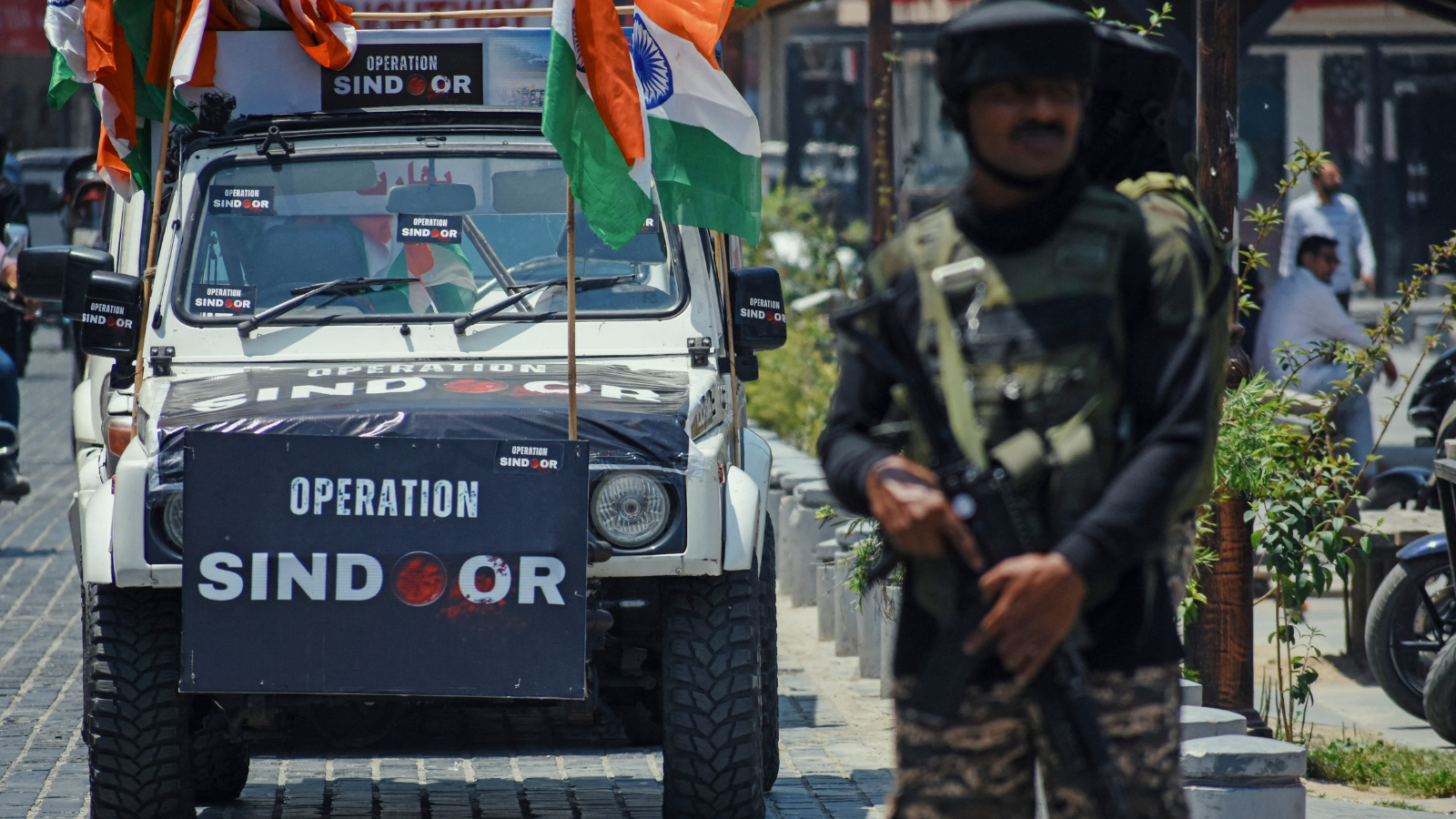
The India-Pakistan conflict that played out between May 6 and May 10, 2025, offers several military lessons. This article presents key takeaways from Operation Sindoor and breaks down how India’s preparations shaped the outcome and what more is needed to strengthen future readiness.

Dinakar Peri