• Research
  • About
  • Experts
Carnegie India logoCarnegie lettermark logo
AI
{
  "authors": [
    "Minxin Pei",
    "Michael D. Swaine"
  ],
  "type": "other",
  "centerAffiliationAll": "dc",
  "centers": [
    "Carnegie Endowment for International Peace"
  ],
  "collections": [],
  "englishNewsletterAll": "asia",
  "nonEnglishNewsletterAll": "",
  "primaryCenter": "Carnegie Endowment for International Peace",
  "programAffiliation": "AP",
  "programs": [
    "Asia"
  ],
  "projects": [],
  "regions": [
    "United States",
    "China"
  ],
  "topics": [
    "Democracy",
    "Economy",
    "Trade",
    "Military",
    "Foreign Policy",
    "Nuclear Policy"
  ]
}
REQUIRED IMAGE

REQUIRED IMAGE

Other

Rebalancing United States-China Relations

Link Copied
By Minxin Pei and Michael D. Swaine
Published on Feb 12, 2002

Source: Carnegie

Summary

President George W. Bush's visit to China this month is an opportunity to do far more than make rhetorical commitments to a constructive U.S.-China relationship. The post-9/11 context, China's accession to the WTO, and Beijing's impending leadership change converge to make important improvements possible. Policy adjustments on key security issues and a new attitude toward Chinese political reform would lay the basis for a balanced, long-term China policy that could command broad political support in the United States.

Direct U.S. presidential leadership is especially crucial for managing the four core security issues: Taiwan, missile defense, non-proliferation, and counter-terrorism. Washington should reaffirm its "one China" policy, clarify its intent on missile defense, and press China to fulfill its obligations to non-proliferation agreements.

A forward-looking strategy also demands that the United States abandon its ambivalence toward the support of Chinese political reform. It should, instead, provide leadership to promote democratic institutions and the rule of law in China.

Click on the link above for the full text of this Policy Brief.

A limited number of print copies are also available.
Request a copy

About the Authors
Michael Swaine
is senior associate and codirector of the China Program. He specializes in Chinese security and foreign policy, U.S.-China relations, and East Asian international relations. Previously he served as research director of the Center for Asia-Pacific Policy at the RAND Corporation.

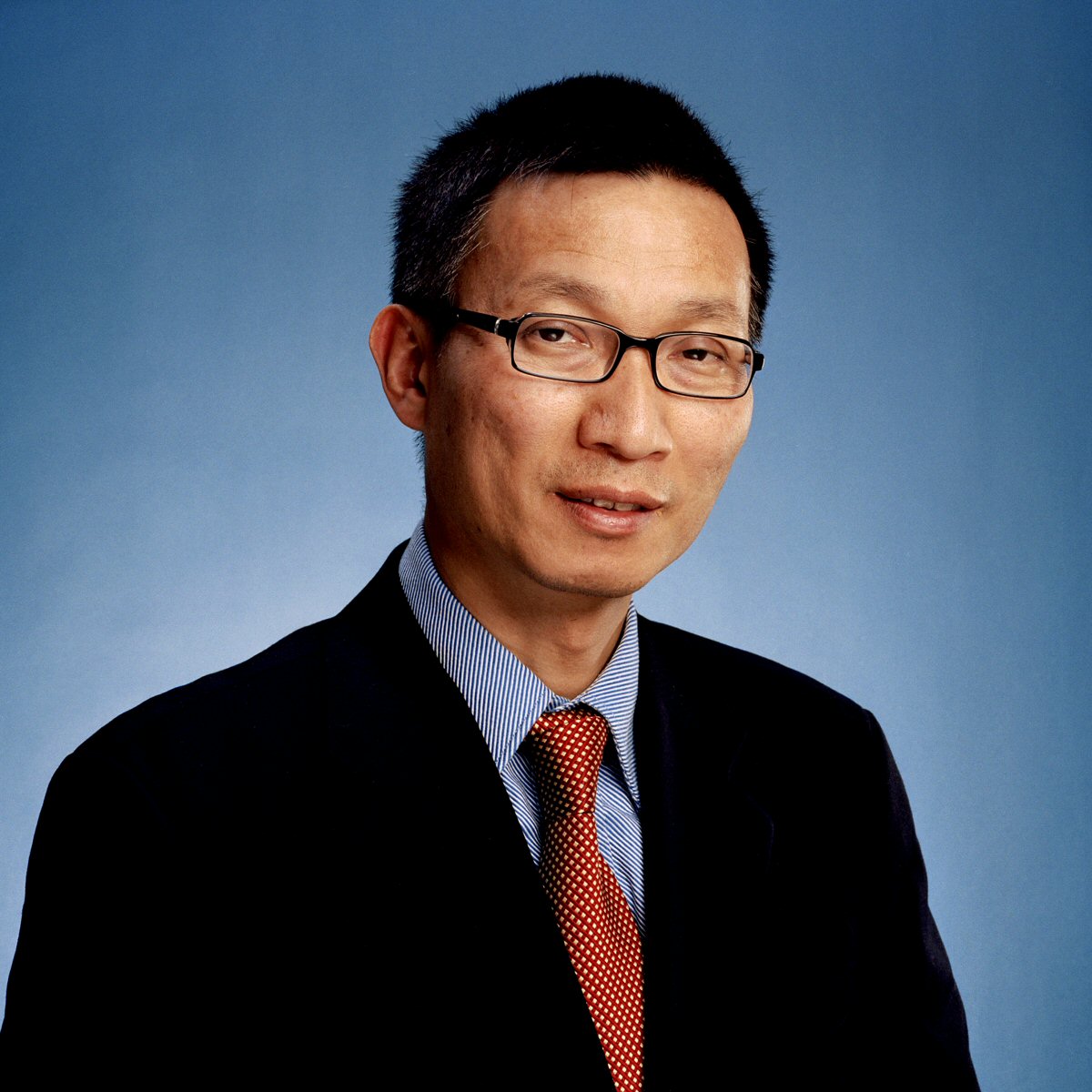
Minxin Pei, senior associate and codirector of the China Program, conducts research in Chinese politics, economic reform, East Asian politics, U.S. relations with East Asian countries, and democratization in developing countries. Before joining the Carnegie Endowment, he was a faculty member of the politics department at Princeton University. He is the author of Future Shock: The WTO and Political Change in China (Carnegie Endowment Policy Brief No. 3).

The Endowment's new China Program was launched in October 2001. Its research on political economy, security studies, and rule of law will be conducted through partnerships with Beijing's Central Party School and the Shanghai Academy of Social Sciences.

About the Authors

Minxin Pei

Former Adjunct Senior Associate, Asia Program

Pei is Tom and Margot Pritzker ‘72 Professor of Government and the director of the Keck Center for International and Strategic Studies at Claremont McKenna College.

Michael D. Swaine

Former Senior Fellow, Asia Program

Swaine was a senior fellow at the Carnegie Endowment for International Peace and one of the most prominent American analysts in Chinese security studies.

Authors

Minxin Pei
Former Adjunct Senior Associate, Asia Program
Minxin Pei
Michael D. Swaine
Former Senior Fellow, Asia Program
Michael D. Swaine
DemocracyEconomyTradeMilitaryForeign PolicyNuclear PolicyUnited StatesChina

Carnegie India does not take institutional positions on public policy issues; the views represented herein are those of the author(s) and do not necessarily reflect the views of Carnegie, its staff, or its trustees.

More Work from Carnegie India

  • Article
    What Could a Reciprocal Defense Procurement Agreement Do for U.S.-India Ties?

    India and the United States are close to concluding a Reciprocal Defense Procurement Agreement (RDPA) that will allow firms from the two countries to sell to each other’s defense establishments more easily. While this may not remedy the specific grievances both sides may have regarding larger bilateral issues, an RDPA could restore some momentum, following the trade deal announcement.

      Konark Bhandari

  • Commentary
    India Signs the Pax Silica—A Counter to Pax Sinica?

    On the last day of the India AI Impact Summit, India signed Pax Silica, a U.S.-led declaration seemingly focused on semiconductors. While India’s accession to the same was not entirely unforeseen, becoming a signatory nation this quickly was not on the cards either.

      Konark Bhandari

  • Commentary
    The Impact of U.S. Sanctions and Tariffs on India’s Russian Oil Imports

    This piece examines India’s response to U.S. sanctions and tariffs, specifically assessing the immediate market consequences, such as alterations in import costs, and the broader strategic implications for India’s energy security and foreign policy orientation.

      Vrinda Sahai

  • Article
    Military Lessons from Operation Sindoor

    The India-Pakistan conflict that played out between May 6 and May 10, 2025, offers several military lessons. This article presents key takeaways from Operation Sindoor and breaks down how India’s preparations shaped the outcome and what more is needed to strengthen future readiness.

      Dinakar Peri

  • Paper
    India-China Economic Ties: Determinants and Possibilities

    This paper examines the evolution of India-China economic ties from 2005 to 2025. It explores the impact of global events, bilateral political ties, and domestic policies on distinct spheres of the economic relationship.

      Santosh Pai

Get more news and analysis from
Carnegie India
Carnegie India logo, white
Unit C-4, 5, 6, EdenparkShaheed Jeet Singh MargNew Delhi – 110016, IndiaPhone: 011-40078687
  • Research
  • About
  • Experts
  • Projects
  • Events
  • Contact
  • Careers
  • Privacy
  • For Media
Get more news and analysis from
Carnegie India
© 2026 Carnegie Endowment for International Peace. All rights reserved.