

Article
Леонид Гозман, Michael McFaul
{
  "authors": [
    "Michael McFaul"
  ],
  "type": "legacyinthemedia",
  "centerAffiliationAll": "dc",
  "centers": [
    "Carnegie Endowment for International Peace"
  ],
  "collections": [],
  "englishNewsletterAll": "ctw",
  "nonEnglishNewsletterAll": "",
  "primaryCenter": "Carnegie Endowment for International Peace",
  "programAffiliation": "russia",
  "programs": [
    "Russia and Eurasia"
  ],
  "projects": [],
  "regions": [],
  "topics": [
    "Security"
  ]
}
REQUIRED IMAGE
Source: Carnegie
Originally published in the Washington Post, February 5, 2001
The United States is at war. President Bush therefore has correctly asked for Congress to approve additional resources to fight this war. The new sums requested -- $48 billion for next year alone -- are appropriately large. Bush and his administration have astutely defined this new campaign as a battle for civilization itself, and have wisely cautioned that the battle lines will be multifaceted and untraditional.
So why are the new supplemental funds earmarked to fight this new war largely conventional and single-faceted -- i.e., money for the armed forces? Without question, the Department of Defense needs and deserves new resources to conduct the next phase of the war on terrorism. The Department of Defense may even need $48 billion for next year.
What is disturbing about President Bush's new budget, though, is how little creative attention or new resources have been devoted to the other means for winning the war on terrorism. The Bush budget is building greater American capacity to destroy bad states, but it adds hardly any new capacity to construct new good states.
We should have learned the importance of following state destruction with state construction, since the 20th century offers up both positive and negative lessons. Many have commented that our current war is new and unprecedented, but it is not. Throughout the 20th century, the central purpose of American power was to defend against and, when possible, destroy tyranny.
American presidents have been at their best when they have embraced the mission of defending liberty at home and spreading liberty abroad. This was the task during World War II. This was the objective (or should have been the mission) during the Cold War. It must be our mission again.
The process of defeating the enemies of liberty is twofold: Crush their regimes or the regimes that harbor them and then build new democratic, pro-Western regimes in the vacuum.
In the first half of the last century, imperial Japan and fascist Germany constituted the greatest threats to American national security. The destruction of these dictatorships, followed by the imposition of democratic regimes in Germany and Japan, helped make these two countries American allies.
In the second half of the last century, Soviet communism and its supporters represented the greatest threat to American national security. The collapse of Communist autocracies in Eastern Europe and then the Soviet Union greatly improved American national security. The emergence of democracies in east Central Europe a decade ago and the fall of dictators in southeast Europe more recently have radically improved the European security climate, and therefore U.S. national security interests. Democratic consolidation in Russia, still an unfinished project, is the best antidote to a return of U.S.-Russian rivalry.
The Cold War, however, also offers sad lessons of what can happen when the United States carries out state destruction of anti-Western, autocratic regimes without following through with state construction of pro-Western, democratic regimes. President Reagan rightly understood that the United States had an interest in overthrowing Communist regimes around the world. The Reagan doctrine channeled major resources to this aim and achieved some successes, including most notably in Afghanistan. State construction there, however, did not follow state destruction. The consequences were tragic for American national security.
So why is the Bush administration not devoting greater capacity for state construction in parallel to increasing resources for state destruction? Bush's pledge of $297 million for Afghanistan for next year is commendable, but this one-time earmark does not constitute a serious, comprehensive strategy for state construction in Afghanistan or the rest of the despotic world that currently threatens the United States.
On the contrary, in the same year that the Department of Defense is receiving an extra $48 billion, many U.S. aid agencies will suffer budget cuts. Moreover, the experience of the past decade of assistance in the post-Communist world shows that aid works best in democratic regimes. Yet budgets for democracy assistance in South Asia and the Middle East are still minuscule. Strikingly, the theme of democracy promotion was absent in President Bush's otherwise brilliant State of the Union speech.
It is absolutely vital that the new regime in Afghanistan succeed. Afghanistan is our new West Germany. The new regime there must stand as a positive example to the rest of the region of how rejection of tyranny and alliance with the West can translate into democratic governance and economic growth. And the United States must demonstrate to the rest of the Muslim world that we take state construction -- democratic construction -- as seriously as we do state destruction. Beyond Afghanistan, the Bush administration must develop additional, non-military tools for fighting the new war. To succeed, the United States will need its full arsenal of political, diplomatic, economic and military weapons. Bush's statements suggest that he understands this imperative. Bush's budget, however, suggests a divide between rhetoric and policy.

Former Senior Associate
In addition to his role at Carnegie, McFaul is Peter and Helen Bing Senior Fellow at the Hoover Institution and associate professor of political science at Stanford University.
Recent Work
Леонид Гозман, Michael McFaul
Michael McFaul, Sanja Tatic
Carnegie India does not take institutional positions on public policy issues; the views represented herein are those of the author(s) and do not necessarily reflect the views of Carnegie, its staff, or its trustees.

This piece argues that the present Indian strategy, based on opportunistic diversification and utilization of limited strategic reserves, remains inadequate when confronting supply disruptions. It evaluates India’s options in the short, medium, and long terms.

Vrinda Sahai

This piece examines India’s response to U.S. sanctions and tariffs, specifically assessing the immediate market consequences, such as alterations in import costs, and the broader strategic implications for India’s energy security and foreign policy orientation.
Vrinda Sahai
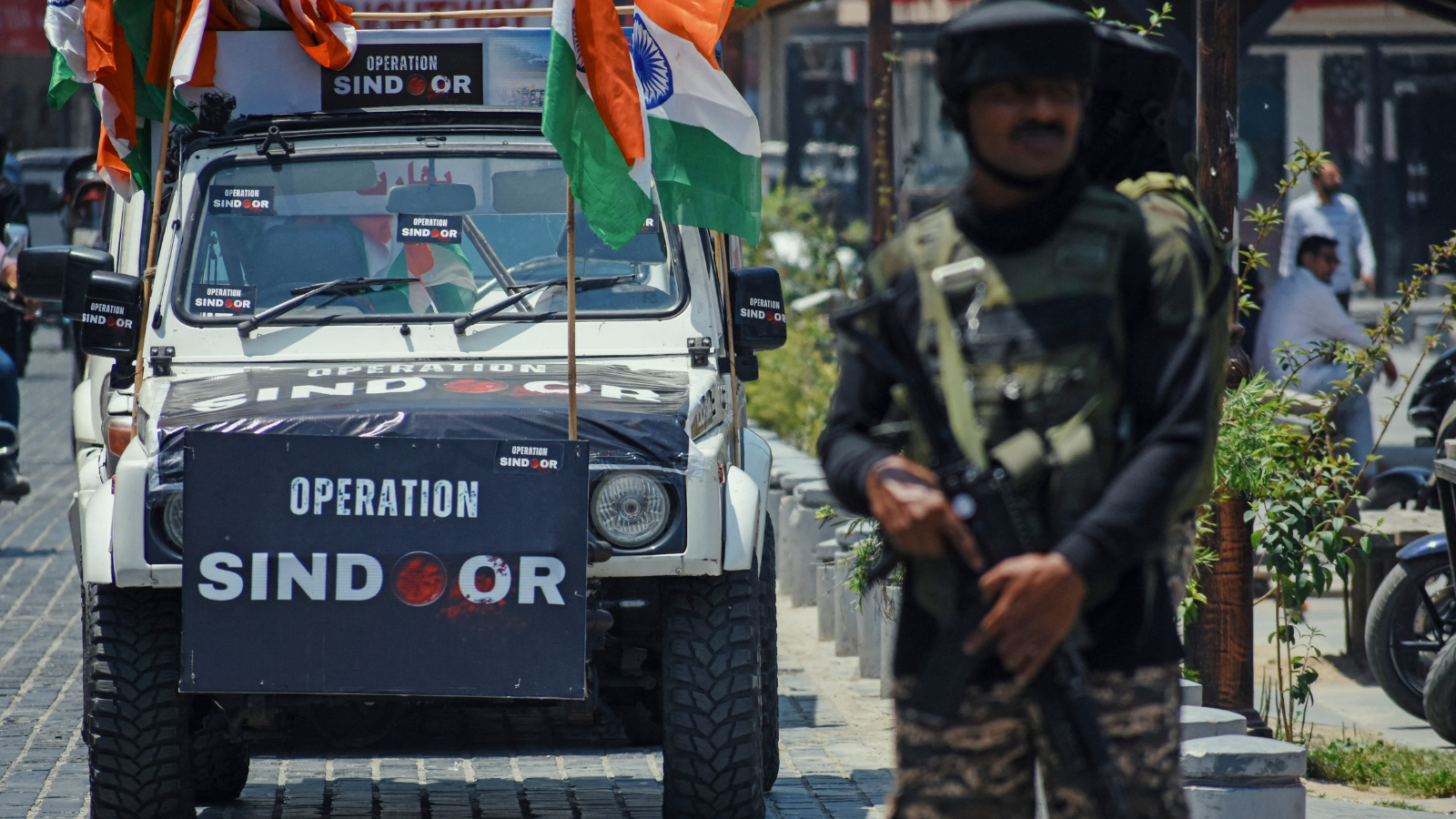
The India-Pakistan conflict that played out between May 6 and May 10, 2025, offers several military lessons. This article presents key takeaways from Operation Sindoor and breaks down how India’s preparations shaped the outcome and what more is needed to strengthen future readiness.

Dinakar Peri
This book offers a comprehensive analysis of India's evolving relationship with sovereignty in a complex global order. Moving beyond conventional narratives, it examines how the sovereignty principle shapes India's behavior across four critical domains—from traditional military power to contemporary data governance.

Rudra Chaudhuri, Nabarun Roy

This article examines the scale and impact of Chinese IUU fishing operations globally and identifies the nature of the challenge posed by IUU fishing in the Indian Ocean Region (IOR). It also investigates why existing maritime law and international frameworks have struggled to address this growing threat.


Ajay Kumar, Charukeshi Bhatt