

In The Media
Michele Dunne, Robert Kagan
{
  "authors": [
    "Robert Kagan"
  ],
  "type": "legacyinthemedia",
  "centerAffiliationAll": "",
  "centers": [
    "Carnegie Endowment for International Peace"
  ],
  "collections": [],
  "englishNewsletterAll": "",
  "nonEnglishNewsletterAll": "",
  "primaryCenter": "Carnegie Endowment for International Peace",
  "programAffiliation": "",
  "programs": [],
  "projects": [],
  "regions": [
    "United States"
  ],
  "topics": [
    "Foreign Policy"
  ]
}
REQUIRED IMAGE
Source: Carnegie
Reprinted with permission from the International Herald Tribune, Monday, May 27, 2002
WASHINGTON: The Bush administration is making a noble effort to pull together the fraying alliance, but Europeans and Americans no longer share a common view of the world. On the all-important question of power - the utility of power, the morality of power - they have parted ways.
Europeans believe they are moving beyond power into a self-contained world of laws and rules and transnational negotiation and cooperation. Europe itself has entered a post-historical paradise, the realization of Immanuel Kant's "perpetual peace."
The United States remains mired in history, exercising power in the anarchic Hobbesian world where international rules are unreliable and where security and the promotion of a liberal order still depend on the possession and use of military might.
Europe's relative weakness has produced an aversion to force as a tool of international relations. Europeans today, like Americans 200 years ago, seek a world where strength doesn't matter so much, where unilateral action by powerful nations is forbidden, where all nations regardless of their strength are protected by commonly agreed rules of behavior.
Europe's relatively pacific strategic culture is also the product of its warlike past. The European Union is a monument to rejection of the old power politics. Who knows the dangers of Machtpolitik better than a French or German citizen?
As the British diplomat Robert Cooper recently noted, Europe today lives in a "postmodern system" that does not rest on a balance of power but on "rejection of force" and on "self-enforced rules of behavior." Raison d'état has been "replaced by a moral consciousness."
Now Europeans have become evangelists for their "postmodern" gospel of international relations. The application of the European miracle to the rest of the world has become Europe's new mission civilisatrice.
This has put Europeans and Americans on a collision course. Americans have not lived the European miracle. They have no experience of promoting ideals and order successfully without power. Their memory of the past 50 years is of a Cold War strug-gle that was eventually won by strength and determination, not by the spontaneous triumph of "moral consciousness."
The irony is that this trans-Atlantic disagreement is the fruit of successful trans-Atlantic policies. As Joschka Fischer and other Europeans admit, the United States made the new Europe possible by leading the democracies to victory in World War II and the Cold War and by providing the solution to the age-old "German problem."
Even today, Europe's rejection of power politics ultimately depends on America's willingness to use force around the world against those who still do believe in power politics. Europe's Kantian order depends on the United States using power according to the old Hobbesian rules.
Most Europeans don't acknowledge the great paradox: that their passage into post-history has depended on the United States not making the same passage. Instead, they have come to view the United States simply as a rogue colossus.
This is not just a family quarrel. If Americans and Europeans no longer agree on the utility and morality of power, what remains to undergird their military alliance? There is no sure cure for this trans-Atlantic divergence. Whatever else we do, let's stop pretending that we agree. That pretense has done little for the alliance since the end of the Cold War except create more confusion, misunderstanding and anger.
This comment has been excerpted from longer articles in The Washington Post and the June/July issue of Policy Review.

Former Senior Associate
Kagan, author of the recent book, The Return of History and the End of Dreams (Knopf 2008), writes a monthly column on world affairs for the Washington Post and is a contributing editor at both the Weekly Standard and the New Republic.
Recent Work

Michele Dunne, Robert Kagan
Robert Kagan, Michele Dunne
Carnegie India does not take institutional positions on public policy issues; the views represented herein are those of the author(s) and do not necessarily reflect the views of Carnegie, its staff, or its trustees.

How is AI reshaping space security, creating governance challenges, and where does international diplomacy stand today?


Tejas Bharadwaj, Almudena Azcárate Ortega
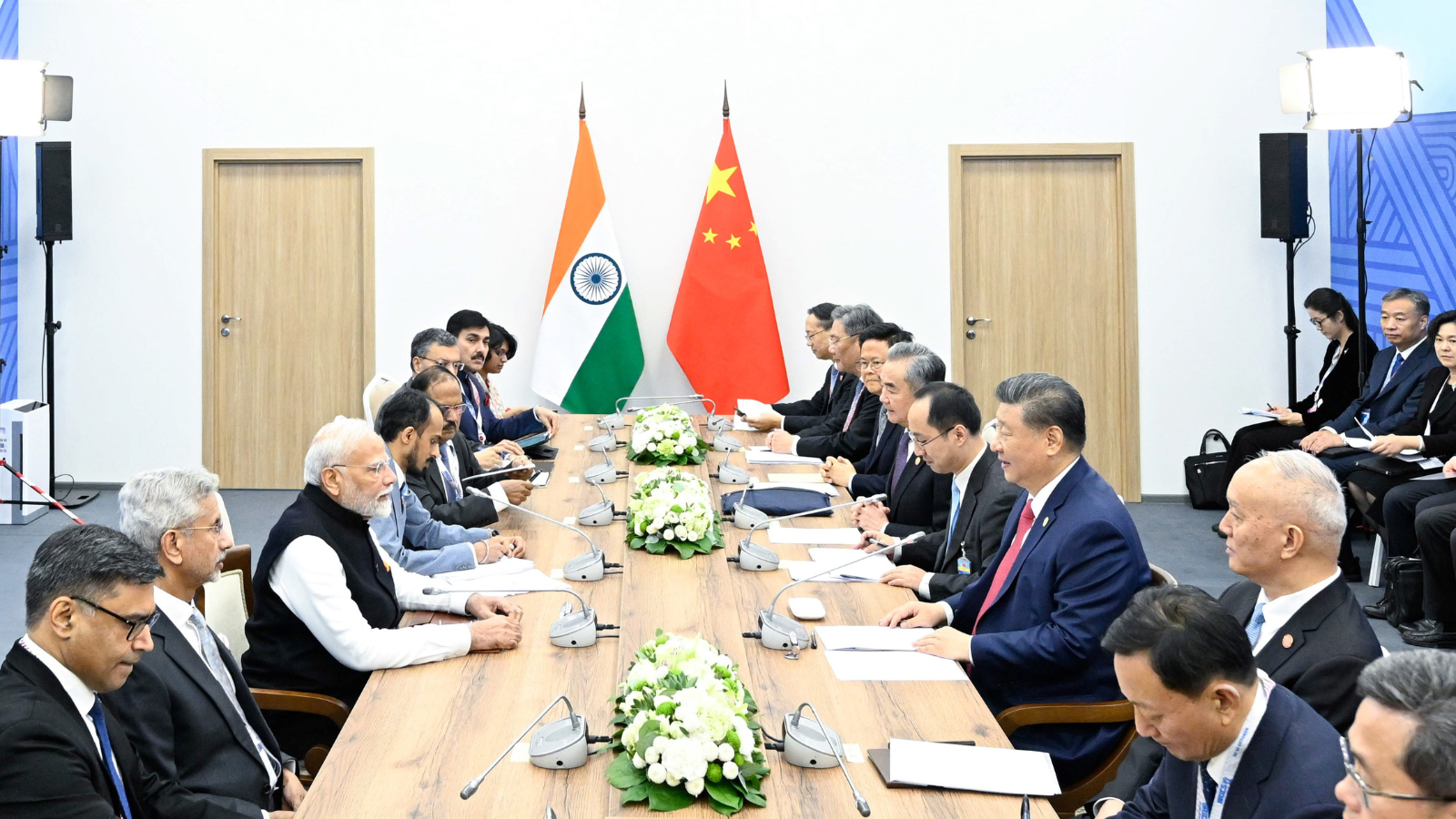
After the chill in ties between 2020 and 2024 that brought India–China relations to their lowest point in several decades, the two countries have engaged each other afresh. This paper argues that there are predominantly four imperatives guiding India’s approach to China, and they exist in an order of priority.
Saheb Singh Chadha

This piece argues that India’s central challenge is not managing a single flashpoint but resolving the underlying tension between expansion and institutional coherency of the BRICS grouping.

Vrinda Sahai

A partnership between India, a country of subcontinental size, and Africa, a continent of fifty-four countries, may seem asymmetric until one notes that both are home to nearly the same number of people—1.4 billion. This essay spells out the existing challenges to the partnership, its optimal potential, and the possible pathways to realize it over the next quarter-century.
Rajiv Bhatia
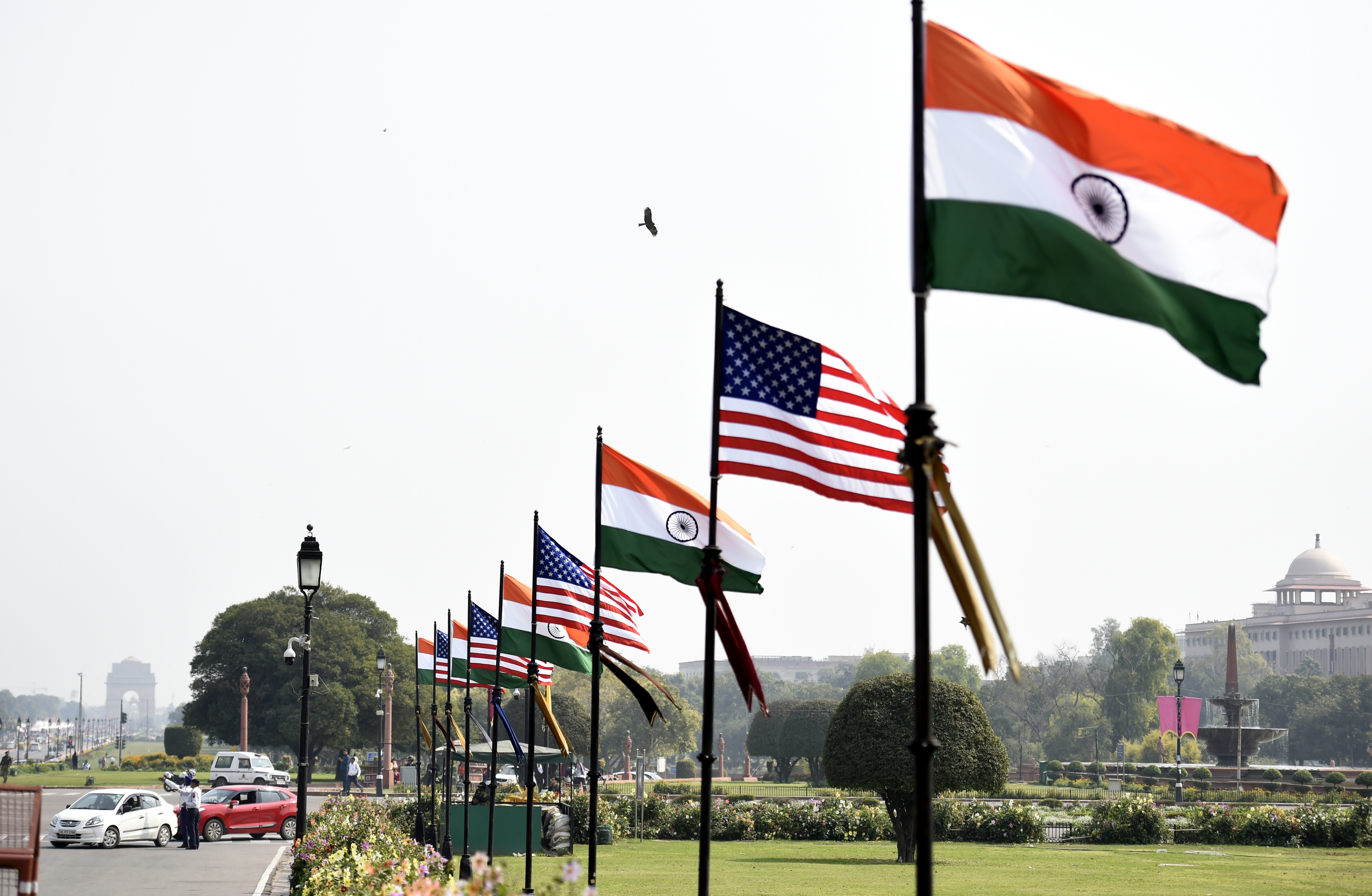
The U.S.–India semiconductor cooperation story is well-stocked with top-level strategic intent. What remains unresolved, however, are some underlying challenges that will determine whether the cooperation actually functions. Three such friction points stand out.

Shruti Mittal