

Report
Mr. Husain Haqqani, Ashley J. Tellis
{
  "authors": [
    "Husain Haqqani"
  ],
  "type": "legacyinthemedia",
  "centerAffiliationAll": "dc",
  "centers": [
    "Carnegie Endowment for International Peace"
  ],
  "collections": [],
  "englishNewsletterAll": "ctw",
  "nonEnglishNewsletterAll": "",
  "primaryCenter": "Carnegie Endowment for International Peace",
  "programAffiliation": "russia",
  "programs": [
    "Russia and Eurasia"
  ],
  "projects": [],
  "regions": [
    "South Asia",
    "Afghanistan",
    "Pakistan",
    "Central Asia"
  ],
  "topics": [
    "Security",
    "Foreign Policy"
  ]
}
REQUIRED IMAGE
Source: Carnegie
Originally appeared in the Asian Wall Street Journal, January 7, 2003
Strains in the U.S. alliance with Pakistan are beginning to show with an increase in terrorist activity along the border with Afghanistan as well as within Pakistan. Twice in the last month, U.S. troops in Afghanistan have come under attack in the border region and the attackers were thought by the U.S. military to have taken refuge in Pakistan. On one occasion, U.S. troops called in air support to bomb Pakistani territory after they came under attack by a man in the uniform of a Pakistani tribal security guard.
The U.S. military now says it reserves the right to cross from Afghanistan into Pakistan's lawless tribal regions in pursuit of fugitive Taliban or al Qaeda militants. According to the Pentagon, the Pakistani government has given U.S. forces the right of hot pursuit into its territory, although Islamabad denies striking any agreement along these lines.
Popular sentiment against the U.S. is increasing in overwhelmingly Muslim Pakistan, fueled in part by the prospect of a war with Iraq. This limits the ability of an increasingly unpopular Pakistani government to fulfill U.S. demands in the antiterrorism effort. It also forces Washington to walk a tightrope in dealing with Pakistan. The U.S. cannot pressure the Pakistani military regime to the extent of destabilizing an important ally. Nor can it ignore the many errors of omission and commission that continue to make Pakistan a flashpoint in the war against Islamic militancy and terrorism.
Extremists have been at work in Pakistan with increasing ferocity in recent weeks. The Christmas Day attack on a church in the town of Daska in northeastern Pakistan was preceded by several small-scale bombings in different parts of the country. Police in the port city of Karachi said they had arrested members of a group planning to attack U.S. diplomats, drawing praise from Washington for Pakistan's cooperation in the antiterrorism effort.
But western journalists have also reported disturbing trends. An Associated Press reporter interviewed a former Taliban official who claimed that Taliban and al Qaeda remnants were regrouping inside Pakistan and that al Qaeda even ran secret training camps there. The Pakistani government blames private individuals and groups for sheltering Taliban and al Qaeda members and says it is doing its best to track them down.
Pakistan is, in part, paying the price of its past support for the Taliban and its tolerance of Islamic militants. The government's inability to crackdown effectively against militants also stems from its lack of domestic political support. U.S. actions, such as the Immigration and Naturalization Service's decision to fingerprint and register all Pakistani visitors to the U.S. and the obtrusive presence of Federal Bureau of Investigation agents in Pakistani cities, is adding to frustration among the Pakistani people over what they see as a loss of sovereignty. As in some Middle Eastern countries, Washington's closeness with rulers lacking in legitimacy increases anti-U.S. sentiment among the general public while the rulers themselves covertly compromise with anti-U.S. elements to protect their own position.
Pakistani authorities cannot deny their role in the release of the leaders of groups that were declared terrorist organizations by the country's military strongman, Gen. Pervez Musharraf, last year. On Dec. 29, Maulana Masood Azhar, leader of Jaish-e-Muhammad (Army of Muhammad) was released from house arrest, ostensibly following a court order two weeks earlier. Jaish-e-Muhammad was one of five Islamic militant groups banned by Mr. Musharraf in January 2002, when he promised to reverse Pakistan's past policy of tolerating such groups because of their role in fighting Indian forces in disputed Kashmir. Since then, Pakistan's expectation of U.S. mediation in its dispute with India has not been fulfilled and continuing tensions along the border with India have strengthened the hand of those opposed to a crackdown on the militants.
Azhar was reluctantly put under house arrest after much pressure from the U.S., on account of his public advocacy of suicide bombings and his statement accepting responsibility for the Oct. 1, 2001 attack on the legislative assembly building in Srinagar, the capital of Indian-controlled Kashmir. Azhar's deputy, Omar Saeed Shaikh, masterminded the kidnapping and murder of Wall Street Journal reporter Daniel Pearl. Shaikh may have been influenced by the avowedly anti-Semitic teachings of Azhar, whose many books include an anti-Semitic tome, "The 40 afflictions of Jews."
The court ordering Azhar's release said the government had failed to make the case for his continued detention under the Public Safety Law, causing some to question whether the government really wanted to keep him detained. Hafiz Muhammad Saeed who heads the Lashkar-e-Tayyaba (Army of the Pure), another banned militant organization was ordered released by the High Court on similar grounds a few days earlier. In the last week of December, a Pakistani court also prohibited the extradition of three al Qaeda suspects to the U.S., even before an extradition request was actually filed.
The judicial orders in favor of Azhar, Saeed and other alleged terrorists raise questions about Mr. Musharraf's commitment to the war against terrorism because, if it wants to keep someone in prison, the Pakistani government usually has little difficulty finding some way to do so. For example, Asif Ali Zardari, husband of exiled opposition leader Benazir Bhutto has obtained bail from various courts 17 times only to face continued imprisonment on a new charge. He has been in prison, pending trial for allegations of corruption, for six years. Gen. Musharraf had shown little regard for juridical niceties since he took power in a coup d'etat in Oct. 1999, suspended the constitution and purged the superior courts under his Provisional Constitution Order. Had he wanted to do so, Gen. Musharraf could have shown similar "resolve" against the leaders of terrorist organizations that he has already banned.
Pakistan is a strategically important country facing tremendous difficulties, compounded by the ambition of its security services to retain their supremacy in running the country. The U.S. has dealt with Pakistan cautiously, in view of its nuclear-weapons capability, its traditional friendship with Washington and its declared support in the war against terrorism. But the situation in Pakistan is tenuous and the U.S. policy of depending exclusively on its military regime for a change in the country's overall direction has not worked.
Washington must now look at ways of securing cooperation from other elements of Pakistani society, many of who are themselves angry with the country's unending cycle of violence. Washington should also start holding Pakistan's rulers accountable. While thanking Islamabad for the cooperation that it has so far given, the lapses of its security services should be fully monitored. And the military regime should not be given the legitimacy it craves by accepting the recent parliamentary elections as marking a real return to civilian rule.
Reprinted from The Asian Wall Street Journal © 2003 Dow Jones & Company, Inc. All rights reserved.
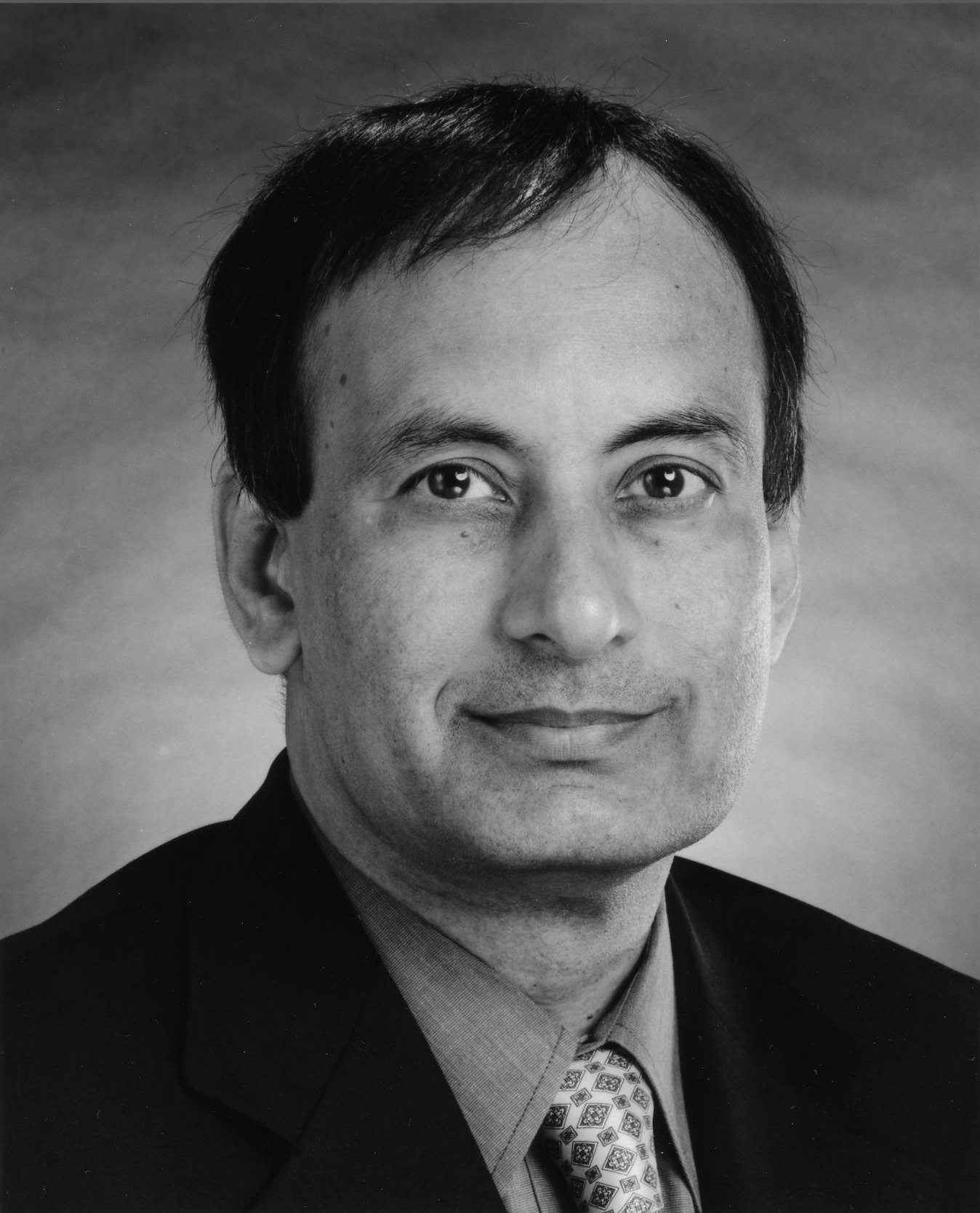
Former Visiting Scholar
Recent Work
Mr. Husain Haqqani, Ashley J. Tellis
Mr. Husain Haqqani
Carnegie India does not take institutional positions on public policy issues; the views represented herein are those of the author(s) and do not necessarily reflect the views of Carnegie, its staff, or its trustees.

In any defense establishment, change is an ongoing process. However, despite the best of intentions, existing bureaucracies, bound by habit and years of socialization, have their limits in implementing transformative change.

Anit Mukherjee

After the chill in ties between 2020 and 2024 that brought India–China relations to their lowest point in several decades, the two countries have engaged each other afresh. This paper argues that there are predominantly four imperatives guiding India’s approach to China, and they exist in an order of priority.

Saheb Singh Chadha

This piece argues that India’s central challenge is not managing a single flashpoint but resolving the underlying tension between expansion and institutional coherency of the BRICS grouping.

Vrinda Sahai

A partnership between India, a country of subcontinental size, and Africa, a continent of fifty-four countries, may seem asymmetric until one notes that both are home to nearly the same number of people—1.4 billion. This essay spells out the existing challenges to the partnership, its optimal potential, and the possible pathways to realize it over the next quarter-century.

Rajiv Bhatia

The India–EU Free Trade Agreement (FTA) is shaping up to be one of the most consequential trade negotiations, both economically and strategically. But, what’s in the agreement, what’s missing, and what will determine its success in the years ahead
Vrinda Sahai, Nicolas Köhler-Suzuki