

Report
Mr. Husain Haqqani, Ashley J. Tellis
{
  "authors": [
    "Husain Haqqani"
  ],
  "type": "legacyinthemedia",
  "centerAffiliationAll": "dc",
  "centers": [
    "Carnegie Endowment for International Peace"
  ],
  "collections": [],
  "englishNewsletterAll": "ctw",
  "nonEnglishNewsletterAll": "",
  "primaryCenter": "Carnegie Endowment for International Peace",
  "programAffiliation": "russia",
  "programs": [
    "Russia and Eurasia"
  ],
  "projects": [],
  "regions": [
    "Pakistan"
  ],
  "topics": [
    "Political Reform",
    "Democracy",
    "Foreign Policy"
  ]
}
REQUIRED IMAGE
Source: Carnegie
Originally appeared in the Indian Express, Gulf News, and Nation (Pakistan), May 28, 2003
Pakistan’s military ruler, General Pervez Musharraf, will visit Washington and meet President George Bush on June 24. Musharraf’s visit substitutes the visit by Prime Minister Zafarulla Jamali that was scheduled for April and cancelled due to the war in Iraq.
Although Pakistanis elected a Parliament in October and Musharraf nominated a civilian PM earlier this year, no one really believes that the country has reverted to civilian rule. It is for that reason, perhaps, that the US decided to invite the General so that talks can be held with the real wielder of power instead of a stand-in.
In Washington, Musharraf can expect to be thanked for his cooperation in the war against Al Qaeda and offered a long-term commitment of economic assistance. But he is also likely to be told of the deep misgivings that analysts and policy-makers have about the long-term direction of Pakistan.
There is still apprehension that Pakistani authorities are pursuing mutually contradictory policies and that Musharraf is not willing to undertake the fundamental shift that is needed to make Pakistan a more normal country than it has been in a long time.
Two characteristics of the Pakistani State make it difficult for Pakistan to function as a democracy and as a civilian-led society. The first of these is that Pakistan has become a rent-seeking state, living off the rents of its strategic location since its involvement in US-sponsored treaties of the Cold War era.
The principal instrument of attracting foreign, mainly US, support for Pakistan has been the value of its military and intelligence apparatus. During the Cold War, the Pakistani military-intelligence machinery was of use to the West against the Soviet Union. After 9/11, Washington looks upon Musharraf’s military regime as a key ally in the global war against terrorism. The military’s status as the principal attraction for international interest, and the economic assistance that comes by way of strategic rents, vests considerable power and legitimacy in the military’s desire to control and direct the country’s politics.
Conflict with India is the military’s raison d’etre but it now sees itself as Pakistan’s only effective institution and therefore the only group worthy of running the country.
Pakistan is also a ‘‘manipulated state’’, the second characteristic that distorts its politics. This means that political actors do not always function on their own and that much that appears to be political bickering is actually the result of manipulation by the military-controlled intelligence services.
Behind-the-scenes funding of political parties, creating and breaking up political alliances and engineering defection of politicians from one party to another is often part of the Pakistani intelligence services’ agenda. Quite often, what passes off as politics is actually the military’s covert handiwork. The objective is to ensure that the political process does not acquire a life of its own and that the military’s ascendancy remains unquestioned.
The October election and subsequent domestic developments must be seen in the light of these more permanent realities of military supremacy in Pakistan. Jamali ostensibly leads a civilian government, cobbled together for him by the intelligence services.
He lacks national stature, did not lead the Pakistan Muslim League (PML-Q), also known as the king’s party, in the general elections, and is dependent on several smaller factions including defectors from Benazir Bhutto’s Pakistan People’s Party (PPP) for parliamentary support.
He and the coalition he leads have no natural constituency and the thing that binds them is the willingness to bend to the will of Pakistan’s permanent establishment. In any case, Musharraf retains the power to dismiss the PM, his Cabinet and the National Assembly and is refusing to allow Parliament to review constitutional amendments he promulgated as a package — the Legal Framework Order (LFO) — at the time of parliamentary elections.
Before holding elections, Musharraf had declared his preference for a centralised system of government. ‘‘Unless there is unity of command, unless there is one man in charge on top, it will never function,’’ he had said. Pakistan’s mainstream political parties, bar associations and leading civil society organisations have questioned Musharraf’s right to arbitrarily alter the country’s Constitution but it is the recently resurgent Islamists against whom he says he has declared war that have led the charge against the military ruler.
To keep the politicians from threatening his power, the General is likely to cut a deal with the Islamists though that could undermine his international support, which is dependent on his commitment to take on militant Islamists.
Jamali faces, in many ways, the dilemma that was faced by Muhammad Khan Junejo when he was appointed Prime Minister by General Zia-ul-Haq in 1985, after seven years of Martial Law. Like Junejo, Jamali must balance his position as the military’s creature with civilians’ aspiration for asserting greater influence over policy. Junejo found that the balancing act was not easy. In the beginning, Junejo was extremely deferential to his military benefactor, causing him to be seen as a mere puppet. The moment he started exercising his constitutional authority, or failed to ‘‘defend’’ Zia against parliamentary criticism, the General felt slighted. The weak and embattled PM finally fell afoul of Zia when he agreed to the Geneva Accords for Soviet withdrawal from Afghanistan in April 1988.
Zia dissolved Parliament and dismissed Junejo under powers he had given himself earlier. Elections to a new Parliament could be held only after Zia died in a mysterious plane crash and the new Army Chief, General Aslam Beg, opted to control the government from behind-the-scenes.
During the decade (1988-1999) that the military did not directly wield power, Pakistan was said to be run by a troika comprising the President, the Army Chief and the Prime Minister. Although General Zia’s successors as President were civilians, they wielded powers under Zia’s constitutional amendments.
These powers were used to dismiss every elected PM and to prematurely dissolve Parliament thrice, each time with the military’s involvement. After the 1997 election, Prime Minister Nawaz Sharif, whose political career had been launched by the military and the ISI, got Parliament to revoke the President’s power to dismiss the PM and dissolve Parliament. In 1999, Sharif was toppled in the military coup that brought Musharraf to power.
Jamali is likely to be extremely cautious, given the experience of Junejo and Sharif, both of whom started out as the military’s political proteges like Jamali. He knows that Junejo and Sharif found no protection against removal from office once they crossed the military’s path. The only pragmatic option for him is to enjoy the perks of office without trying to assert his views in the realm of government policy. But doing so would mean that he would not be able to raise either his own stature or that of the office that he has now been given.
The wild card in Pakistan’s domestic politics remains the Islamists. Unified under the banner of the Muttahida Majlis-e-Amal (MMA), Pakistan’s religious parties have been able to take advantage of the political vacuum created by Musharraf’s suppression of the mainstream PPP and PML.
While traditionally the Islamists have been allies of the military, they could leverage their new political strength in making demands on Musharraf, thereby limiting his ability to operate as a free agent in domestic matters. On the other hand, the Islamists could also be useful for the military as an excuse for dragging its feet in areas such as relations with India and the US. Instead of refusing to cooperate fully in clamping down on anti-India Kashmiri militants, for example, Musharraf and the military could simply argue that domestic political compulsions do not allow them a freer hand.
Whatever the outcome of the political power play inside and outside Parliament, there is no immediate prospect of the military, as an institution, relinquishing its pre-eminence in political matters.
The US can, at best, ‘‘advise’’ Musharraf to set things right, focusing on what matters to Washington (at this moment, the war against al-Qaeda) but that is unlikely to address Pakistan’s deeper-rooted malaise.
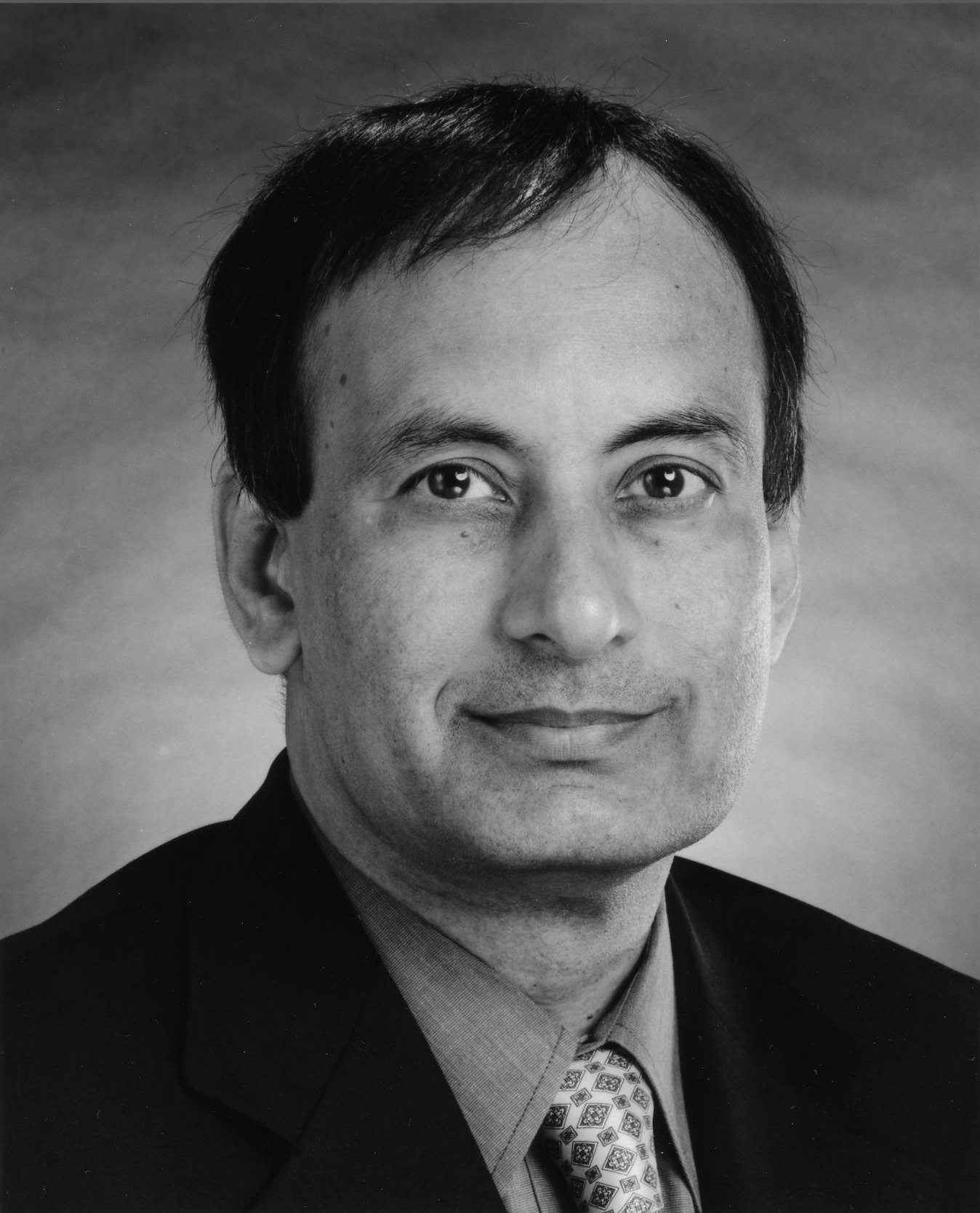
Former Visiting Scholar
Recent Work
Mr. Husain Haqqani, Ashley J. Tellis
Mr. Husain Haqqani
Carnegie India does not take institutional positions on public policy issues; the views represented herein are those of the author(s) and do not necessarily reflect the views of Carnegie, its staff, or its trustees.

After the chill in ties between 2020 and 2024 that brought India–China relations to their lowest point in several decades, the two countries have engaged each other afresh. This paper argues that there are predominantly four imperatives guiding India’s approach to China, and they exist in an order of priority.

Saheb Singh Chadha

This piece argues that India’s central challenge is not managing a single flashpoint but resolving the underlying tension between expansion and institutional coherency of the BRICS grouping.

Vrinda Sahai

A partnership between India, a country of subcontinental size, and Africa, a continent of fifty-four countries, may seem asymmetric until one notes that both are home to nearly the same number of people—1.4 billion. This essay spells out the existing challenges to the partnership, its optimal potential, and the possible pathways to realize it over the next quarter-century.

Rajiv Bhatia

The India–EU Free Trade Agreement (FTA) is shaping up to be one of the most consequential trade negotiations, both economically and strategically. But, what’s in the agreement, what’s missing, and what will determine its success in the years ahead
Vrinda Sahai, Nicolas Köhler-Suzuki

Trump 2.0 has unsettled India’s external environment—but has not overturned its foreign policy strategy, which continues to rely on diversification, hedging, and calibrated partnerships across a fractured order.



Milan Vaishnav, ed., Sameer Lalwani, Tanvi Madan, …