

Report
Mr. Husain Haqqani, Ashley J. Tellis
{
  "authors": [
    "Husain Haqqani"
  ],
  "type": "legacyinthemedia",
  "centerAffiliationAll": "dc",
  "centers": [
    "Carnegie Endowment for International Peace"
  ],
  "collections": [],
  "englishNewsletterAll": "ctw",
  "nonEnglishNewsletterAll": "",
  "primaryCenter": "Carnegie Endowment for International Peace",
  "programAffiliation": "russia",
  "programs": [
    "Russia and Eurasia"
  ],
  "projects": [],
  "regions": [
    "India",
    "Pakistan"
  ],
  "topics": [
    "Security"
  ]
}
REQUIRED IMAGE
Source: Carnegie
Originally published in the Wall Street Journal, December 29, 2003
The precariousness of the U.S. relationship with Pakistan has been exposed by two assassination attempts within 11 days on the life of Pakistan's ruler, Pervez Musharraf. On both occasions, terrorists thwarted tight security in the garrison town of Rawalpindi and got dangerously close to Gen. Musharraf's armored limousine. For certain, the U.S. has high stakes in ensuring the safety of Gen. Musharraf. But it should also secure continuity in Pakistan's alliance with even if the general falters or departs from the scene.
In the aftermath of 9/11, Pakistani support was crucial for U.S. military and intelligence operations against Afghanistan's Taliban regime. Gen. Musharraf abandoned Islamabad's previous policy of support for the Taliban, became an American ally and promised fundamental changes in Pakistan's direction. Until then, Pakistan had been a haven for militant Islamists, a holdover from its role as the staging ground for the anti-Soviet Mujahideen and a result of its pursuit of "unconventional" options in its rivalry with India.
As payback for the Musharraf U-turn, the U.S. bailed Pakistan out with economic assistance and debt rescheduling. But Gen. Musharraf's policy of supporting the U.S. has been unpopular among members of Pakistan's security services and Islamists, who have worked closely with each other for over two decades. Worryingly, the general has made little effort to mobilize domestic support for his post-9/11 pro-U.S. policy. Moreover, his domestic policies have increased the military's grip on government and led to an environment of domestic unrest -- in which America's enemies feel they can end Pakistan's cooperation with the U.S. by removing Gen. Musharraf from the scene.
Pakistan poses a challenge for U.S. policymakers because it cannot be characterized easily as friend or enemy. It acquired nuclear weapons in the 1980s despite assuring Washington that it would not do so. Recent reports emanating from the International Atomic Energy Agency suggest that Pakistan may have been the source of technology and materials for the nuclear weapons programs of North Korea and Iran. Pakistani officials say that the Pakistani government is not involved in nuclear weapons proliferation but they are investigating reports that individual scientists sold nuclear technology to others, including Pyongyang and Tehran, for personal financial gain. This official account of "private" leaks of WMD technology make Pakistan seem irresponsible and not in control of its deadly technology -- and therefore worthy of greater international scrutiny and concern.
It is relatively easier for the U.S. to deal with rogue states like Libya, Syria or Iran, which can be subjected to sanctions or threatened with military action. Pakistan under Gen. Musharraf has become more like Saudi Arabia: an ally too close to Washington for public condemnation, but one engaged in actions that intentionally or inadvertently help America's enemies. The focus of Pakistan's hostility is India, not the U.S., and periodic cooperation with the U.S. has enabled Pakistan to get away with frequent lapses in good international citizenship. Pakistan served U.S. interests during the anti-Soviet Afghan war in the '80s; in return the U.S. did not press too hard while Pakistan built its nuclear weapons. The understanding at the time was that India was Pakistan's only international adversary and that Pakistani nukes would not directly target U.S. interests. India was known to have its own nuclear weapons capability and Pakistan was seen as seeking a regional deterrent.
So the U.S. treated Pakistan's nuclear program more as an Indian problem than an American one. But the prospect of Pakistani nuclear technology being available on the international market to America's foes makes Pakistan's nuclear weapons a direct and urgent U.S. concern. The State department says that it trusts Gen. Musharraf's assurances that there are no "transfers of WMD-related technologies or know-how going on in the present time." But the U.S. must work on worst-case scenarios involving Pakistani nuclear technology falling into the hands of enemies of the U.S., including non-state actors.
Gen. Musharraf and his close military advisers have yet to implement a comprehensive strategic shift in Pakistan's foreign and domestic policies. His approach to the multiple crises staring Pakistan in the face has been tactical. Only a day before the Christmas Day attack on his life, he concluded a deal with Islamist political parties in parliament to break a constitutional deadlock that has persisted since legislative elections in October 2002. Gen. Musharraf agreed to step down as army chief at the end of 2004, in return for the Islamists' cooperation in approving arbitrary constitutional amendments introduced by him. The fact that he opted for a deal with political Islamists at a time when militant Islamists are trying to kill him, instead of befriending the secular opposition that seeks restoration of democracy, betrays his lack of overall direction.
At any given moment, Gen. Musharraf seeks only to deflect the pressure at hand, be it from foreign powers such as the U.S. or India, or from domestic sources. Seeking momentary success, he and his associates seem to ignore the need to define a strategic vision that goes beyond the traditional Pakistani paradigm. India remains The Enemy, the U.S. a necessary source of funds and weapons, and the institutional interests of the Pakistan army the core national interest. Nuclear weapons are still seen as Pakistan's ultimate defense, a military-bureaucratic state the only means of ensuring stability, and an Islamic identity the only glue binding Pakistan's citizens. Unless these basic premises are altered, and Pakistan adopts the goal of becoming a secular democracy at peace with India, Gen. Musharraf's life will remain in danger. And U.S. interests in Pakistan would not be fully secure even if the general's luck holds out.
Former Visiting Scholar
Recent Work
Mr. Husain Haqqani, Ashley J. Tellis
Mr. Husain Haqqani

On March 10, 2026, India’s Union Cabinet approved amendments to Press Note 3, a regulation that mandated government approval on all foreign direct investment (FDI) from countries sharing a land border with India. This amendment raises questions primarily about whether its stated benefits will materialize and if the risks have been adequately weighed. This piece will address the same.

Konark Bhandari
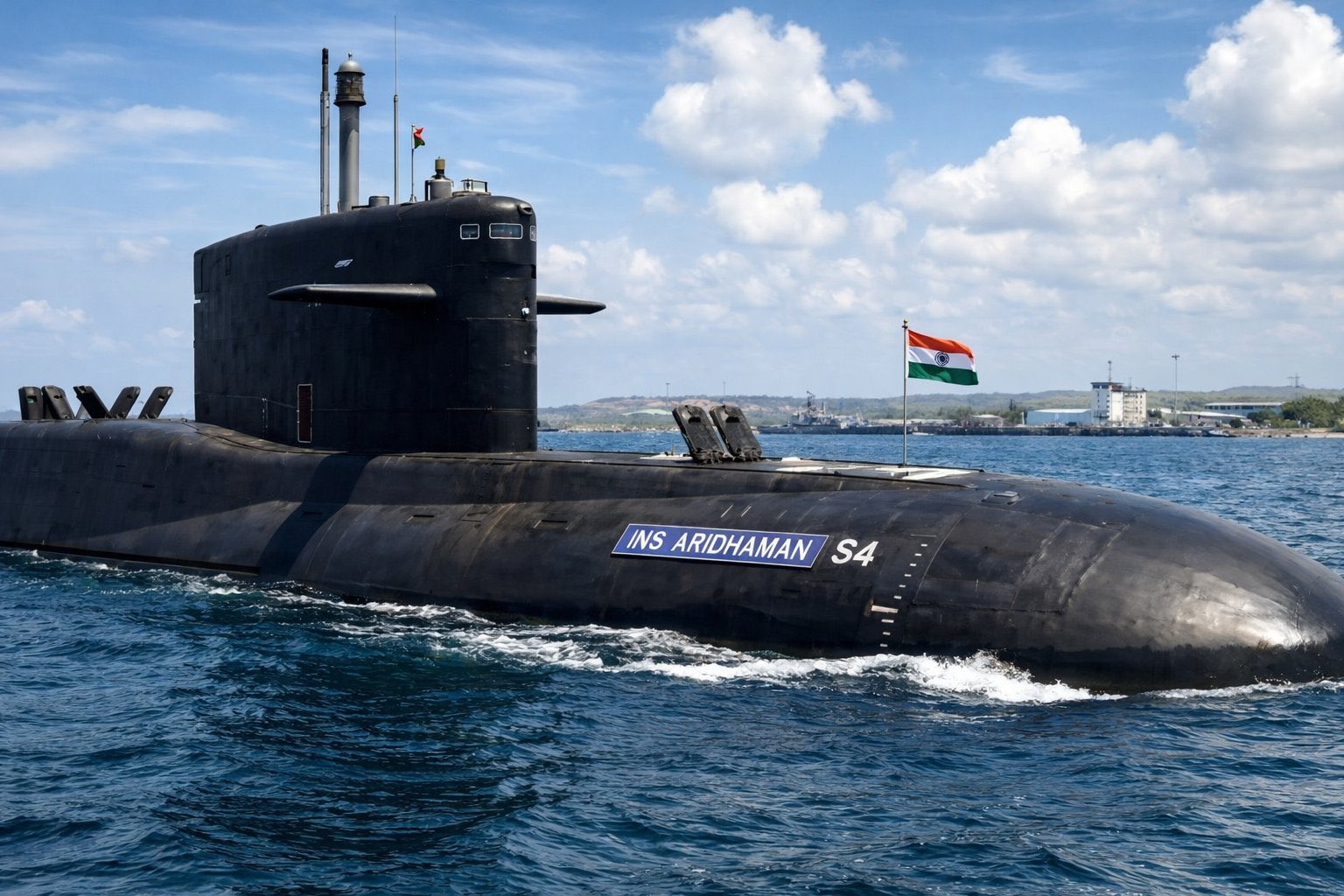
The induction of INS Aridhaman, which features several technological enhancements, now gives India the third nuclear ballistic missile submarine to ensure continuous at-sea deterrent.

Dinakar Peri

This piece argues that the present Indian strategy, based on opportunistic diversification and utilization of limited strategic reserves, remains inadequate when confronting supply disruptions. It evaluates India’s options in the short, medium, and long terms.

Vrinda Sahai
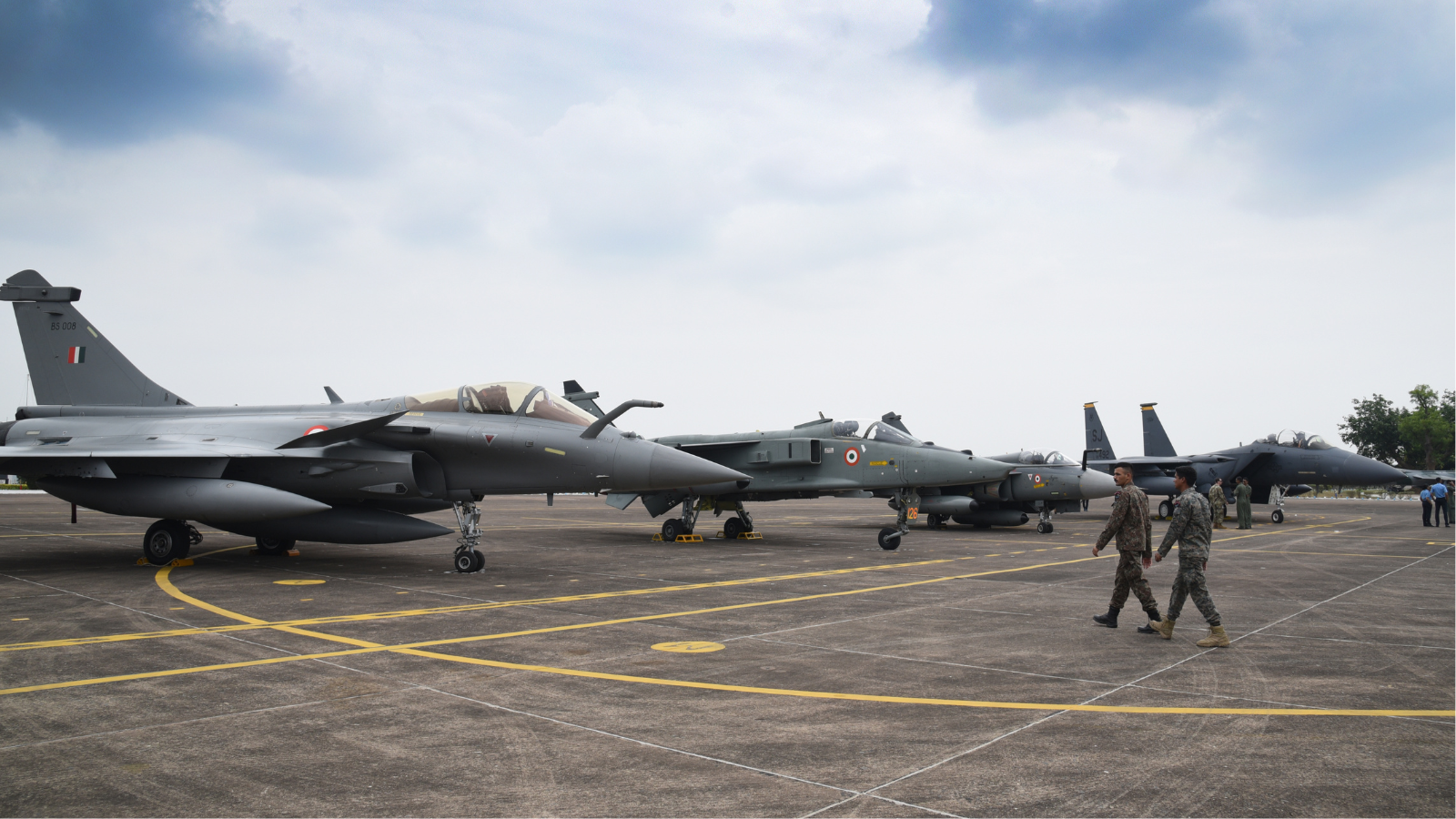
India and the United States are close to concluding a Reciprocal Defense Procurement Agreement (RDPA) that will allow firms from the two countries to sell to each other’s defense establishments more easily. While this may not remedy the specific grievances both sides may have regarding larger bilateral issues, an RDPA could restore some momentum, following the trade deal announcement.
Konark Bhandari

On the last day of the India AI Impact Summit, India signed Pax Silica, a U.S.-led declaration seemingly focused on semiconductors. While India’s accession to the same was not entirely unforeseen, becoming a signatory nation this quickly was not on the cards either.
Konark Bhandari