

In The Media
Lilia Shevtsova
{
  "authors": [
    "Lilia Shevtsova"
  ],
  "type": "legacyinthemedia",
  "centerAffiliationAll": "",
  "centers": [
    "Carnegie Endowment for International Peace",
    "Carnegie Russia Eurasia Center"
  ],
  "collections": [],
  "englishNewsletterAll": "",
  "nonEnglishNewsletterAll": "",
  "primaryCenter": "Carnegie Russia Eurasia Center",
  "programAffiliation": "",
  "programs": [],
  "projects": [],
  "regions": [
    "Caucasus",
    "Russia",
    "Ukraine"
  ],
  "topics": [
    "Political Reform",
    "Democracy",
    "Foreign Policy"
  ]
}
REQUIRED IMAGE
Ukraine poses a challenge for the West, for Russia and for the entire post-Soviet zone. Depending on events, a group of transitional societies - Russia among them - will either be pushed toward new transformations or will try to seal themselves up in their current condition. So, what are the challenges?
Source: The International Herald Tribune
Ukraine poses a challenge for the West, for Russia and for the entire post-Soviet zone. Depending on events, a group of transitional societies - Russia among them - will either be pushed toward new transformations or will try to seal themselves up in their current condition. So, what are the challenges?
The events in Ukraine represent a revolution of a new type. The previous revolutionary wave in south, central and east Europe, and in the Soviet Union in 1991, were revolutions against totalitarianism. The events in Ukraine are a revolution against imitation democracy. It is a protest against a collusion of yesterday's Soviet apparatchiks and crony capitalism.
Georgia was first to demonstrate the weakness of such a regime, but the Georgian revolution was perceived as a local phenomenon. Ukraine suggests a trend. I don't contend that all post-Soviet states will soon follow the Ukrainian example, but the fact that they all have problems maintaining stable authoritarian systems is obvious.
Ukraine demonstrates that for post-Soviet regimes, the moment of truth comes with a change of leader. Russia resolved the problem after Boris Yeltsin by naming his successor and strictly controlling the election. But Ukraine rejected the Russian way. Sooner or later other post-Soviet states may find themselves with the same choice: either real democracy or undisguised totalitarianism. The moment may be closer than they think.
It would be naïve to idealize Viktor Yushchenko. He and the elite that supports him are part of the Ukrainian ruling class responsible for the corrupt capitalism. But the interests of democratic legitimacy, the participation of Europe in the crisis and the longing to be free of Moscow could compel Yushchenko and his team to create new rules.
All successful democratic revolutions are the result of a compromise between anti-establishment forces and the part of the ruling class that realizes that holding out does not guarantee their survival.
Everything that is happening in Ukraine - the independence of the judiciary, the transparency of the political process, the liberated press, the neutrality of security forces, the absence of violence (so far) - all this suggests that preconditions are being laid for a new relationship between the state and society.
By interfering in the Ukrainian struggle, Moscow not only disqualified itself as a broker in Ukrainian politics, but reduced its ability to dominate the post-Soviet area. We have witnessed an event which could have greater consequences for Russia than the expansion of NATO or the European Union.
The West was also no mere observer. But it is hard to accuse the West of being clumsy in Ukraine: the scale and nature of its activity in Ukraine were nowhere near the scale of Russian pressures. It is critical also to differentiate the goals of the West and Russia. Europe hoped to bring Ukraine closer to the West to help the Ukrainians build an open and prosperous society. Russia wanted to maintain a corrupt government. It's not surprising that part of Ukrainian society chose the European vector.
Still, for the first time, Europe assumed responsibility for resolving a political crisis in a country that Russians are accustomed to regard as a continuation of Russia. If Europe succeeds in Kiev, next on the agenda might be Abkhazia, South Ossetia, the Trans-Dniestr region of Moldova.
That raises another question: Is Europe ready for this new role, and can it play it in a way that will not enrage the Russian bear, which will start destroying everything within reach?
What will now happen to Russia and President Vladimir Putin? For now, Putin is wavering, and it is easy to understand why. How can he retreat? In the eyes of the Russian political class, this would be a show of weakness, all the more so because Russian society continues to support its president, as if saying to him: "You're doing everything right." And all the more because there is no effective opposition that could persuade Putin and the Russians that Ukraine is useful to Russia not as a cordon sanitaire, but as a bridge to Europe.
The Ukrainian revolution could provoke the reverse reaction in the Kremlin. The Beslan tragedy became a pretext for the government to become more authoritarian; Ukraine can become the pretext for moving on to a Stalinist policy of mobilization.
Ukraine is putting Putin to a real test. He has already begun to destroy what he created with such effort - trust between Russia and the world. Can he stop before he is swept into the abyss? We will soon see. For now, Putin is still wavering.
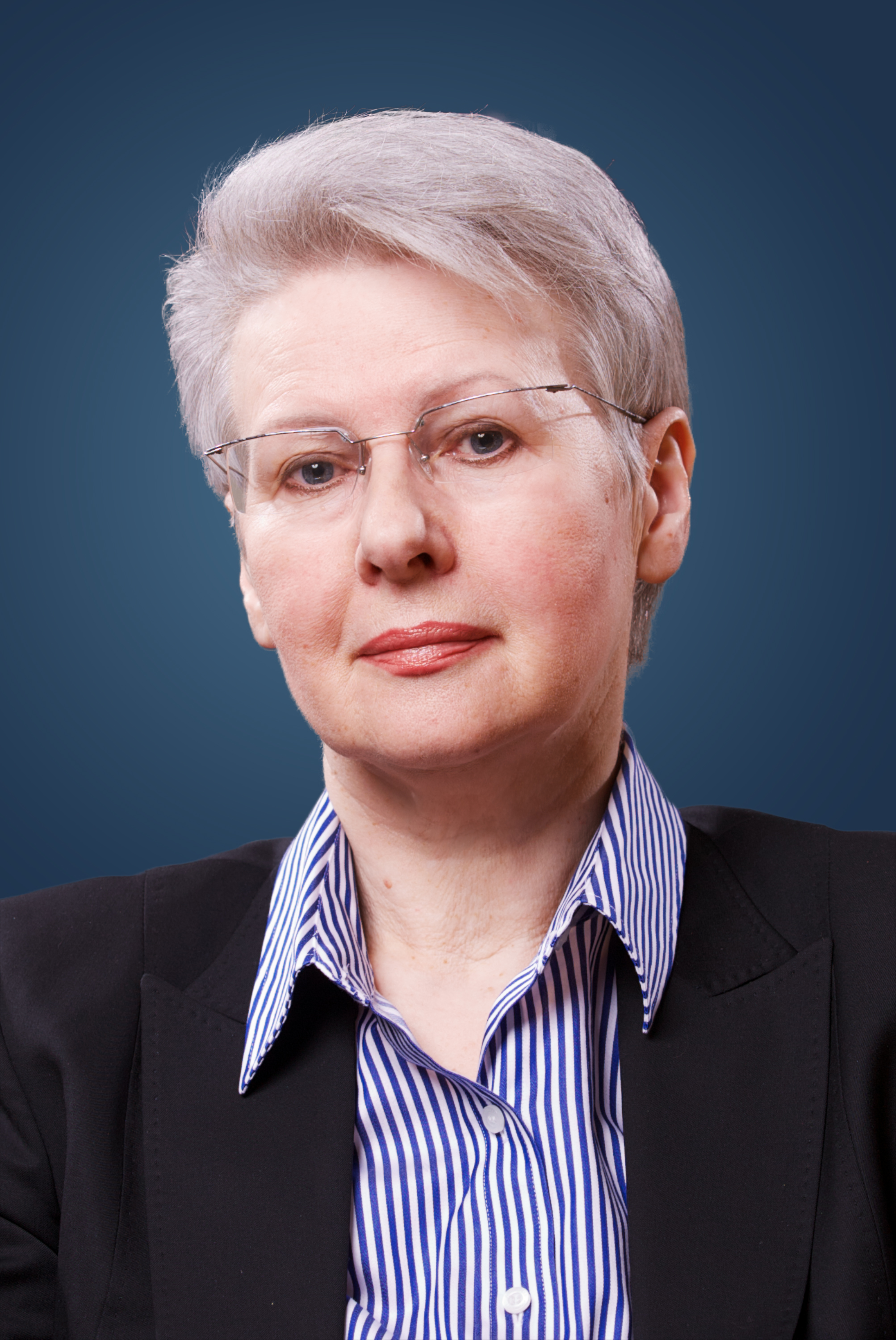
Former Senior Associate, Russian Domestic Politics and Political Institutions Program, Moscow Center
Shevtsova chaired the Russian Domestic Politics and Political Institutions Program at the Carnegie Moscow Center, dividing her time between Carnegie’s offices in Washington, DC, and Moscow. She had been with Carnegie since 1995.
Recent Work
Lilia Shevtsova
Lilia Shevtsova
Carnegie India does not take institutional positions on public policy issues; the views represented herein are those of the author(s) and do not necessarily reflect the views of Carnegie, its staff, or its trustees.

After the chill in ties between 2020 and 2024 that brought India–China relations to their lowest point in several decades, the two countries have engaged each other afresh. This paper argues that there are predominantly four imperatives guiding India’s approach to China, and they exist in an order of priority.

Saheb Singh Chadha

This piece argues that India’s central challenge is not managing a single flashpoint but resolving the underlying tension between expansion and institutional coherency of the BRICS grouping.

Vrinda Sahai

A partnership between India, a country of subcontinental size, and Africa, a continent of fifty-four countries, may seem asymmetric until one notes that both are home to nearly the same number of people—1.4 billion. This essay spells out the existing challenges to the partnership, its optimal potential, and the possible pathways to realize it over the next quarter-century.

Rajiv Bhatia

The India–EU Free Trade Agreement (FTA) is shaping up to be one of the most consequential trade negotiations, both economically and strategically. But, what’s in the agreement, what’s missing, and what will determine its success in the years ahead
Vrinda Sahai, Nicolas Köhler-Suzuki

Trump 2.0 has unsettled India’s external environment—but has not overturned its foreign policy strategy, which continues to rely on diversification, hedging, and calibrated partnerships across a fractured order.



Milan Vaishnav, ed., Sameer Lalwani, Tanvi Madan, …