

Other
Anders Aslund
{
  "authors": [
    "Anders Aslund"
  ],
  "type": "legacyinthemedia",
  "centerAffiliationAll": "dc",
  "centers": [
    "Carnegie Endowment for International Peace"
  ],
  "collections": [],
  "englishNewsletterAll": "ctw",
  "nonEnglishNewsletterAll": "",
  "primaryCenter": "Carnegie Endowment for International Peace",
  "programAffiliation": "russia",
  "programs": [
    "Russia and Eurasia"
  ],
  "projects": [],
  "regions": [
    "Caucasus",
    "Russia"
  ],
  "topics": [
    "Political Reform",
    "Democracy",
    "Trade"
  ]
}
REQUIRED IMAGE
Source: The Moscow Times
President Vladimir Putin is quickly becoming a classic example of a politician who was very successful during his first term, when he tried to do all the good things people wanted in order to consolidate his power, but a disaster in his second term, when he had consolidated power and could do all the bad things he wanted to do.One date marks the divide between the first benign Putin and the second harmful Putin. It is Oct. 25, 2003, the day of Mikhail Khodorkovsky's arrest. This event was never a matter of one person or his actual acts. The causes given for this arrest are many, but in the end they boil down to Putin's wanting to increase his political control and to his close associates' desiring to grab Yukos' assets.
Khodorkovsky's arrest signified the end of the oligarchs as a political force. After carrying out an intricate and elegant balancing act between oligarchs and KGB officers and being everything to everybody, Putin transformed himself from the president of the whole of Russia to the president of a small group of KGB men from St. Petersburg. He seems to have become their hostage because he has not demoted anybody from his closest circle. The remaining oligarchs were allowed to make money -- even more than before -- but they were ousted from politics.
This tiny group of siloviki from St. Petersburg sits on top of the state administration and the big state enterprises. Therefore, they have no interest in reforms, which in turn are thus precluded. They distrust everybody, so they have centralized decision-making to so few that both the quantity and quality of decision-making has lapsed to Soviet levels. As good KGB men, they do not believe in anything but their own disinformation, keeping themselves distant from reality. Such an unrepresentative and dysfunctional regime can hardly last for long.
Three of Russia's greatest recent reforms have been tax reform, judicial reform and the reinforcement of property rights. Through the Yukos case, Putin has effectively jeopardized all these achievements.
Whatever the final sentence will be in the Khodorkovsky affair -- if it is ever concluded -- Putin has rendered his judicial reform a joke, because it has been obvious that every turn of the Yukos story has been ordered by the Kremlin. Nobody can believe in the integrity of the Russian judicial system after this.
A patent post-Soviet problem has been Russia's arbitrary tax system. Putin did a great deal to improve it, but with the Yukos case, he has reversed the very essence of these reforms, namely the freedom from lawless persecution. The company appears to have utilized legal loopholes, and to an outsider no crime is apparent, but the government has the audacity to claim $28 billion -- and the immediate payment of that sum -- in order to effectively confiscate Yukos.
The worst long-term effect is that property rights in Russia have been severely undermined. If even the richest capitalist cannot assert his property rights, then who can? With the arrest of Khodorkovsky, Putin unleashed a property-rights populism that may be difficult to stop. As a result, the political risk premium for investment in Russia remains high.
It is difficult to imagine anything that Putin could have done that would have damaged himself more than the arrest of Khodorkovsky. But with characteristic stubbornness, Putin is just continuing to dig a deeper hole for himself. The question is how deep this hole needs to be before he disappears from Russia's political stage altogether.
Anders Aslund is director of the Russian and Eurasian Program at the Carnegie Endowment for International Peace. He contributed this comment to The Moscow Times.
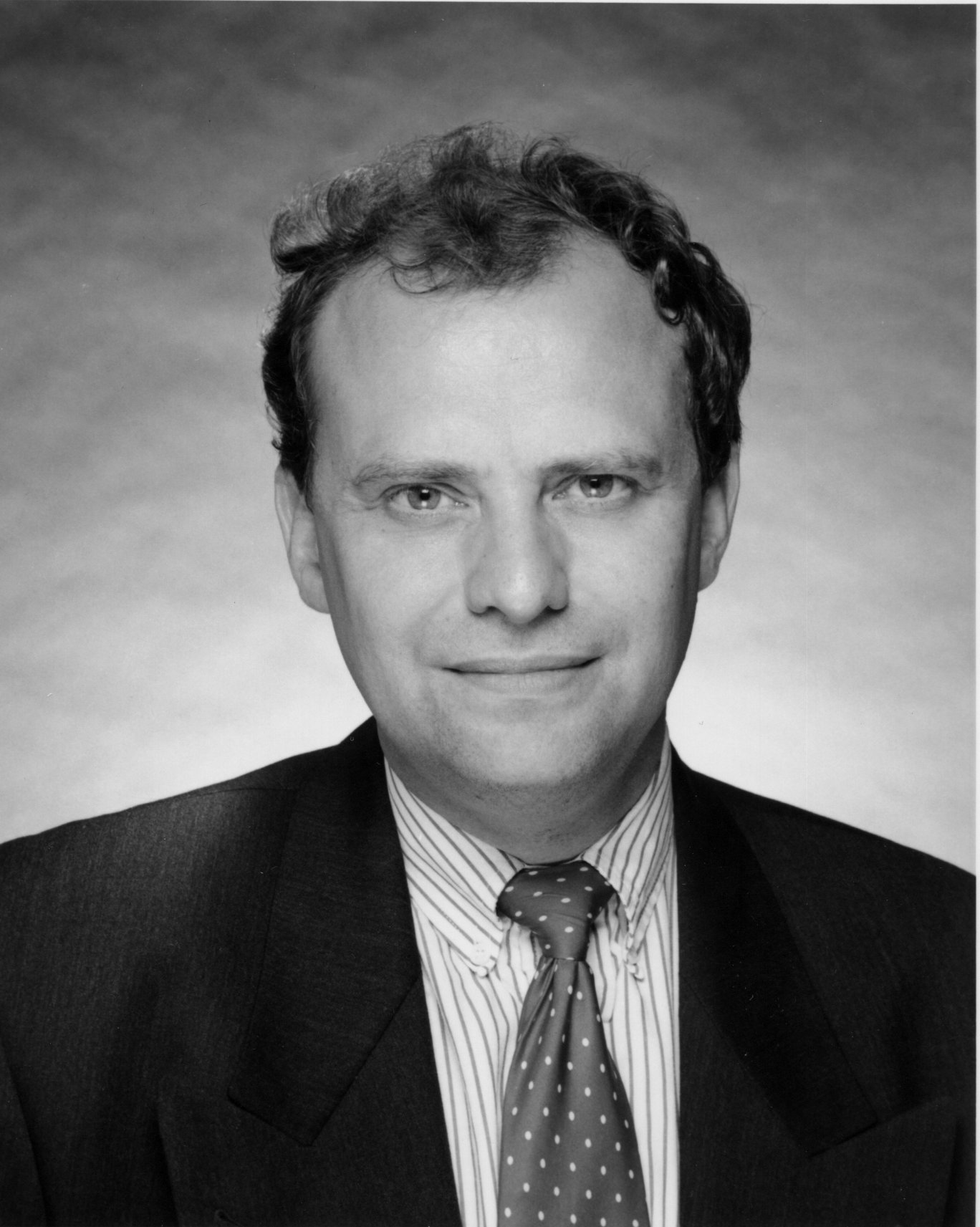
Former Senior Associate, Director, Russian and Eurasian Program
Recent Work
Anders Aslund
Anders Aslund
Carnegie India does not take institutional positions on public policy issues; the views represented herein are those of the author(s) and do not necessarily reflect the views of Carnegie, its staff, or its trustees.

This piece argues that India’s central challenge is not managing a single flashpoint but resolving the underlying tension between expansion and institutional coherency of the BRICS grouping.

Vrinda Sahai

This piece examines India’s response to U.S. sanctions and tariffs, specifically assessing the immediate market consequences, such as alterations in import costs, and the broader strategic implications for India’s energy security and foreign policy orientation.
Vrinda Sahai
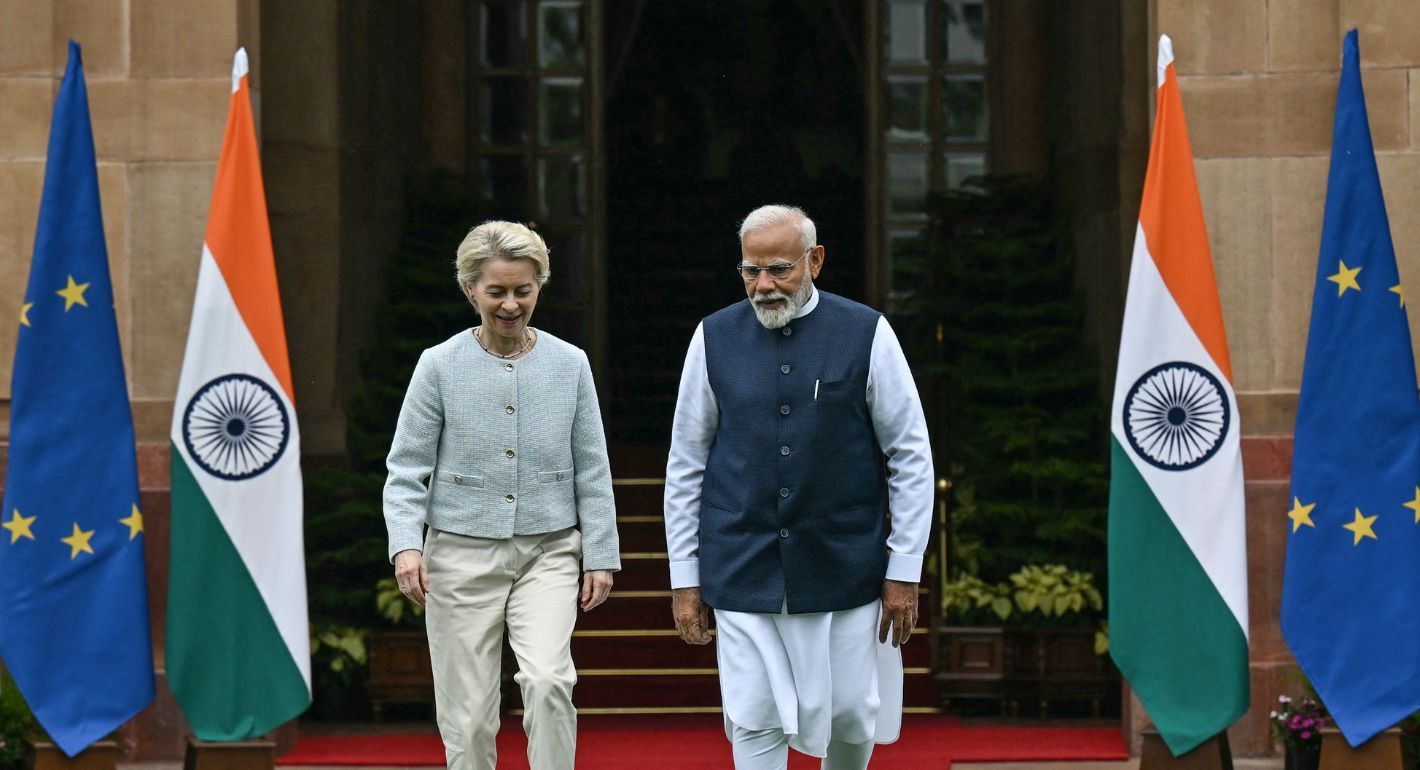
This article argues that the geopolitical circumstances have never been more conducive, not merely for the early conclusion of the free trade agreement (FTA) between India and the EU, but also for crafting a substantive and comprehensive strategic partnership.
Mohan Kumar
Experts weigh in on whether the United States is too hostile toward China.
Stephen Wertheim, Evan S. Medeiros, Vijay Gokhale
China’s central bank has plans to roll out a digital yuan, which could circumvent the U.S. dollar in important global financial transactions. Here are some ways the digital yuan could pose a challenge to the dollar’s prominence.
Rajesh Bansal, Somya Singh