

Commentary
Maria Lipman
{
  "authors": [
    "Maria Lipman"
  ],
  "type": "legacyinthemedia",
  "centerAffiliationAll": "",
  "centers": [
    "Carnegie Endowment for International Peace",
    "Carnegie Russia Eurasia Center"
  ],
  "collections": [],
  "englishNewsletterAll": "",
  "nonEnglishNewsletterAll": "",
  "primaryCenter": "Carnegie Russia Eurasia Center",
  "programAffiliation": "",
  "programs": [],
  "projects": [],
  "regions": [
    "Caucasus",
    "Russia",
    "Ukraine"
  ],
  "topics": [
    "Foreign Policy"
  ]
}
REQUIRED IMAGE
Source: Washington Post
MOSCOW -- A group of young people carrying spades came together recently where the isthmus connecting the Crimean Peninsula to the Ukrainian mainland is narrowest. "Isolate the Crimea from Ukraine!" their leader shouted in a mock military order, and then, as TV cameras recorded it all, the group began to dig.
The Crimea is a Russian-speaking territory joined to Ukraine in 1954 by Nikita Khrushchev as part of an administrative rearrangement within the Soviet Union that is seen by many in Russia as unfair. The recent publicity stunt with shovels, however unserious, is another example of growing friction between Russians and Ukrainians that got the world's attention last month during a dispute over natural gas supplies. If tensions are further inflamed, it will be an unpardonable consequence of Russia's geopolitical aspirations.
After Russia moved to raise the price of the natural gas it supplies, Ukraine warned that it may revise the contract regulating rent paid by the Russian government for the Black Sea Fleet bases in the Crimea. The Russian defense minister, Sergei Ivanov, responded with a thinly disguised threat to take the Crimea away from Ukraine. A revision of the rent contract, he said, might lead to renunciation of the 1997 agreement by which Russia recognized the 1954 borders of Ukraine.
Several Russian legislators chimed in, but unlike the defense minister, they were quite explicit. "Sooner or later the Crimea will be reclaimed," one Russian Duma deputy said. "To make the Crimea again part of Russia will be an absolutely right decision," said another.
Those who live in the Crimea have long complained about forced "Ukrainization." Recently, the complaints have become more vocal: The Crimean inhabitants claim that their last names have been changed in the lists of registered voters to sound Ukrainian.
In mid-January Ukraine and Russia got involved in a dispute over control of Crimean lighthouses. One lighthouse was seized by a group of Ukrainians who barred access to anybody from the Russian Black Sea Fleet. The Russian fleet commanders regard the lighthouses as part of their operation. A Ukrainian ambassador said all of them are the property of Ukraine and must be returned to it. A Ukrainian foreign ministry spokesman said that with respect to the lighthouses the actions of the Black Sea Fleet "border on interference with the affairs of a sovereign state." Ukrainian student groups picketed the headquarters of the Black Sea Fleet in Sevastopol, demanding that the lighthouses be returned to Ukraine, while their pro-Russian opponents camped outside one of the lighthouses.
A dispute that broke out in 2003 over the border between Russia and Ukraine in the Kerch Strait, which connects the Sea of Azov with the Black Sea, has flared up again. And about 10 days ago Ukraine blamed Russia for giving shelter and granting Russian citizenship to Ukrainian government officials who were ousted in the country's Orange Revolution and are under investigation for alleged misconduct. (Russia also has barred all imports of Ukrainian meat and dairy products, citing safety concerns that Ukraine disputes.)
The gas conflict, which continues to pick up steam, has an obvious political underpinning. Since the humiliating failure of Russia's attempt to influence the Ukrainian presidential election in late 2004, the Kremlin has sought ways to recoup. The move to raise gas prices for Russia's intractable neighbor came three months before important parliamentary elections and was clearly meant to cause maximum destabilization of Ukrainian politics. The goal of Kremlin strategists appears to be a weak coalition government in Ukraine that will be more vulnerable to Russian economic pressure.
This may or may not work. One thing is certain, though: Russia's attempt to cut gas to Ukraine led to a disruption of supplies to Europe, thus undermining Russia's reputation as a reliable economic partner.
There may be another consequence of Russia's ambition to emerge as an energy superpower. Political destabilization and the stirring up of territorial disputes could provoke nationalist sentiment and anti-Russian feelings in Ukraine, a country that is divided into mostly Russian-speaking and mostly Ukrainian-speaking regions and is struggling to shape its nationhood.
If this happens, anti-Ukrainian sentiment in Russia is also certain to grow. People in Russia hardly differentiate between those of Russian and Ukrainian ethnic origin, even though Ukrainian last names are easily recognizable. The neighboring Slavic nations are blessed with good relations based on historical, cultural and language kinship. This is exactly why it would be unforgivable should the current conflict lead to an accidental act of violence. After all, in recent times we have seen Slavic nations in Yugoslavia with shared history and basically common language engage in bloody warfare nobody had predicted.
Masha Lipman, editor of the Carnegie Moscow Center's Pro et Contra journal, writes a monthly column for The Post.
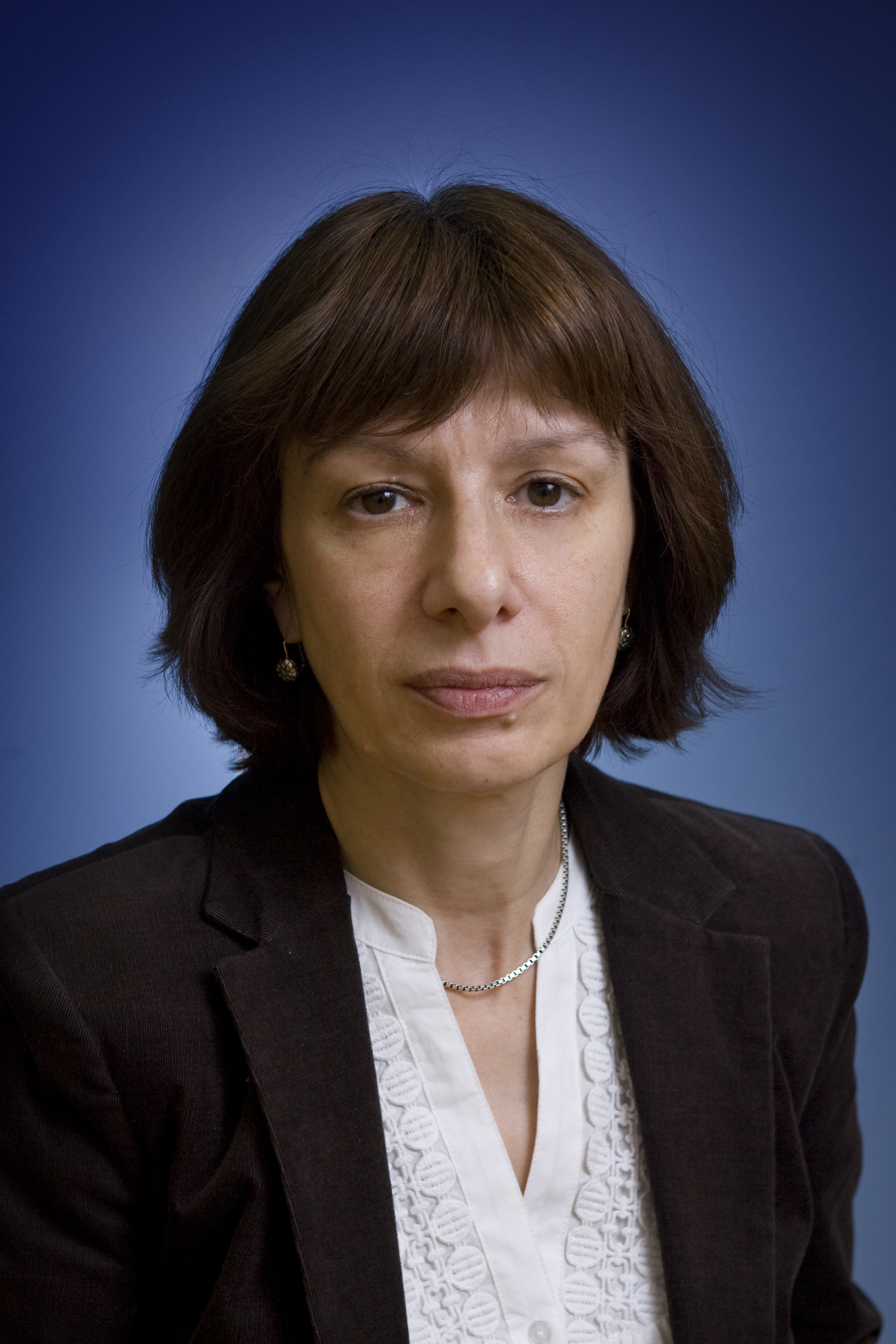
Former Scholar in Residence, Society and Regions Program, Editor in Chief, Pro et Contra, Moscow Center
Lipman was the editor in chief of the Pro et Contra journal, published by the Carnegie Moscow Center. She was also the expert of the Carnegie Moscow Center’s Society and Regions Program.
Recent Work
Maria Lipman
Maria Lipman
Carnegie India does not take institutional positions on public policy issues; the views represented herein are those of the author(s) and do not necessarily reflect the views of Carnegie, its staff, or its trustees.

After the chill in ties between 2020 and 2024 that brought India–China relations to their lowest point in several decades, the two countries have engaged each other afresh. This paper argues that there are predominantly four imperatives guiding India’s approach to China, and they exist in an order of priority.

Saheb Singh Chadha

This piece argues that India’s central challenge is not managing a single flashpoint but resolving the underlying tension between expansion and institutional coherency of the BRICS grouping.

Vrinda Sahai

A partnership between India, a country of subcontinental size, and Africa, a continent of fifty-four countries, may seem asymmetric until one notes that both are home to nearly the same number of people—1.4 billion. This essay spells out the existing challenges to the partnership, its optimal potential, and the possible pathways to realize it over the next quarter-century.

Rajiv Bhatia

The India–EU Free Trade Agreement (FTA) is shaping up to be one of the most consequential trade negotiations, both economically and strategically. But, what’s in the agreement, what’s missing, and what will determine its success in the years ahead
Vrinda Sahai, Nicolas Köhler-Suzuki

Trump 2.0 has unsettled India’s external environment—but has not overturned its foreign policy strategy, which continues to rely on diversification, hedging, and calibrated partnerships across a fractured order.



Milan Vaishnav, ed., Sameer Lalwani, Tanvi Madan, …