

Q&A
- +2
Judy Dempsey, Alexander Gabuev, Rose Gottemoeller, …
{
  "authors": [
    "Rose Gottemoeller"
  ],
  "type": "legacyinthemedia",
  "centerAffiliationAll": "dc",
  "centers": [
    "Carnegie Endowment for International Peace"
  ],
  "collections": [
    "Korean Peninsula"
  ],
  "englishNewsletterAll": "ctw",
  "nonEnglishNewsletterAll": "",
  "primaryCenter": "Carnegie Endowment for International Peace",
  "programAffiliation": "russia",
  "programs": [
    "Russia and Eurasia",
    "Nuclear Policy"
  ],
  "projects": [],
  "regions": [
    "South Korea",
    "Caucasus",
    "Russia"
  ],
  "topics": [
    "Foreign Policy",
    "Nuclear Policy"
  ]
}
REQUIRED IMAGE
Source: Moscow Times
As the six parties in the talks with North Korea over its nuclear policy declare victory, we have to be clear about what has been accomplished. It's a decent agreement but not the end of the story. Most important, from the perspective of nonproliferation policy, is that the North Koreans have agreed to shut down and seal their nuclear reactor facility at Yongbyon. This is a good step, but the North Koreans are already hinting that it is no more than a "temporary suspension." How do we assure that North Korea continues to move forward to complete denuclearization?
One place to look for some insight is right next door. Several times in the past 30 years South Korea has advanced a campaign to acquire nuclear weapons. Each time, under significant pressure from the United States, it has reversed itself.
Since the early 1970s, the government in Seoul has been tempted by nuclear weapons any time the United States has wavered in its defense commitment to South Korea. The first time, in 1970, when U.S. President Richard Nixon was recommending a troop withdrawal under the so-called Guam Doctrine, a secret committee recommended that a covert nuclear program be started, and the South Korean political leadership agreed.
Afterward, when the United States found out about the recommendation through intelligence sources, Washington intervened to prevent sales of nuclear technologies by Canada, France and Belgium, and even threatened to end the privileged bilateral relationship with South Korea. The South Koreans bowed gracefully to the pressure and halted their military nuclear program. In return, the United States halted its withdrawal of troops from the country. This pattern repeated itself a couple of times ever the next three decades.
As it played the nuclear card, South Korea became a success story in Asia, with strong economic growth, a robust political system and a stable civil society. It hosted the Summer Olympics in 1988 and is vying to host the Winter Olympics in 2014. It spends more money on research and development than almost any country in the world. A former foreign minister, Ban Ki-moon, has become secretary-general of the United Nations. South Korea is a country to be envied, with a lot going for it -- respect, prosperity and innovation. It's just possible that Kim Jong Il has been watching.
Of course, he has really pushed the envelope with nuclear and missile tests. It is also true that he is an unsavory interlocutor, engaged in criminal activities that have stunned and angered the global community -- counterfeiting currency, dumping drugs on the international market, kidnapping innocents, gun-running and trading in missiles. But none of this means he cannot be attracted to South Korea's experience.
It's especially important that South Korea play the game well. The nuclear card came out whenever the United States wavered in its security guarantee and was put away again when the United States reversed course.
North Korea might have noticed that the United States responds to this particular stimulus. If that is the case, then North Korea might very well respond to the reverse stimulus. Washington is on the right track if it is beginning a step-by-step process to redraw the security relationship between North Korea and the United States.
Of course, the type of allied relationship that the United States has with Seoul would be wildly premature. But as negotiations proceed, Washington should able to offer clear political assurances at the highest level not to attack North Korea with nuclear or conventional weapons. It should also offer to sign a peace treaty formally ending the Korean War. In return, North Korea should agree to all the steps necessary to halt and reverse its military nuclear program in a verifiable manner. No other course should be acceptable to the United States or to any other player in the international community.
The United States does not need to act alone. Its partners in the six-party talks offer unique resources that they can each bring to bear. Russia, for example, is often seen as a "silent partner" in the talks, but it might have some of the most powerful economic incentives to offer North Korea. Russian companies are involved in developing North Korea's considerable mineral resources, and Russia has long been planning electricity and transportation projects to connect North Korea with the Russian Far East.
What is more, Russia is well connected to North Korean elites. North Korean scientists were educated in the physics and chemistry departments of Russian universities, and Russia was engaged in technical assistance in North Korea for years. Connections are even good at the top leadership level -- who could forget Kim Jong Il's visit by train to Moscow in 2001? It shut down the city and led to considerable disgruntlement among Muscovites, but cemented a strong relationship between the North Korean leader and key figures in the Russian leadership like Konstantin Pulikovsky, who was President Vladimir Putin's envoy in the Far East.
Such contacts will be very important to build confidence as the difficult negotiations on the nuclear issue continue. Economic engagement leading to the long-term transformation of the country would clearly be the best outcome for all.
So the United States should consider the unique contributions that its partners can make, and work closely with them to coordinate a comprehensive strategy. For the United States that means playing a mixed hand of security and economic cards -- not easy, but at least it has the experience of dealing with North Korea's neighbor to the south for all these years. The United States got what it wanted, as did they -- and South Korea reformed itself in the process.
Rose Gottemoeller is director of the Carnegie Moscow Center and a former U.S. deputy undersecretary of energy for defense nuclear nonproliferation.
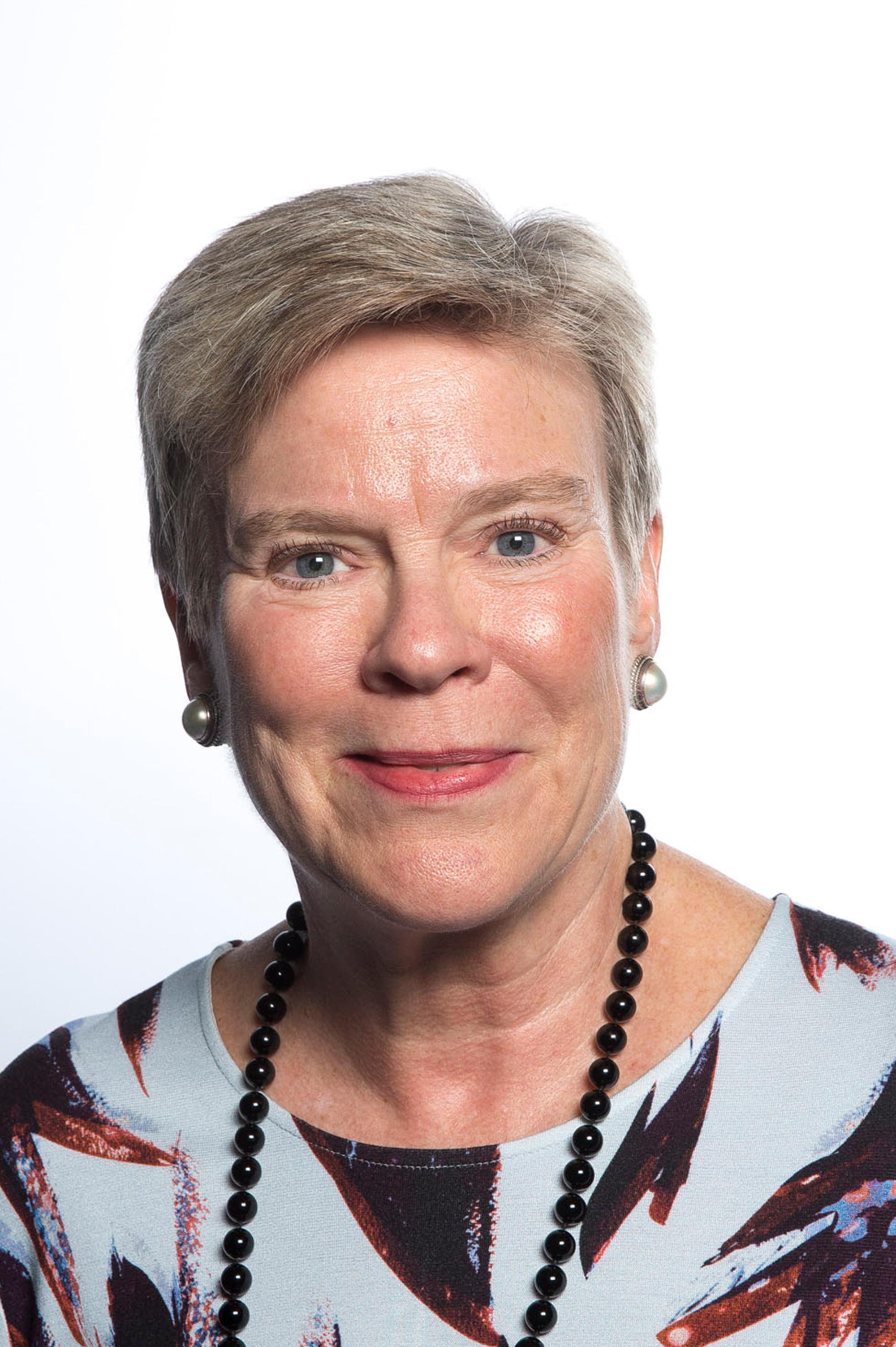
Nonresident Senior Fellow, Nuclear Policy Program
Rose Gottemoeller is a nonresident senior fellow in Carnegie’s Nuclear Policy Program. She also serves as lecturer at Stanford University’s Freeman Spogli Institute for International Studies and is a research fellow at the Hoover Institution. Ambassador Gottemoeller served as the deputy secretary general of NATO from 2016 to 2019.
Recent Work


Judy Dempsey, Alexander Gabuev, Rose Gottemoeller, …
Carnegie India does not take institutional positions on public policy issues; the views represented herein are those of the author(s) and do not necessarily reflect the views of Carnegie, its staff, or its trustees.

After the chill in ties between 2020 and 2024 that brought India–China relations to their lowest point in several decades, the two countries have engaged each other afresh. This paper argues that there are predominantly four imperatives guiding India’s approach to China, and they exist in an order of priority.

Saheb Singh Chadha

This piece argues that India’s central challenge is not managing a single flashpoint but resolving the underlying tension between expansion and institutional coherency of the BRICS grouping.

Vrinda Sahai

A partnership between India, a country of subcontinental size, and Africa, a continent of fifty-four countries, may seem asymmetric until one notes that both are home to nearly the same number of people—1.4 billion. This essay spells out the existing challenges to the partnership, its optimal potential, and the possible pathways to realize it over the next quarter-century.

Rajiv Bhatia

The India–EU Free Trade Agreement (FTA) is shaping up to be one of the most consequential trade negotiations, both economically and strategically. But, what’s in the agreement, what’s missing, and what will determine its success in the years ahead
Vrinda Sahai, Nicolas Köhler-Suzuki

Trump 2.0 has unsettled India’s external environment—but has not overturned its foreign policy strategy, which continues to rely on diversification, hedging, and calibrated partnerships across a fractured order.



Milan Vaishnav, ed., Sameer Lalwani, Tanvi Madan, …