

Commentary
Maria Lipman
{
  "authors": [
    "Maria Lipman"
  ],
  "type": "legacyinthemedia",
  "centerAffiliationAll": "",
  "centers": [
    "Carnegie Endowment for International Peace",
    "Carnegie Russia Eurasia Center"
  ],
  "collections": [],
  "englishNewsletterAll": "",
  "nonEnglishNewsletterAll": "",
  "primaryCenter": "Carnegie Russia Eurasia Center",
  "programAffiliation": "",
  "programs": [],
  "projects": [],
  "regions": [
    "Caucasus",
    "Russia"
  ],
  "topics": [
    "Political Reform",
    "Democracy",
    "Economy"
  ]
}
Source: Getty
The Russian government's recent decision to outlaw foreign migrant workers at retail markets is a politically motivated decision born of intolerance. It is more likely to harm Russian consumers and further exacerbate the difficult situation of migrant workers.
Source: Washington Post

The affected markets are vast premises where salesmen pay for counter space and offer produce and other goods such as clothes. Buyers looking for lower prices or fresher produce than in conventional stores find such foods as homegrown or imported fruit and vegetables, homemade preserves, cottage cheese, pickles, meat and fish.
Given Russia's climate, throughout most of the year vegetables and especially fruit are imported from warmer parts of the world. But the law seeks to impose the same pattern on all regions, even though the products and markets in southern Russian and areas beyond the polar circle are not at all alike. Without the choices provided by middlemen, diet options in many places will be reduced to carrots, potatoes, cabbage and little else.
The new regulations were probably a reaction to growing ethnic intolerance, which took an alarming turn late last summer when a riot in the northwestern town of Kondopoga forced non-Slavic residents to flee, and their businesses were looted and burned. The Russian government is concerned about controlling such hostility, especially in an election year, when any sign of autonomous activism is regarded as a potential threat to the political status quo.
Propagation of tolerance is only a marginal policy for the Kremlin -- it would hardly be efficient given the current degree of xenophobia -- so instead it opted to co-opt the spreading nationalist sentiments. In October, President Vladimir Putin called for "additional measures to improve trade in . . . retail markets in order to protect the interests of the Russian manufacturers and . . . the native population of Russia." He reiterated this concern, in a more balanced form, in his annual news conference on Thursday, saying that "labor market issues . . . have not always been settled to the benefit of Russia's own people, its own citizens."
By this time, however, government monitoring had found that migrant workers at the markets were not a national issue: They were in high proportion to natives only in Moscow and the Far East.
This is not surprising, since those regions are the two that experience workforce shortages, making migrant workers a necessity. In Far East areas near China, this need is filled by Chinese workers, many of whom cross the border to sell cheap goods.
The new regulations have already pushed Chinese traders to sell their stock at catchpenny prices and leave. And local news reports indicate that the markets are staying empty: "The benefit of the new regulation looks vague. But the disadvantages are evident," reported a newspaper in Sakhalin, in the Far East. "For the time being there's no replacement for the cheap Chinese goods and southern fruit."
A Moscow official echoed those concerns: "Do we want to leave the Muscovites without tangerines, raisins and dried apricots?"
Other problems are expected because the law enables employers to cancel contracts with migrant workers without a court decision. Significant numbers of migrant workers could find themselves jobless. Meanwhile, Muscovites are unlikely to want the low-paying, menial jobs of market salesmen. "The citizens of Russia don't wait in lines to take those 28 to 30 thousand jobs in market trade that [the new law] will require. This is a serious vacuum that will have to be filled before April 1," the Moscow official said.
These consequences should have been obvious before the law was enacted. But there wasn't much time -- or desire -- for discussion, as is the case when an initiative originates with the president. After Putin asked his ministers to protect native manufacturers at the markets, the cabinet issued a regulation restricting foreigners' presence in retail trade; in less than three months a bill was put together, passed by both chambers of parliament and signed into law.
Such actions corrode what respect for law and lawmaking is left here. Local officials will probably think of ways around the restrictions, and some are sure to take advantage of new opportunities for graft. Still others expect that the absurdity of some provisions and the damage the law is inflicting on consumers will lead to its revision. Indeed, shortly after the new regulations -- drafted by his own ministry at the president's urging -- took effect, German Gref, the minister of economic development and trade, said a full ban on the employment of migrant foreign workers may be postponed.

Former Scholar in Residence, Society and Regions Program, Editor in Chief, Pro et Contra, Moscow Center
Lipman was the editor in chief of the Pro et Contra journal, published by the Carnegie Moscow Center. She was also the expert of the Carnegie Moscow Center’s Society and Regions Program.
Recent Work
Maria Lipman
Maria Lipman
Carnegie India does not take institutional positions on public policy issues; the views represented herein are those of the author(s) and do not necessarily reflect the views of Carnegie, its staff, or its trustees.

This piece argues that India’s central challenge is not managing a single flashpoint but resolving the underlying tension between expansion and institutional coherency of the BRICS grouping.

Vrinda Sahai

On March 10, 2026, India’s Union Cabinet approved amendments to Press Note 3, a regulation that mandated government approval on all foreign direct investment (FDI) from countries sharing a land border with India. This amendment raises questions primarily about whether its stated benefits will materialize and if the risks have been adequately weighed. This piece will address the same.

Konark Bhandari

This piece examines India’s response to U.S. sanctions and tariffs, specifically assessing the immediate market consequences, such as alterations in import costs, and the broader strategic implications for India’s energy security and foreign policy orientation.
Vrinda Sahai

This paper examines the evolution of India-China economic ties from 2005 to 2025. It explores the impact of global events, bilateral political ties, and domestic policies on distinct spheres of the economic relationship.

Santosh Pai
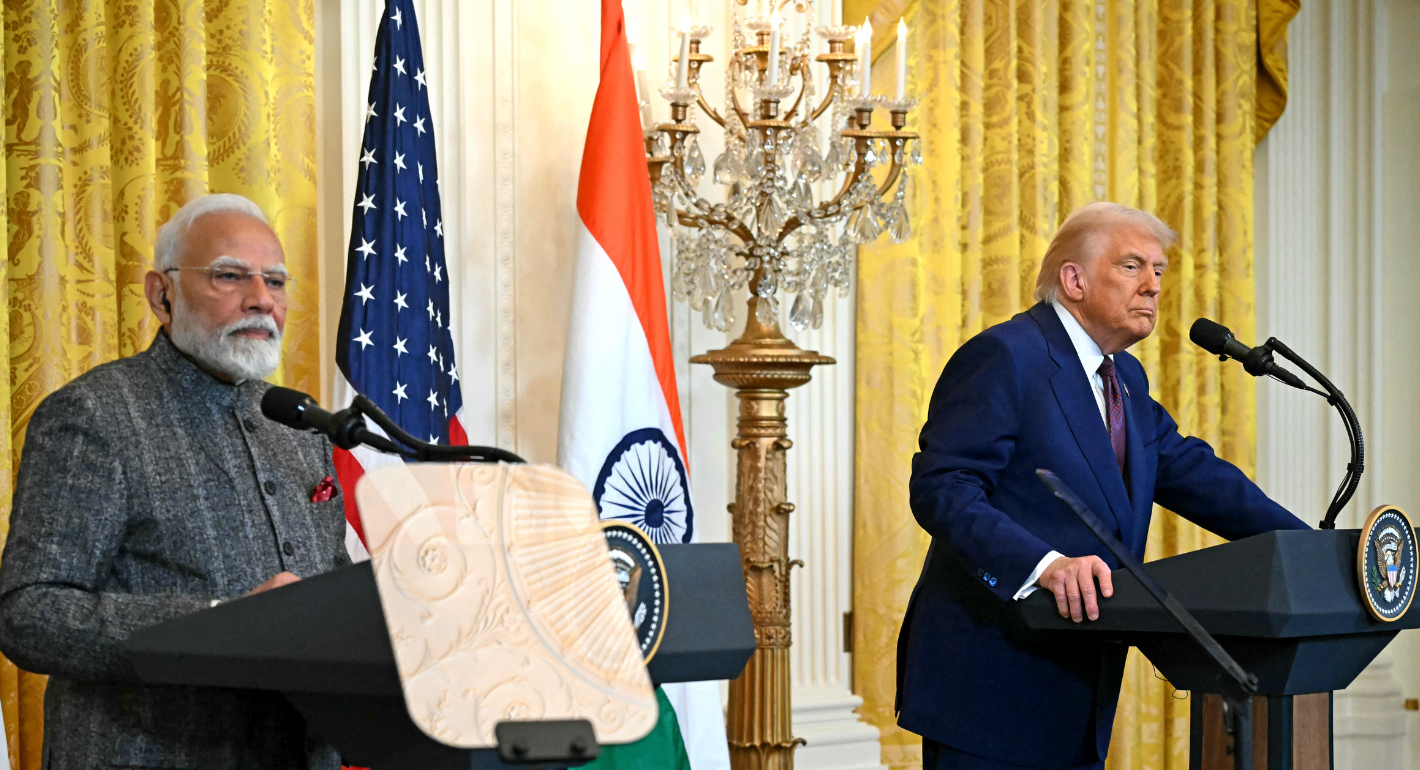
The India-U.S. relationship currently appears buffeted between three “Ts”—TRUST, Tariffs, and Trump.
Arun K. Singh