

Paper
George Perkovich
{
  "authors": [
    "George Perkovich"
  ],
  "type": "legacyinthemedia",
  "centerAffiliationAll": "dc",
  "centers": [
    "Carnegie Endowment for International Peace"
  ],
  "collections": [
    "Korean Peninsula"
  ],
  "englishNewsletterAll": "ctw",
  "nonEnglishNewsletterAll": "",
  "primaryCenter": "Carnegie Endowment for International Peace",
  "programAffiliation": "NPP",
  "programs": [
    "Nuclear Policy"
  ],
  "projects": [],
  "regions": [
    "Middle East",
    "Iran",
    "Pakistan",
    "South Korea",
    "Caucasus",
    "Russia"
  ],
  "topics": [
    "Nuclear Policy",
    "Nuclear Energy"
  ]
}
REQUIRED IMAGE
Reading William Langewiesche's new book is like going to a concert and discovering that your favorite rock star is having an off night. The sublime talent rings through in a few electric riffs. The voice registers the deep truth of heavy experience in two or three places. But the show doesn't hold together from start to finish.
Source: Book Review
THE ATOMIC BAZAAR
The Rise of the Nuclear Poor
By William Langewiesche
Farrar Straus Giroux. 179 pp. $22
Reading William Langewiesche's new book is like going to a concert and discovering that your favorite rock star is having an off night. The sublime talent rings through in a few electric riffs. The voice registers the deep truth of heavy experience in two or three places. But the show doesn't hold together from start to finish.
The first theme we hear in The Atomic Bazaar, a series of reports on the proliferation of nuclear weapons , is that they have become the weapons of the poor, and proliferation is inevitable. It is highly possible, Langewiesche warns, that "one or two nuclear weapons will pass into the hands of the new stateless guerrillas, the jihadists, who offer none of the retaliatory targets that have so far underlain the nuclear peace. . . . These jihadists are the people who would not hesitate to detonate a nuclear device."
For the next quarter of the book, Langewiesche inventively explores how terrorists might steal or buy the plutonium or highly enriched uranium needed to make nuclear bombs. He travels into the heart of secluded Russian nuclear cities and sits in bars where would-be terrorists might try to make connections with helpers on the inside. He walks around the fenced compounds and imagines ways to sneak or fight in and out. He concludes it would have to be a nonviolent inside job; otherwise, the bad guys would not be able to stay ahead of the posse over the 1,200 miles to the Caspian Sea or Caucasus. His visit to a U.S.-funded border checkpoint between Russia and Georgia is a tour de force. You don't know whether to laugh or cry over the ground-level realities on which Washington's well-intentioned bureaucratic projects founder. At the checkpoint, for example, a vast complex of air-conditioned buildings, dormitories, VIP quarters, and athletic facilities sit like a turnstyle that smugglers can simply skirt around. Because the turnstyle is bolted into concrete, it cannot be stolen and is therefore safe from congressional scrutiny, but what's needed more are mobile, street-savvy operatives who can be eyes and ears in the byways that smugglers travel.
From Russia, Langewiesche travels to the mountainous Kurdish border region between Turkey and Iran. After late-night bull sessions with leaders of smuggling clans, he reckons that deals could be made to move highly enriched uranium across the border into the commotion of Turkey. Then a gang of pretty sophisticated experts -- likely foreigners -- would have to work for weeks with noisy machine tools and other gear to make a nuclear bomb. Walking around Istanbul, Langewiesche observes, "In even the most chaotic neighborhoods, where industrial shops are mixed among illegal apartment blocks and communities of impoverished newcomers and squatters, it would be difficult to keep neighbors from asking inconvenient questions."
Virtuosity shines here -- bold, trenchant reporting against the pop refrain that jihadist nuclear terrorism is coming. But then Langewiesche changes his opening lyric. "In the final analysis," he writes, "if a would-be nuclear terrorist calculated the odds, he would have to admit that they were stacked against him, simply because of all the natural circumstances that could cause his plans to fail. . . . In reality Washington, London, and New York are unlikely anytime soon to suffer a nuclear strike."
The book then segues to a staid acoustic chapter, essentially a profile of Pakistan's infamous nuclear proliferator, A.Q. Khan. His story was widely noted when Langewiesche first wrote about him in the Atlantic Monthly in 2005. Langewiesche describes how Khan and his European suppliers sold know-how and equipment to help North Korea, Libya, Iran and perhaps others build nuclear weapons.
Khan's motives are irreducibly complex. But an equally intriguing question is why the Pakistani authorities didn't inquire into how his ostentatiously grand spending sprees squared with his government salary. "Even the army is run like a real estate racket," Langewiesche explains, "expropriating land from ordinary citizens, then passing it on to the officers for their personal gain. It is not by chance that Islamabad is a city of mansions, and that many of them are inhabited by retired generals. What was Khan's skimming compared with all that? And unlike the generals, who tended to lose every fight they provoked, Khan had delivered on his words."
To the extent that Langewiesche establishes a coda, it is that "terrorist attacks can be thwarted . . . but no amount of maneuvering will keep determined nations from developing nuclear arsenals." Post-colonial nations are fed up with the inequality of the nuclear order that makes it okay for the great powers and Israel to have nuclear weapons, but not for anyone else. So, Langewiesche writes, we must accept "the equalities of a maturing world in which many countries have acquired atomic bombs, and some may use them."
Langewiesche is a gifted reporter and writer, not a policy wonk. Yet, a more careful study would challenge his assumption that proliferation is inevitable in nations such as Turkey, Saudi Arabia and Brazil. Nor would a more intensive study have repeated dubious assertions about the extent of North Korea's uranium enrichment capabilities, and a hollow claim that India and Pakistan verged on a nuclear exchange in 1998.
The Atomic Bazaar suffers from the flaws that often weaken medleys. Composed of previously published magazine articles, it lacks the coherence and concentration necessary to be more than the sum of its parts. ·
George Perkovich is vice president for studies of the Carnegie Endowment for International Peace and the author of "India's Nuclear Bomb."

Japan Chair for a World Without Nuclear Weapons, Senior Fellow
George Perkovich is the Japan Chair for a World Without Nuclear Weapons and a senior fellow in the Carnegie Endowment for International Peace’s Nuclear Policy Program. He works primarily on nuclear deterrence, nonproliferation, and disarmament issues.
Recent Work
George Perkovich
George Perkovich
Carnegie India does not take institutional positions on public policy issues; the views represented herein are those of the author(s) and do not necessarily reflect the views of Carnegie, its staff, or its trustees.

This piece argues that India’s central challenge is not managing a single flashpoint but resolving the underlying tension between expansion and institutional coherency of the BRICS grouping.

Vrinda Sahai
This book examines the impact of cross-border violence on communities living along the Line of Control and the International Border in Jammu and Kashmir, India.



Deep Pal, Surya Valliappan Krishna, Saheb Singh Chadha
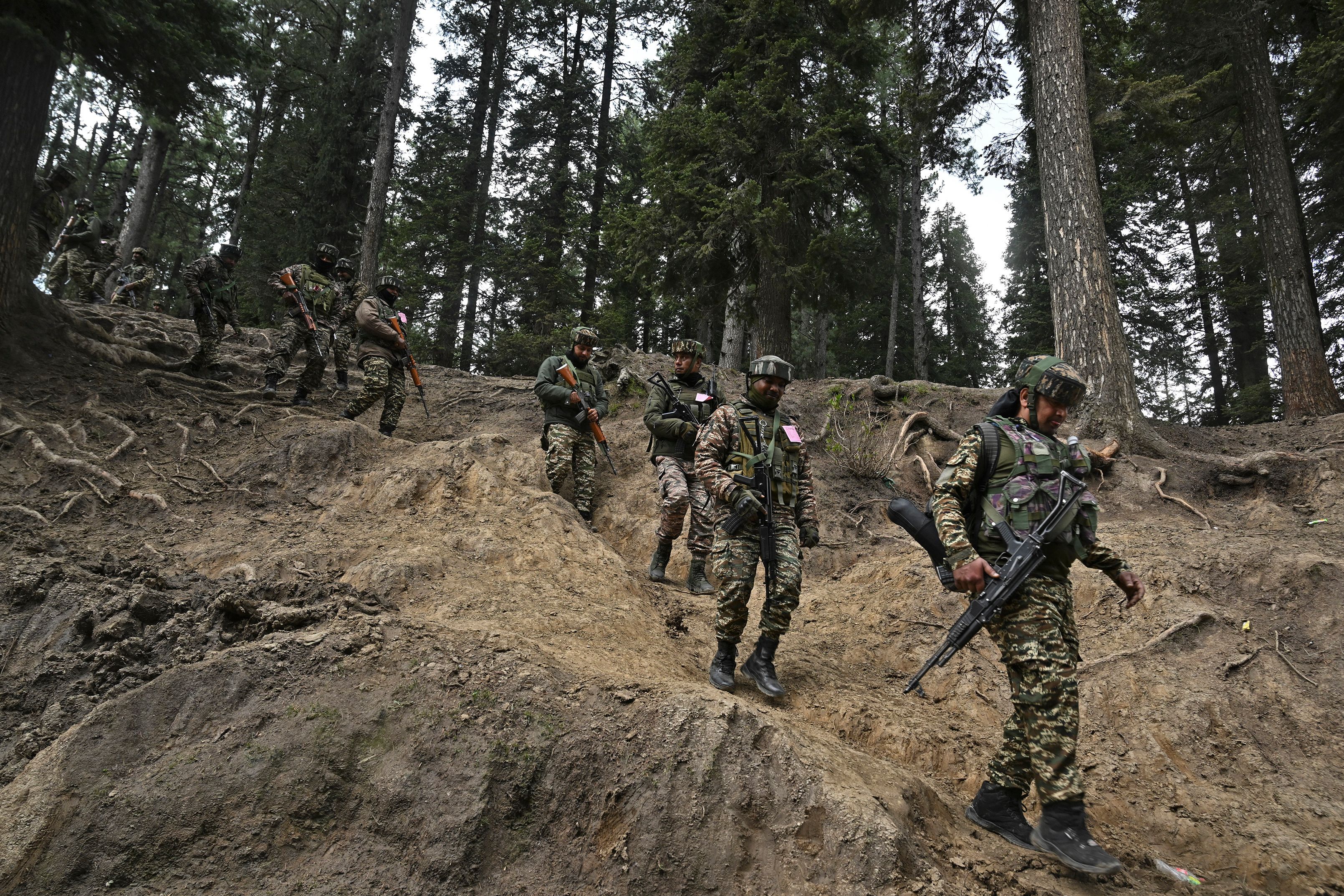
On May 7, 2025, between 1:05 and 1:30 a.m. (IST), airstrikes carried out by the Indian Air Force hit nine locations inside Pakistan and Pakistan occupied Kashmir (PoK). It was codenamed Operation Sindoor.

Rudra Chaudhuri
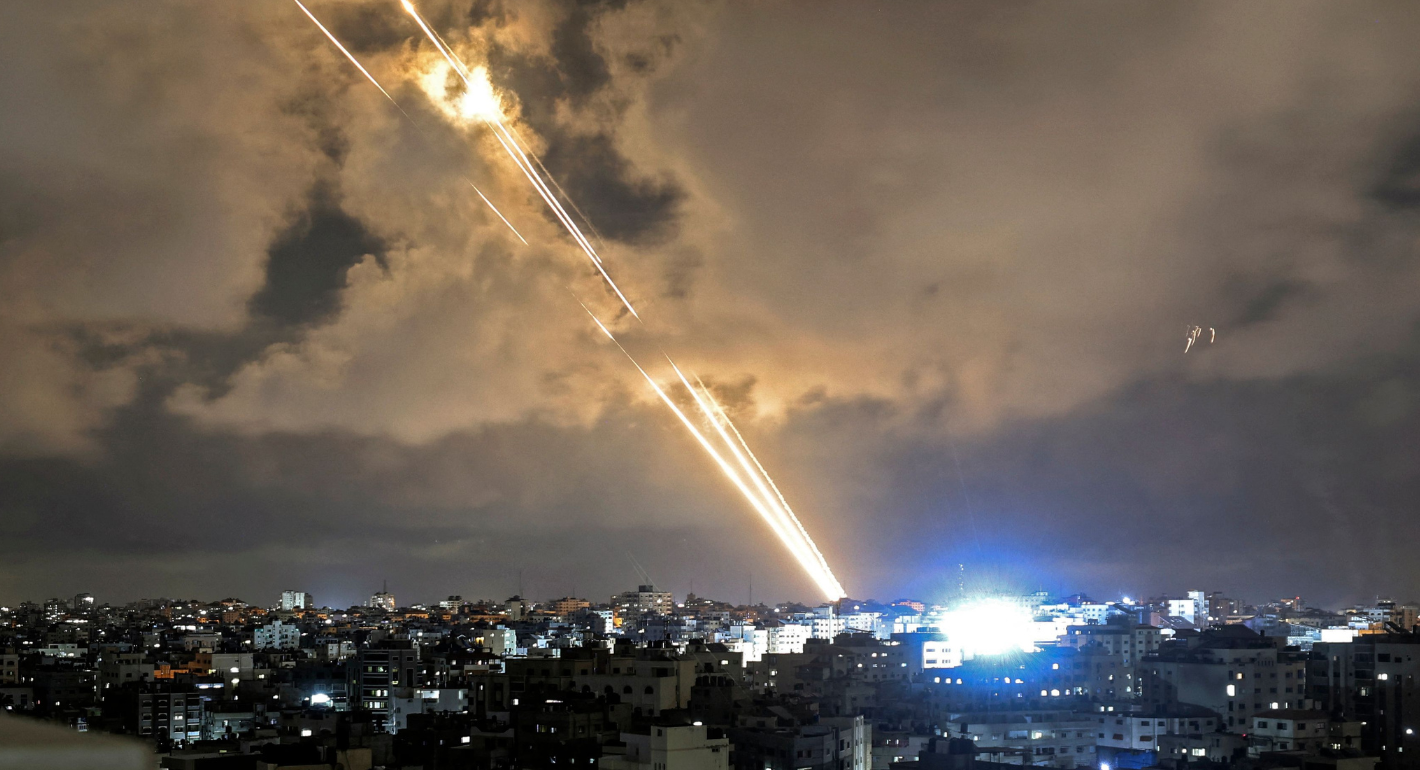
An Israeli response to Iran’s October 1 attack is imminent. The key question is of its intensity and potential fallout, both within Iran, in terms of nuclear security policy changes, and across the broader region. The coming days are likely to reshape West Asia irreversibly.
Gaddam Dharmendra
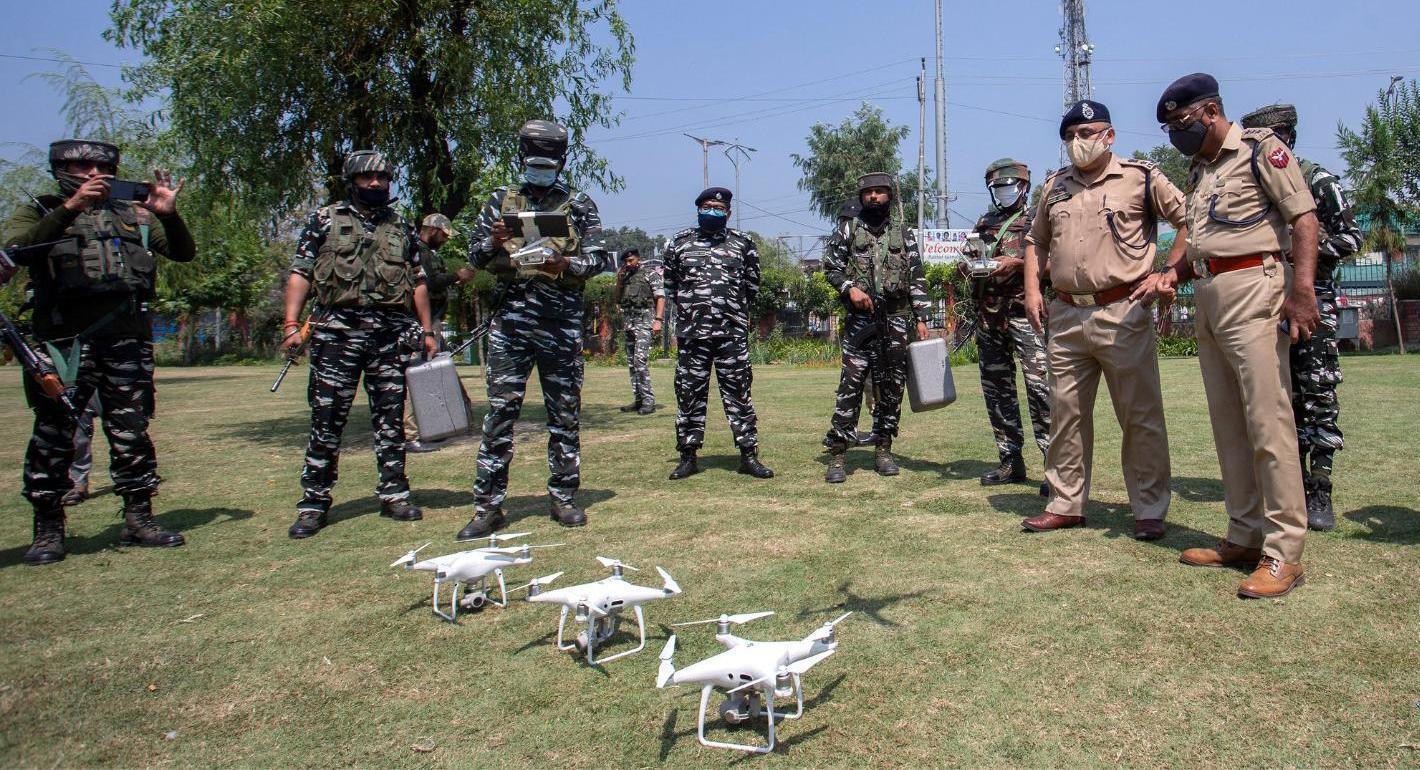
Over the last three years, drone intrusions along the India-Pakistan International Border have increased. This commentary describes the nature of this new threat and outlines countermeasures deployed by the Indian security establishment so far.
Surya Valliappan Krishna, Ashima Singh