

Commentary
Maria Lipman
{
  "authors": [
    "Maria Lipman"
  ],
  "type": "legacyinthemedia",
  "centerAffiliationAll": "",
  "centers": [
    "Carnegie Endowment for International Peace",
    "Carnegie Russia Eurasia Center"
  ],
  "collections": [],
  "englishNewsletterAll": "",
  "nonEnglishNewsletterAll": "",
  "primaryCenter": "Carnegie Russia Eurasia Center",
  "programAffiliation": "",
  "programs": [],
  "projects": [],
  "regions": [
    "Caucasus",
    "Russia"
  ],
  "topics": [
    "Political Reform",
    "Democracy",
    "Economy"
  ]
}
REQUIRED IMAGE
Source: Washington Post
Among Russia-watchers, the phrase "burgeoning middle class" has become common. A recent study found that about one-quarter of the country's 140 million people were "middle class." A consumer boom is a new reality, with crowded shopping malls, growing sales of foreign cars (up 65 percent in March from the same month last year), fast-expanding Internet access and Russian tourists becoming as familiar as Germans or Brits at some international resorts.
It is certainly good to see my compatriots enjoy more comfortable lifestyles. And do we deserve it, after decades, even centuries, of deprivation! Arguably, never in history has the proportion of Russians who enjoy decent lives been as large.
The question is why the middle class matters. Is it about more than improved living standards? Is it, as some speculate, conducive to greater demand for the rule of law, a democratic polity and better governance?
Such demand is not found in today's Russia. As the Kremlin has steadily expanded and tightened control over the public realm -- stripping other institutions of authority and restricting people's political rights -- the "burgeoning middle class" has shown as little yearning for political participation as has the vast majority of the rest of the population. As with the majority overall, those in the middle-income group have accepted the paternalism of Vladimir Putin's government and remained apolitical and apathetic. They have not taken action to reclaim the territory encroached upon by the Kremlin.
This doesn't mean that the quasi-middle class is fond of the Kremlin's ways or the quality of its governance. But it's a long way from grumbling in workplaces -- or even in op-ed columns and blogs -- to getting politically involved.
And why should they get politically active, or even vote, for that matter? It is assumed -- quite rightly -- that in a Kremlin-controlled political environment, elections are devoid of meaning. But those in the middle class don't mind being unrepresented; as long as life is good, their non-participation suits them fine, just as it does the state.
Radical depoliticization is not the only feature that distinguishes the Russian middle class from its Western counterparts. Russia's is not a broad-based economy. Revenue from commodities exports is greater than tax revenue from small or medium-size businesses. The government does not depend greatly on taxpayers, and taxpayers do not expect, let alone demand, accountability from the government.
More than half of Russia's middle class is employed by the state, with many people working for the growing number of big state-run corporations. As the 2007-08 election campaign approaches, the government, awash in energy cash, has repeatedly raised salaries. Why would citizens want political change if the state provides well-paid jobs and if showing disloyalty to a generous employer is likely to make their lives worse, not better?
Russia's middle class may suffer from the absence of the rule of law but is unlikely to demand it. Abiding by the law is hardly regarded as a virtue. Corruption and extralegal arrangements are seen as facts of life, and the rare attempts by civic activists' to change things seem naive. Government bureaucrats habitually convert the authority of their offices into steady incomes.
The Western middle class is rooted in institutions and immersed in regulated interactions such as paying mortgages, buying insurance and saving for children's educations. Westerners invest in the future and expect the system to be effective and fair; if an administration fails to meet those standards, the middle class assumes it can vote the government out.
Unlike its Western counterparts, Russia's middle class does not believe it can make a difference, nor do middle-class Russians (or the population at large) think much about the future. A poll taken late last year found that about 50 percent of Russians didn't know what would befall them in the coming months, and a third said they could not plan beyond one year. The mood is to spend, not save. This offers another perspective on the consumer boom: About 70 percent of the typical middle-class Russian's income is disposable, compared with about 40 percent for Westerners.
For now, members of the middle class enjoy the new consumption opportunities and are unlikely proponents of change. This attitude might shift, though, if government policies interfere with their new lifestyle. Should the government become less generous after the election, the affected groups may unite to stand up for their interests. The current apathy ("optimistic submission," a cynical observer called it recently) might give way to a desire to hold the government to account.
But change may also come sooner. Greedy, rent-seeking elites have been engaged in an intense rivalry for power and property. The Kremlin may find it harder to contain this feud, especially if there's less rent to divide. This struggle will hardly be pretty or democratic, but if it spills over it will most certainly politicize society.
Masha Lipman, editor of the Carnegie Moscow Center's Pro et Contra journal, writes a monthly column for The Post.
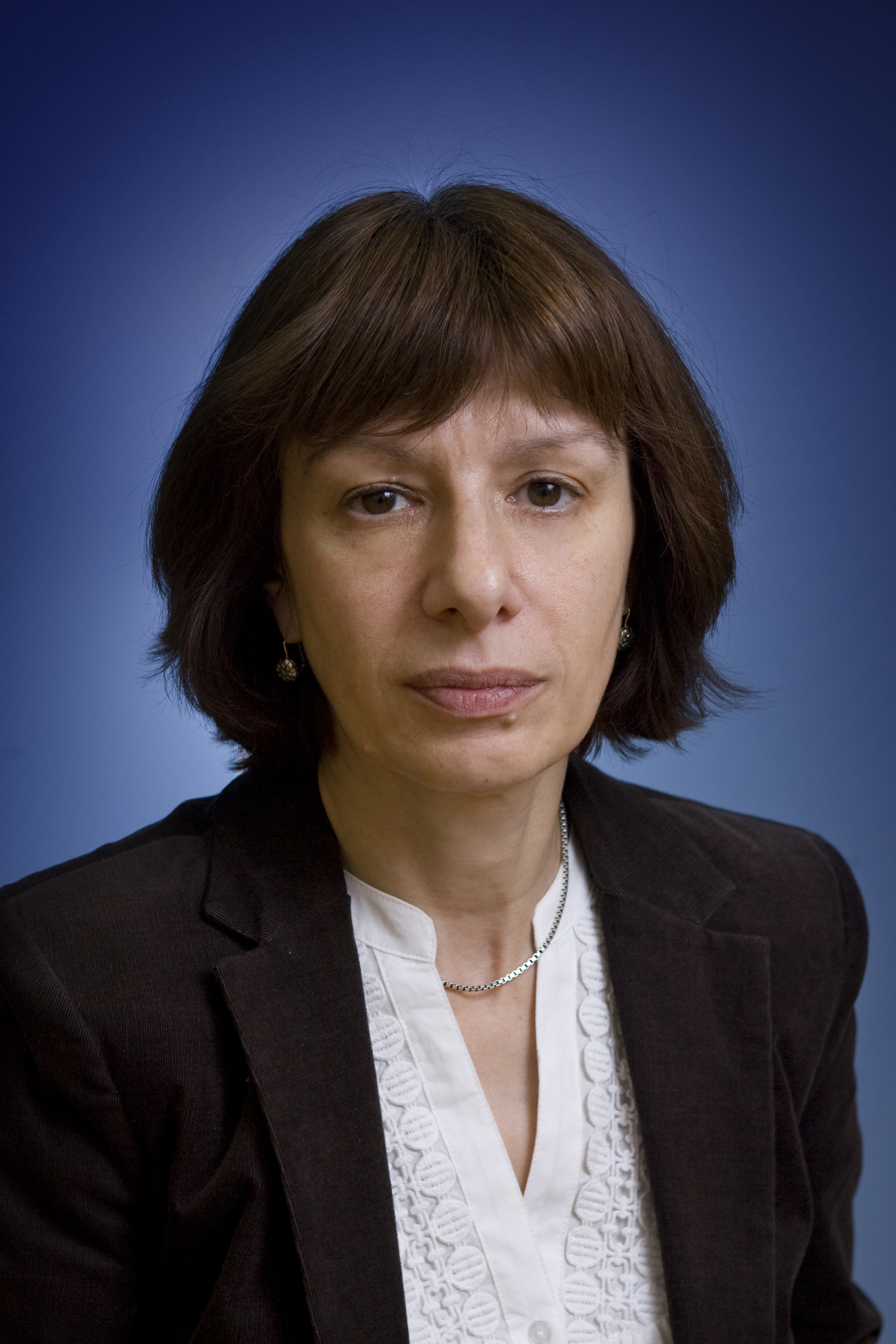
Former Scholar in Residence, Society and Regions Program, Editor in Chief, Pro et Contra, Moscow Center
Lipman was the editor in chief of the Pro et Contra journal, published by the Carnegie Moscow Center. She was also the expert of the Carnegie Moscow Center’s Society and Regions Program.
Recent Work
Maria Lipman
Maria Lipman
Carnegie India does not take institutional positions on public policy issues; the views represented herein are those of the author(s) and do not necessarily reflect the views of Carnegie, its staff, or its trustees.

This piece argues that India’s central challenge is not managing a single flashpoint but resolving the underlying tension between expansion and institutional coherency of the BRICS grouping.

Vrinda Sahai

On March 10, 2026, India’s Union Cabinet approved amendments to Press Note 3, a regulation that mandated government approval on all foreign direct investment (FDI) from countries sharing a land border with India. This amendment raises questions primarily about whether its stated benefits will materialize and if the risks have been adequately weighed. This piece will address the same.

Konark Bhandari

This piece examines India’s response to U.S. sanctions and tariffs, specifically assessing the immediate market consequences, such as alterations in import costs, and the broader strategic implications for India’s energy security and foreign policy orientation.
Vrinda Sahai
This paper examines the evolution of India-China economic ties from 2005 to 2025. It explores the impact of global events, bilateral political ties, and domestic policies on distinct spheres of the economic relationship.
Santosh Pai
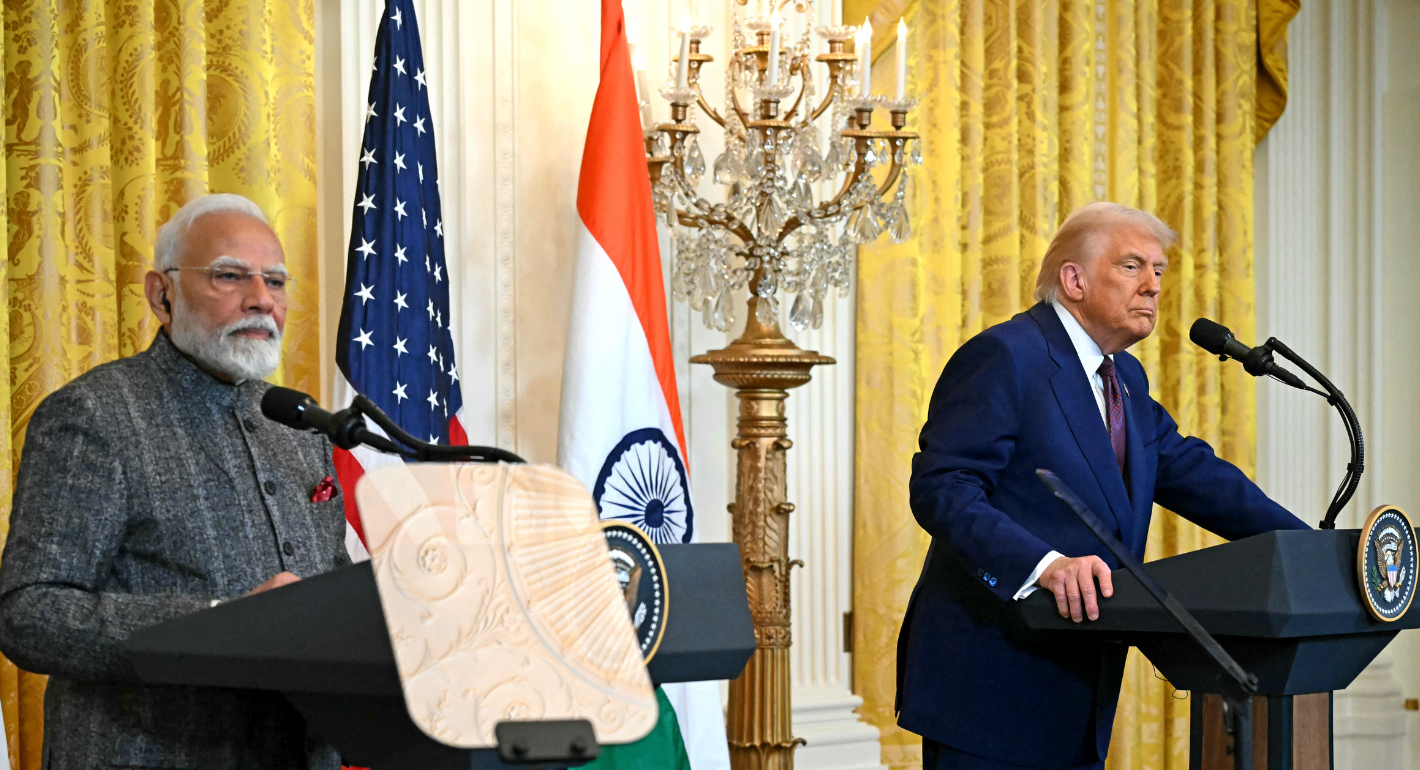
The India-U.S. relationship currently appears buffeted between three “Ts”—TRUST, Tariffs, and Trump.
Arun K. Singh