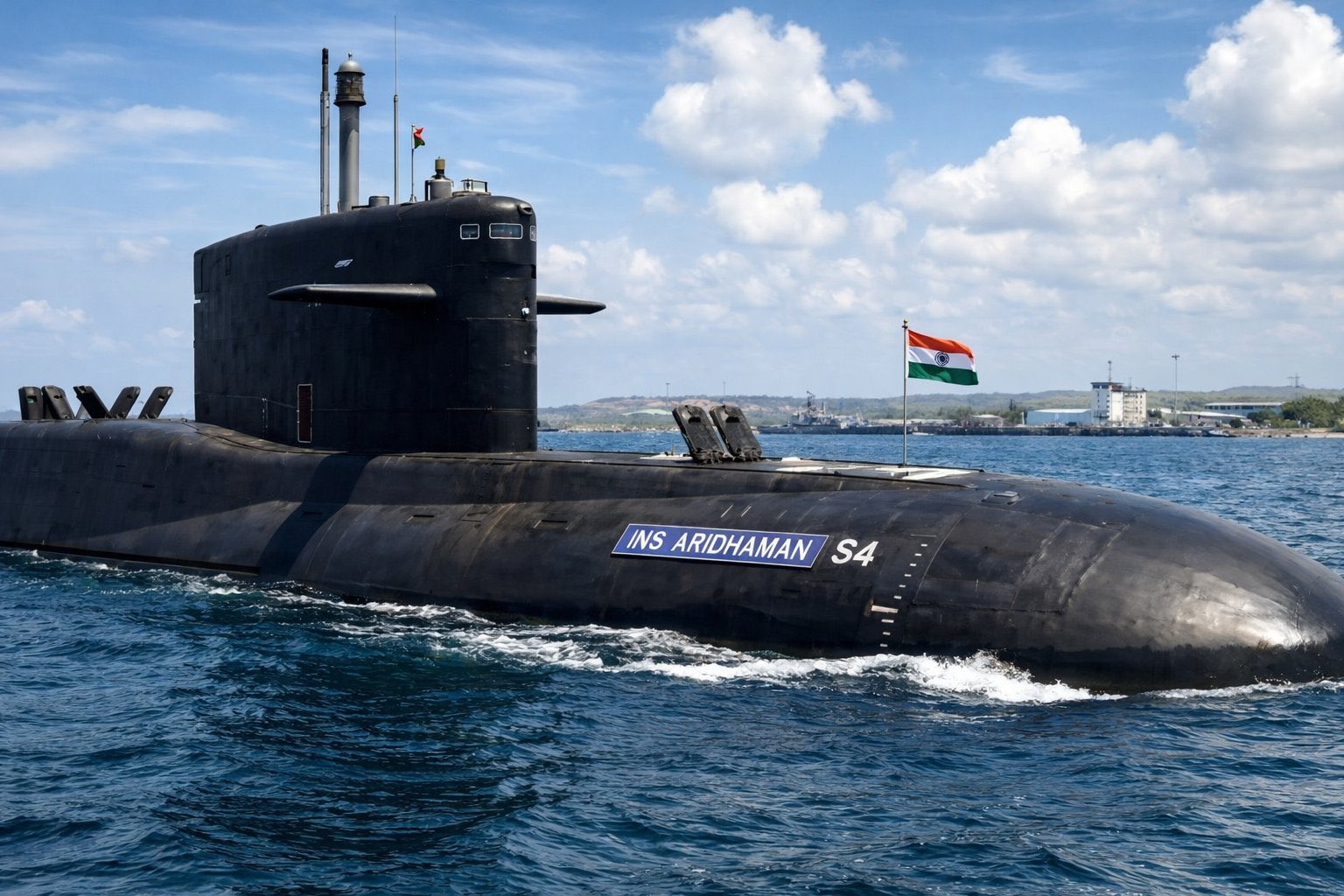
The induction of INS Aridhaman, which features several technological enhancements, now gives India the third nuclear ballistic missile submarine to ensure continuous at-sea deterrent.
Dinakar Peri
{
"authors": [],
"type": "pressRelease",
"centerAffiliationAll": "dc",
"centers": [
"Carnegie Endowment for International Peace"
],
"collections": [],
"englishNewsletterAll": "asia",
"nonEnglishNewsletterAll": "",
"primaryCenter": "Carnegie Endowment for International Peace",
"programAffiliation": "AP",
"programs": [
"Asia"
],
"projects": [],
"regions": [
"East Asia",
"China",
"Taiwan"
],
"topics": [
"Security",
"Military"
]
}REQUIRED IMAGE
The balance of power in the Taiwan Strait has not shifted in China’s favor, but China’s acquisition of new military capabilities threatens cross-strait stability, argues a new volume from the Carnegie Endowment.
FOR IMMEDIATE RELEASE: July 17, 2007
– NEWS RELEASE –
WASHINGTON, July 17—The balance of power in the Taiwan Strait has not shifted in China’s favor, but China’s acquisition of new military capabilities threatens cross-strait stability, argues a new volume from the Carnegie Endowment.
Assessing the Threat: The Chinese Military and Taiwan’s Security, is a comprehensive study of the dangers of military escalation in the Taiwan Strait, the latest advances in capabilities of the People’s Liberation Army, and China’s security relationship with the United States and the Asia-Pacific. Edited by Michael D. Swaine, Andrew N.D. Yang, and Evan S. Medeiros, with Oriana Skylar Mastro, the volume offers concrete suggestions and crisis management practices for government and military leaders in Washington, D.C., Beijing, and Taipei.
Key Conclusions:
If regional relations are mismanaged, Chinese and U.S. actions and reactions in a Taiwan situation could adversely affect Sino-American relations and force other countries in the region to choose sides in a deepening dispute over Taiwan. On the other hand, if properly handled, regional relations with both Beijing and Washington could act as a mutual deterrent to possible provocations originating from Beijing, Washington, and/or Taipei, concludes the volume.
###
Notes:
The induction of INS Aridhaman, which features several technological enhancements, now gives India the third nuclear ballistic missile submarine to ensure continuous at-sea deterrent.
Dinakar Peri
This piece argues that the present Indian strategy, based on opportunistic diversification and utilization of limited strategic reserves, remains inadequate when confronting supply disruptions. It evaluates India’s options in the short, medium, and long terms.
Vrinda Sahai
This piece examines India’s response to U.S. sanctions and tariffs, specifically assessing the immediate market consequences, such as alterations in import costs, and the broader strategic implications for India’s energy security and foreign policy orientation.
Vrinda Sahai
The India-Pakistan conflict that played out between May 6 and May 10, 2025, offers several military lessons. This article presents key takeaways from Operation Sindoor and breaks down how India’s preparations shaped the outcome and what more is needed to strengthen future readiness.
Dinakar Peri
This book offers a comprehensive analysis of India's evolving relationship with sovereignty in a complex global order. Moving beyond conventional narratives, it examines how the sovereignty principle shapes India's behavior across four critical domains—from traditional military power to contemporary data governance.
Rudra Chaudhuri, Nabarun Roy