

Paper
Ashley J. Tellis
{
  "authors": [
    "Ashley J. Tellis"
  ],
  "type": "testimony",
  "centerAffiliationAll": "dc",
  "centers": [
    "Carnegie Endowment for International Peace"
  ],
  "collections": [],
  "englishNewsletterAll": "asia",
  "nonEnglishNewsletterAll": "",
  "primaryCenter": "Carnegie Endowment for International Peace",
  "programAffiliation": "AP",
  "programs": [
    "Asia",
    "South Asia"
  ],
  "projects": [],
  "regions": [
    "South Asia",
    "East Asia",
    "Southeast Asia"
  ],
  "topics": [
    "Economy",
    "Trade"
  ]
}
Source: Getty
Asia’s resurgence is revolutionary; Asia will contribute 43% of world GDP by 2020, is the second global hub of innovation, and has amassed a tremendous amount of military power. But the resurgence is also incomplete. Large swaths remain outside of Asia’s economic “miracle,” political systems remain at various stages of development, and Asian nations face many religious and ideological challenges.
Source: Testimony before French White Paper Commission

Asia’s resurgence is revolutionary; Asia will contribute 43% of world GDP by 2020, is the second global hub of innovation, and has amassed a tremendous amount of military power. But the resurgence is also incomplete. Large swaths remain outside of Asia’s economic “miracle,” political systems remain at various stages of development, and Asian nations face many religious and ideological challenges.
The combination of the strength and weakness of Asian states implies both challenges to and opportunities for cooperation with Europe and the United States, noted Tellis. The U.S. will remain engaged in Asia, as Asian issues continue to be inextricably tied to global issues and the U.S. maneuvers to maintain its primacy. Ultimately, it remains to be seen whether Asia’s multipolarity leaves it “ripe for rivalry” or “primed for peace.”
Tellis said that the four central challenges posed by Asia’s to U.S. and European interests are:
• Will the region produce new rising powers that could disturb the existing power configuration in global politics?
• Will the region’s weaknesses produce threats to our common security and well-being?
• Will the region’s behaviors produce collective action problems that undermine our common security and well-being?
• Will the region produce new partners that can collaborate in the attainment of common goals?
You can watch the video of Tellis' testimony, in French, here.
Former Senior Fellow
Ashley J. Tellis was a senior fellow at the Carnegie Endowment for International Peace.
Recent Work
Ashley J. Tellis
Ashley J. Tellis
Carnegie India does not take institutional positions on public policy issues; the views represented herein are those of the author(s) and do not necessarily reflect the views of Carnegie, its staff, or its trustees.

On March 10, 2026, India’s Union Cabinet approved amendments to Press Note 3, a regulation that mandated government approval on all foreign direct investment (FDI) from countries sharing a land border with India. This amendment raises questions primarily about whether its stated benefits will materialize and if the risks have been adequately weighed. This piece will address the same.

Konark Bhandari

Trump 2.0 has unsettled India’s external environment—but has not overturned its foreign policy strategy, which continues to rely on diversification, hedging, and calibrated partnerships across a fractured order.



Milan Vaishnav, ed., Sameer Lalwani, Tanvi Madan, …

This piece examines India’s response to U.S. sanctions and tariffs, specifically assessing the immediate market consequences, such as alterations in import costs, and the broader strategic implications for India’s energy security and foreign policy orientation.

Vrinda Sahai

This paper examines the evolution of India-China economic ties from 2005 to 2025. It explores the impact of global events, bilateral political ties, and domestic policies on distinct spheres of the economic relationship.

Santosh Pai
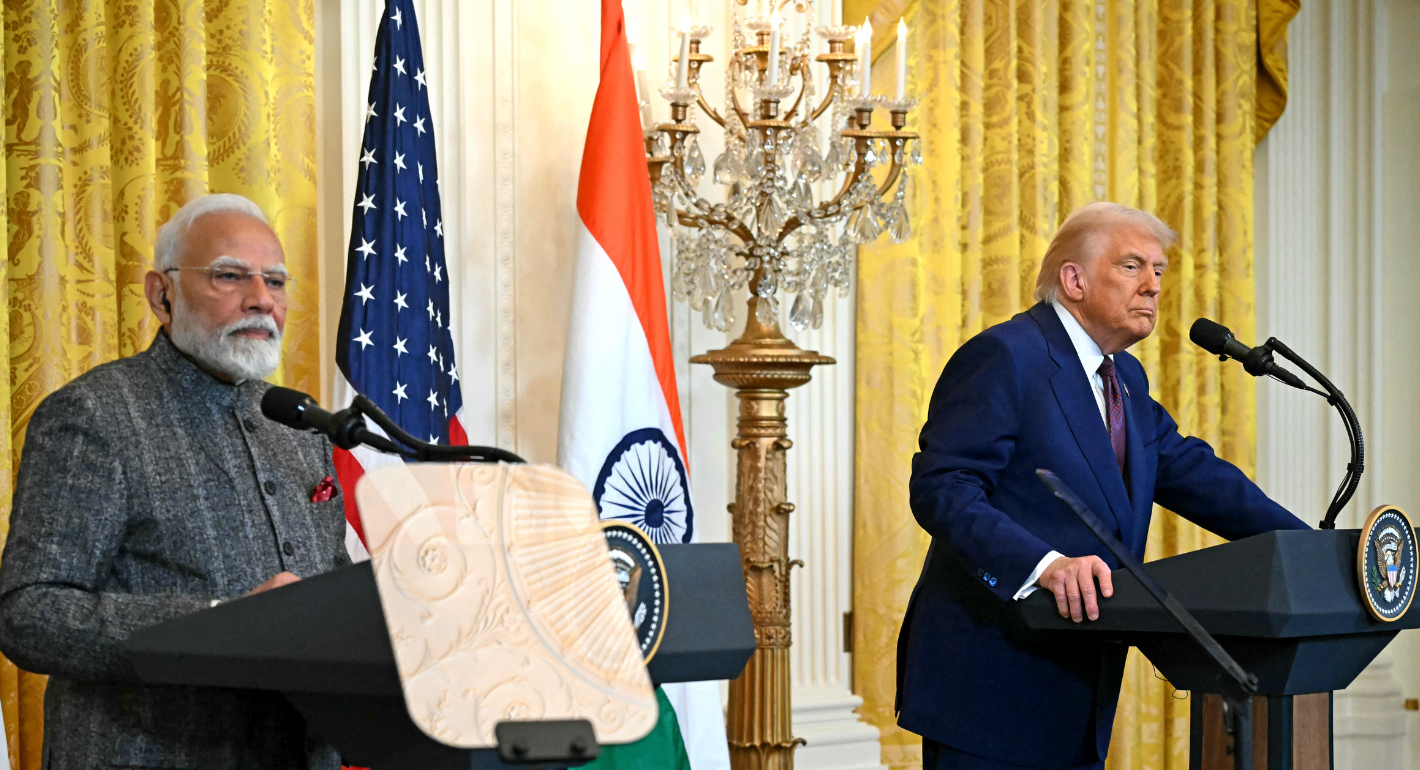
The India-U.S. relationship currently appears buffeted between three “Ts”—TRUST, Tariffs, and Trump.
Arun K. Singh