

Commentary
How is AI reshaping space security, creating governance challenges, and where does international diplomacy stand today?
Tejas Bharadwaj, Almudena Azcárate Ortega
{
  "authors": [
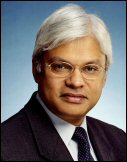
    "Ashley J. Tellis",
    "Blake Hounshell"
  ],
  "type": "legacyinthemedia",
  "centerAffiliationAll": "dc",
  "centers": [
    "Carnegie Endowment for International Peace"
  ],
  "collections": [],
  "englishNewsletterAll": "ctw",
  "nonEnglishNewsletterAll": "",
  "primaryCenter": "Carnegie Endowment for International Peace",
  "programAffiliation": "SAP",
  "programs": [
    "South Asia"
  ],
  "projects": [],
  "regions": [
    "North America",
    "United States"
  ],
  "topics": [
    "Security"
  ]
}
Source: Getty
Monday's elections in Pakistan were -- to use a timeworn cliché -- a political earthquake. Although the poll numbers were clear, very few Pakistan watchers expected that President Pervez Musharraf would allow the opposition to win in such a decisive fashion. In the end, South Asia expert Ashley Tellis of the Carnegie Endowment for International Peace told me, "There was a depth of resentment that not even the government's manifold efforts at shaping the outcome could prevent."
Source: Foreign Policy Magazine blog

So what happens now? "With the quite utterly conclusive demise of the PML-Q," Tellis said, "the coalition that is likely to be formed will be between the PPP and the PML-N." (Referring to Musharraf's Pakistan Muslim League, the Pakistan People's Party of the late Benazir Bhutto and now her husband Asif Zardari, and the PML-N of former Prime Minister Nawaz Sharif, respectively.)
But what about Musharraf? "This result simply just cannot be good news for him," Tellis said. "I mean, this is absolutely devastating." Nawaz Sharif, you may recall, despises Musharraf for ousting him back in 1999, so there's little chance his party would want to keep the general around. The PPP is another story, Tellis said, and Zardari might be willing to let Musharraf stay on as president -- but with vastly curtailed powers. "I would not treat his departure from office as inevitable," Tellis cautioned. But for Pakistan, he said, the return of the moderate civilian parties represents "a very hopeful moment." Now we'll see if they can deliver.
Former Senior Fellow
Ashley J. Tellis was a senior fellow at the Carnegie Endowment for International Peace.
Blake Hounshell
Carnegie India does not take institutional positions on public policy issues; the views represented herein are those of the author(s) and do not necessarily reflect the views of Carnegie, its staff, or its trustees.

How is AI reshaping space security, creating governance challenges, and where does international diplomacy stand today?


Tejas Bharadwaj, Almudena Azcárate Ortega

After the chill in ties between 2020 and 2024 that brought India–China relations to their lowest point in several decades, the two countries have engaged each other afresh. This paper argues that there are predominantly four imperatives guiding India’s approach to China, and they exist in an order of priority.

Saheb Singh Chadha

The U.S.–India semiconductor cooperation story is well-stocked with top-level strategic intent. What remains unresolved, however, are some underlying challenges that will determine whether the cooperation actually functions. Three such friction points stand out.

Shruti Mittal

This piece argues that the present Indian strategy, based on opportunistic diversification and utilization of limited strategic reserves, remains inadequate when confronting supply disruptions. It evaluates India’s options in the short, medium, and long terms.

Vrinda Sahai
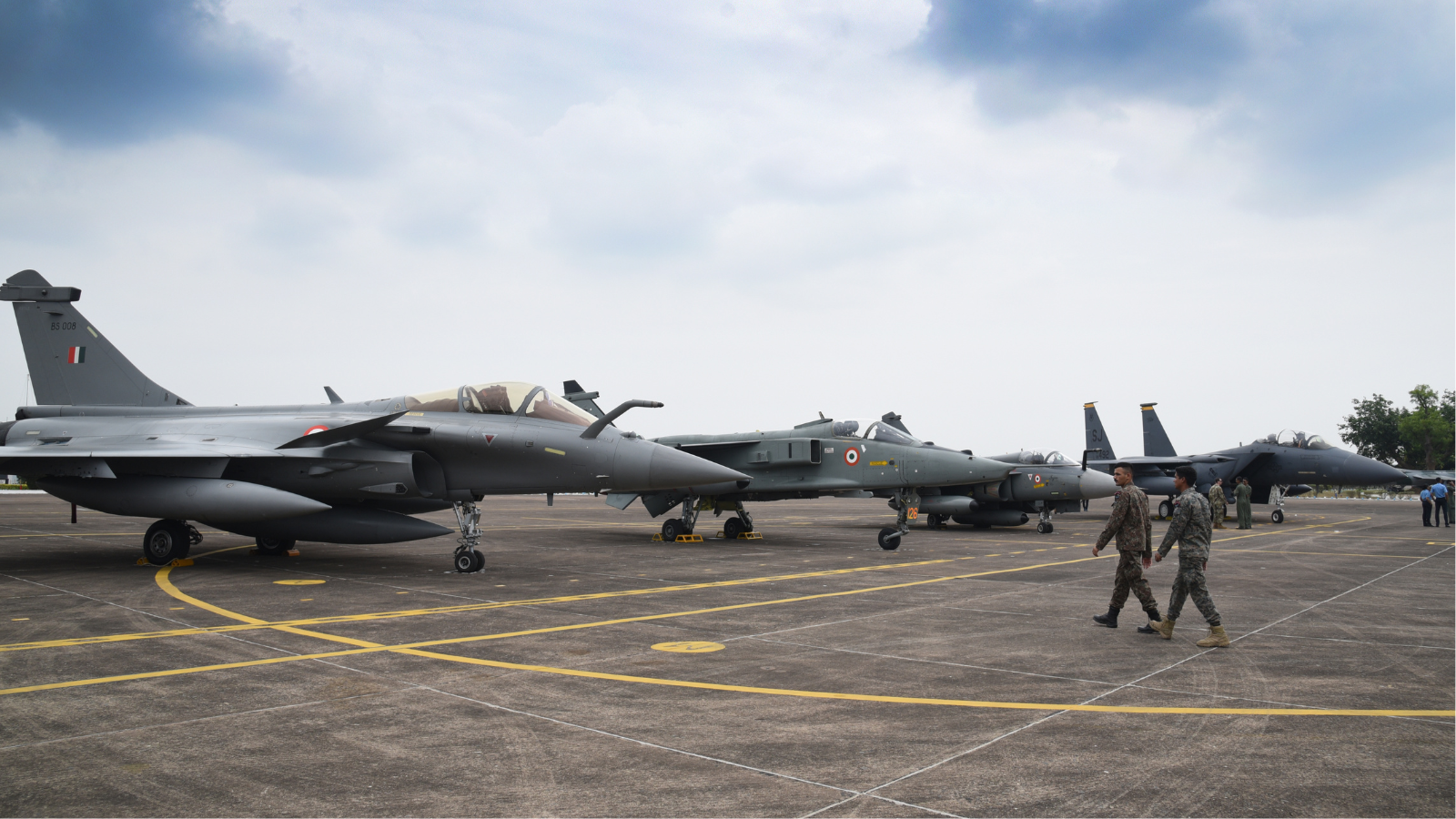
India and the United States are close to concluding a Reciprocal Defense Procurement Agreement (RDPA) that will allow firms from the two countries to sell to each other’s defense establishments more easily. While this may not remedy the specific grievances both sides may have regarding larger bilateral issues, an RDPA could restore some momentum, following the trade deal announcement.

Konark Bhandari