

Commentary
Nikolay Petrov
{
  "authors": [
    "Nikolay Petrov"
  ],
  "type": "legacyinthemedia",
  "centerAffiliationAll": "",
  "centers": [
    "Carnegie Endowment for International Peace",
    "Carnegie Russia Eurasia Center"
  ],
  "collections": [],
  "englishNewsletterAll": "",
  "nonEnglishNewsletterAll": "",
  "primaryCenter": "Carnegie Russia Eurasia Center",
  "programAffiliation": "",
  "programs": [],
  "projects": [],
  "regions": [
    "Caucasus",
    "Russia"
  ],
  "topics": [
    "Political Reform",
    "Democracy",
    "Economy"
  ]
}
REQUIRED IMAGE
During the Stalin years there was the notion of intensifying class struggle. Now we are observing an intensifying clan struggle as part of the Kremlin's policy of managed democracy, which, it would seem, has become quite overmanaged. This policy is particularly evident with governors, who have essentially become federal bureaucrats after President Vladimir Putin began appointing them.
Source: The Moscow Times
During the Stalin years there was the notion of intensifying class struggle. Now we are observing an intensifying clan struggle as part of the Kremlin's policy of managed democracy, which, it would seem, has become quite overmanaged. This policy is particularly evident with governors, who have essentially become federal bureaucrats after President Vladimir Putin began appointing them.
With President-elect Dmitry Medvedev's inauguration only days away, there are many rumors about the departure of some governors. Mayor Yury Luzhkov and St. Petersburg Governor Valentina Matviyenko are mentioned among the lame ducks. Those being considered for replacement also include: Sergei Darkin of Primorye, Nikolai Kolesov of Amur, Georgy Boos of Kaliningrad, Vladimir Kulakov of Voronezh, Nikolai Shaklein of Kirov, Murat Zyazikov of Ingushetia and Alexei Lebed of Khakassia. Also vulnerable are veteran heavyweights such as Eduard Rossel from Sverdlovsk, Murtaz Rakhimov from Bashkortostan, Mintimer Shaimiyev from Tatarstan and Yegor Stroyev from Oryol.
Matviyenko of St. Petersburg, Alexander Khloponin of Krasnoyarsk, Vladimir Yakushev of Tyumen, Vladimir Artyakov of Samara and Anatoly Artamanov of Kaluga are regarded as likely candidates for positions in the new government under Putin. Until now, the only former governors to work in the Cabinet or the Kremlin have been Natural Resources Minister Yury Trutnev, Kremlin chief of staff Sergei Sobyanin and Vladimir Yakovlev, who was the regional development minister under Prime Minster Mikhail Fradkov.
The problem of replacing governors comes at the same time that federal officials may be rotated in a Medvedev presidency. First Deputy Prime Minister Sergei Ivanov, Agriculture Minister Alexei Gordeyev, Sobyanin, Interior Minister Rashid Nurgaliev, Trutnev and Justice Minister Vladimir Ustinov are among those who are being considered for posts in the regions. If these officials go, the Kremlin may want to appoint them as governors after the new Cabinet is formed.
Last month, a survey of political experts rating the chances of political survival for governors was posted on the Strategema.org web site. Of the four regional heads who received the lowest survival rating, Alexander Chernogorov, the governor of Stavropol, has already left his post. Among the four governors who received the second-lowest rating, Alexander Tishanin of Irkutsk has also left. These two resignations have intensified rumors about a new round of replacements.
What will result from these gubernatorial replacements?
First, when there is no public discussion of political issues facing the country, the role of rumors intensifies. They are used as a weapon in the political battle among clans. As a result, it is impossible to know whether the Kremlin is dissatisfied with a particular governor or whether his political rivals are disseminating rumors about an impending dismissal to destabilize the situation.
Second, the governors' positions will become more vulnerable as their fate becomes increasingly dependent on the new presidential administration.
The aspiration of the Kremlin to increase control over the regional political elite and to make them more dependent and loyal to Moscow is actually having the opposite effect. It has become difficult for the Kremlin to develop a stable relationship with the governors because no one knows how long they will remain in office.
With so much uncertainty surrounding governors' positions, they are not viewed in the regions as true leaders. Instead, they are seen as Moscow representatives who are serving the regions on a temporary basis only.
The Kremlin's relations with the regions are like a vehicle whose wheels do not respond to the steering wheel. It seems that the driver does not understand this crucial mechanical flaw -- particularly while the vehicle is moving in one direction. This flaw has tragic consequences, however, the moment he needs to make a turn to avoid hitting an oncoming car.
Nikolai Petrov is a scholar in residence at the Carnegie Moscow Center.
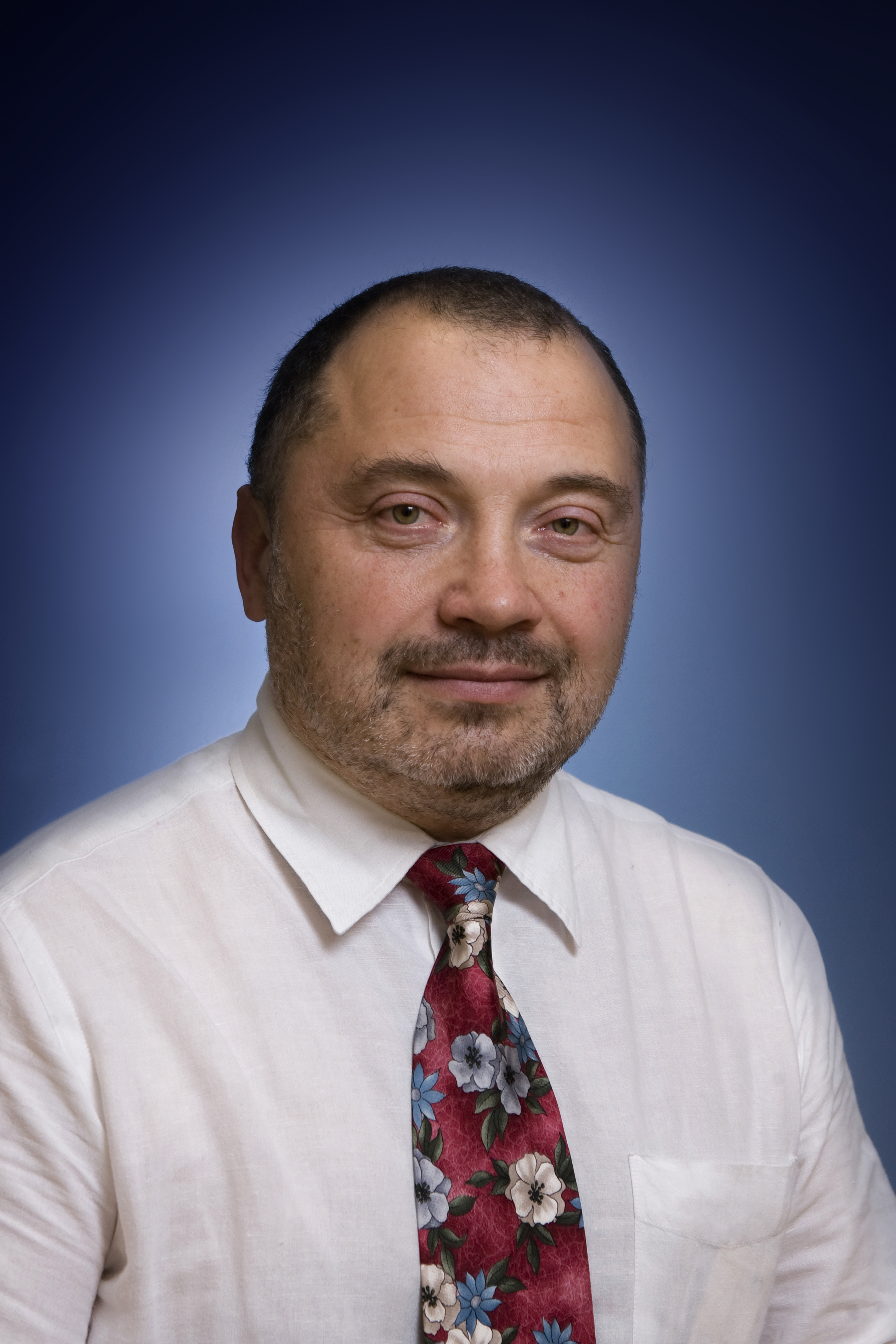
Former Scholar-in-Residence, Society and Regions Program, Moscow Center
Nikolay Petrov was the chair of the Carnegie Moscow Center’s Society and Regions Program. Until 2006, he also worked at the Institute of Geography at the Russian Academy of Sciences, where he started to work in 1982.
Recent Work
Nikolay Petrov
Nikolay Petrov
Carnegie India does not take institutional positions on public policy issues; the views represented herein are those of the author(s) and do not necessarily reflect the views of Carnegie, its staff, or its trustees.

This piece argues that India’s central challenge is not managing a single flashpoint but resolving the underlying tension between expansion and institutional coherency of the BRICS grouping.

Vrinda Sahai

On March 10, 2026, India’s Union Cabinet approved amendments to Press Note 3, a regulation that mandated government approval on all foreign direct investment (FDI) from countries sharing a land border with India. This amendment raises questions primarily about whether its stated benefits will materialize and if the risks have been adequately weighed. This piece will address the same.

Konark Bhandari

This piece examines India’s response to U.S. sanctions and tariffs, specifically assessing the immediate market consequences, such as alterations in import costs, and the broader strategic implications for India’s energy security and foreign policy orientation.
Vrinda Sahai

This paper examines the evolution of India-China economic ties from 2005 to 2025. It explores the impact of global events, bilateral political ties, and domestic policies on distinct spheres of the economic relationship.

Santosh Pai
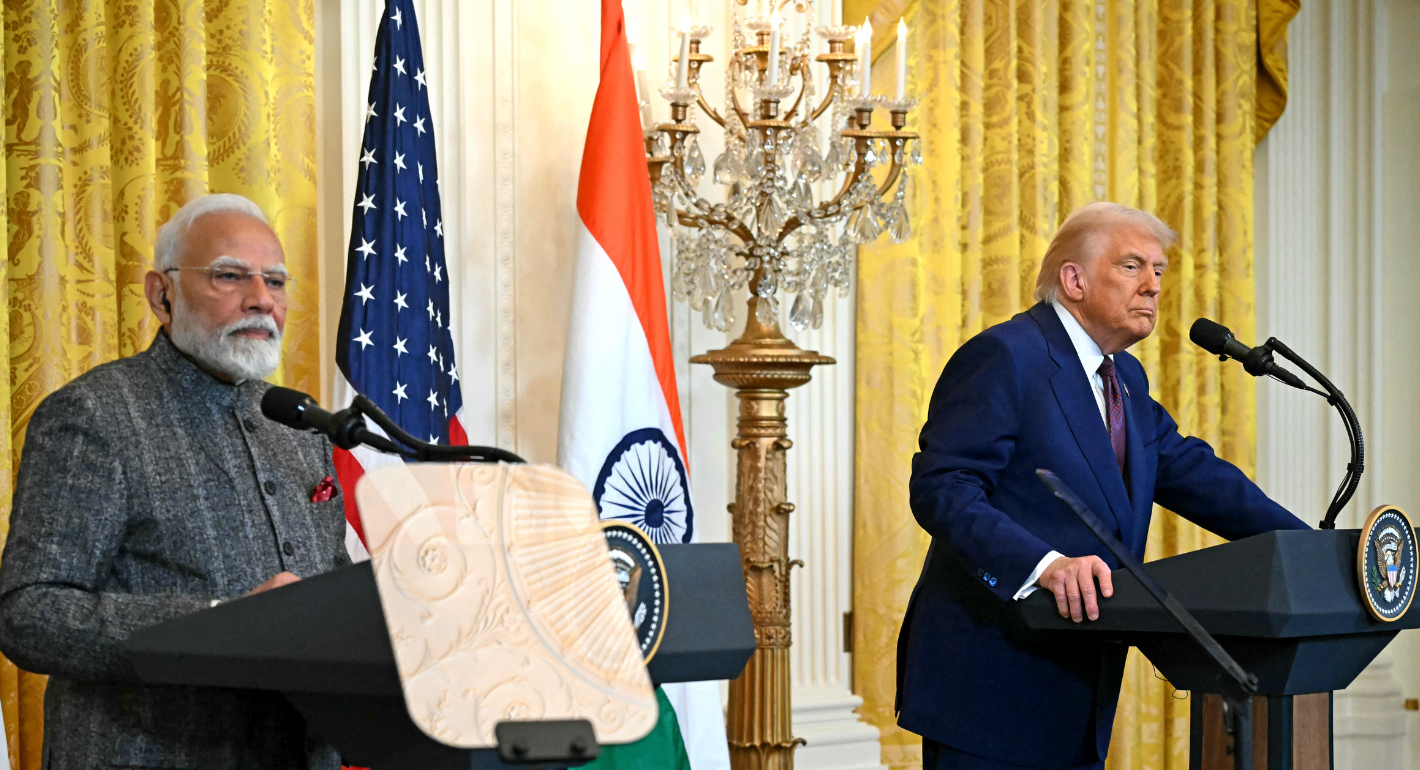
The India-U.S. relationship currently appears buffeted between three “Ts”—TRUST, Tariffs, and Trump.
Arun K. Singh