

Commentary
Maria Lipman
{
  "authors": [
    "Maria Lipman"
  ],
  "type": "legacyinthemedia",
  "centerAffiliationAll": "",
  "centers": [
    "Carnegie Endowment for International Peace",
    "Carnegie Russia Eurasia Center"
  ],
  "collections": [],
  "englishNewsletterAll": "",
  "nonEnglishNewsletterAll": "",
  "primaryCenter": "Carnegie Russia Eurasia Center",
  "programAffiliation": "",
  "programs": [],
  "projects": [],
  "regions": [
    "Caucasus",
    "Russia"
  ],
  "topics": [
    "Political Reform",
    "Democracy"
  ]
}
Source: Getty
Interest in the dark side of Soviet history is modest now compared with the nationwide yearning in the late 1980s for the truth about the Soviet regime's crimes. But it may be enough to make the Kremlin want to preempt or control such interest.
Source: Washington Post

That national journey into history was followed by the collapse of communism and then the collapse of the Soviet Union. Russia's first president, Boris Yeltsin, evolved as a passionate anti-communist and banished the rule of fear and repression that had plagued the nation for seven decades. In the following years, the government and public organizations sought to restore the historical record.
But Russia's next president, Vladimir Putin, distanced himself from his predecessor's outlook. During his presidency, anti-communism was strongly played down. Some communist symbols, including Stalin's national anthem, were brought back, and references to Stalin's crimes all but disappeared from official discourse. Government rhetoric promoting Russia as a strong state and warning of a hostile Western world seeking to harm the country boosted admiration for Stalin, which never quite died out during the post-communist years, and a general nostalgia for Soviet times.
The church's anti-communist initiative may serve the interests of the Russian leadership, which appears to look for ways to denounce communism while avoiding raising questions about today's regime and its association with the communist past.
The interest in a denunciation of communism may have to do with appeals by former Soviet states for an international condemnation of the massacres and other crimes committed on their territories by the Soviet regime. Ukraine, for instance, seeks to hold Russia responsible for the mass famine of its peasants during Stalin's collectivization. Russian officials may be enraged, but they're not in a position to say the death toll estimate is false, not least since Russian peasants fell victim to the same villainy. So the trick for Russia would be to admit crimes but not to take the blame for them, lest Ukraine or other nations seek compensation.
The church, the state's traditional ally, is an appropriate candidate for this mission. Because of its notorious collaboration with the Soviet regime, it has its own reason not to go too deep in denouncing communism. In several statements over the past couple of weeks, a church spokesman urged the government, in very general terms, to honor the memory of victims; to change the names of cities and streets associated with prominent communist figures of the past; to remove "statues of bloody leaders from central squares"; and more. This "de-communization lite" made no mention of Stalin or other perpetrators of the Great Terror, or of the monstrous state security forces that tortured and executed millions on the orders of the Communist Party.
The church's call for de-communization helps the state further marginalize the public effort led by Memorial, the Russian human rights group that, since the late 1980s, has researched and published information on communist crimes. Unlike the Russian Orthodox Church, Memorial wouldn't keep denunciations of communism within "reasonable limits." Little wonder that the church's anti-communist campaign conveys the impression that the church is the only organization concerned with confronting communist horrors.
Putin's Kremlin consistently sought to sideline organizations that wouldn't compromise their autonomy and that pursued agendas that did not conform with the official line. Lately, Memorial may have raised more concerns: As Memorial's board chairman, Arseny Roginsky, told me, public support for his organization has increased. Backing anti-Stalin initiatives, he explains, may be seen as a mild form of opposition by people who regard overt political activity as risky and pointless. For example, construction of a national memorial to gulag victims is again the subject of public discussion. Gorbachev and other prominent public figures are taking an active role. And Novaya Gazeta, a newspaper that Gorbachev co-owns, has published a series this year devoted to the victims of and participants in the Great Terror.
Interest in the dark side of Soviet history is modest now compared with the nationwide yearning in the late 1980s for the truth about the Soviet regime's crimes. But it may be enough to make the Kremlin want to preempt or control such interest. If its plan is indeed to enlist the church in a mild anti-communist campaign while marginalizing Memorial, the government has abundant power and resources to do so. Of course, even a limited condemnation of Soviet communism is better than nothing, but these political half-measures cannot supersede a national effort to come to terms with Russia's history.
Masha Lipman, editor of the Carnegie Moscow Center's Pro et Contra journal, writes a monthly column for The Post.
Click here to see the article on the Washington Post website.
Former Scholar in Residence, Society and Regions Program, Editor in Chief, Pro et Contra, Moscow Center
Lipman was the editor in chief of the Pro et Contra journal, published by the Carnegie Moscow Center. She was also the expert of the Carnegie Moscow Center’s Society and Regions Program.
Recent Work
Maria Lipman
Maria Lipman
Carnegie India does not take institutional positions on public policy issues; the views represented herein are those of the author(s) and do not necessarily reflect the views of Carnegie, its staff, or its trustees.

This piece argues that India’s central challenge is not managing a single flashpoint but resolving the underlying tension between expansion and institutional coherency of the BRICS grouping.

Vrinda Sahai

Experts weigh in on whether the United States is too hostile toward China.

Stephen Wertheim, Evan S. Medeiros, Vijay Gokhale
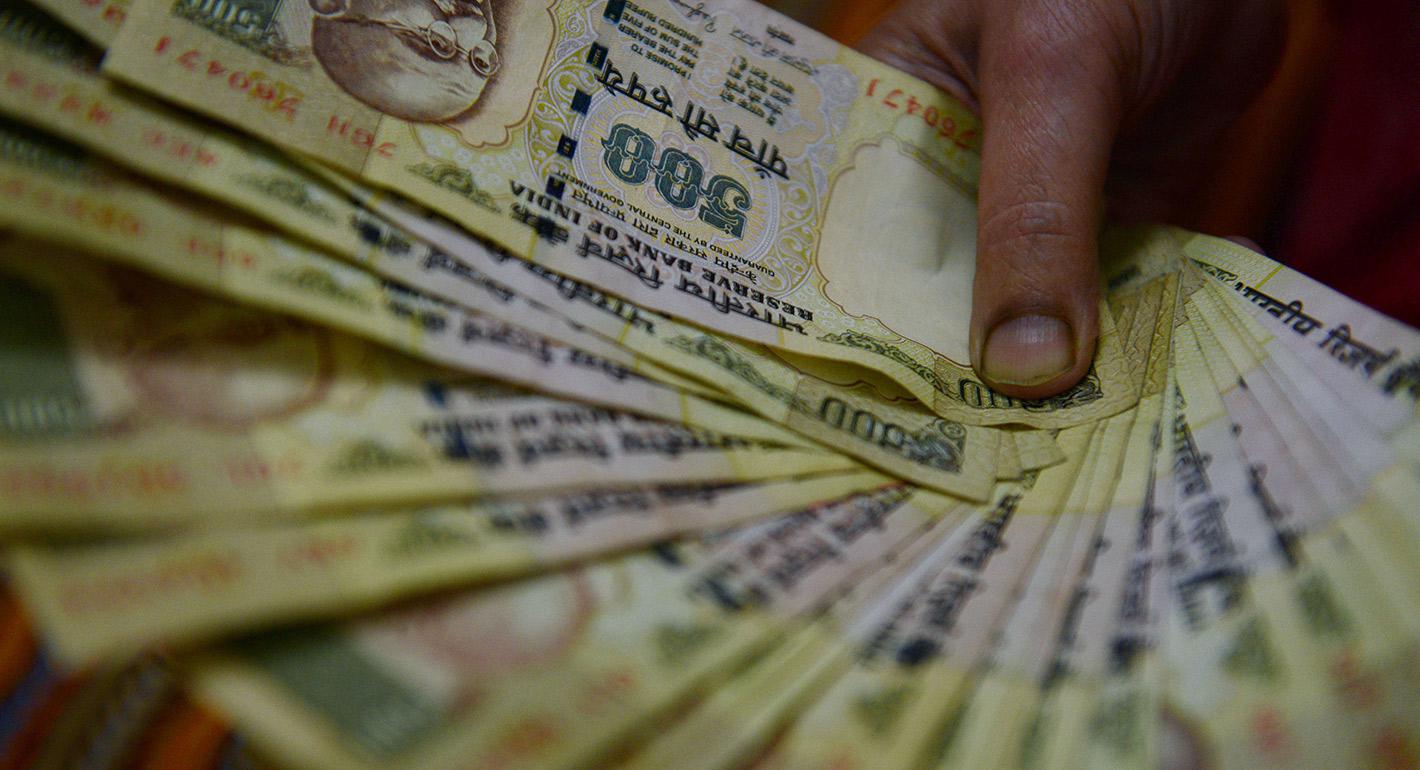
As India’s economy recovers from the coronavirus pandemic, Indian businesses need efficient financial structures to regain their ground. Key reforms to India’s Insolvency and Bankruptcy Code could fill these gaps.
Anirudh Burman
Access to cross-border data is an integral piece of the law enforcement puzzle. India is well placed to lead the discussions on international data agreements subject to undertaking necessary surveillance reforms.

Smriti Parsheera, Prateek Jha
After the coronavirus pandemic wanes, how will China’s reorientation of the Belt and Road Initiative to address global health concerns influence its relationships with South Asian countries?
Deep Pal, Rahul Bhatia