

Commentary
Alexey Malashenko
{
  "authors": [
    "Alexey Malashenko"
  ],
  "type": "legacyinthemedia",
  "centerAffiliationAll": "",
  "centers": [
    "Carnegie Endowment for International Peace",
    "Carnegie Russia Eurasia Center"
  ],
  "collections": [],
  "englishNewsletterAll": "",
  "nonEnglishNewsletterAll": "",
  "primaryCenter": "Carnegie Russia Eurasia Center",
  "programAffiliation": "",
  "programs": [],
  "projects": [],
  "regions": [
    "Caucasus",
    "Russia"
  ],
  "topics": [
    "Foreign Policy"
  ]
}
Source: Getty
Despite Western media coverage that paints Russia as solely responsible for the conflict in Georgia, the question of who is to blame is far less clear.
Source: RIA Novosti

In fact, it is hard to say who was the first to pull the trigger. I have a hunch that emotions have played their sinister role, at any rate, on Saakashvili's part. At a certain point he felt that he could make it, that he was strong enough. I think he acted without counseling with his "senior partners." Up until yesterday their reaction was unclear. It looks as if the United States has been caught unawares.
The same is true of Russia, hence the delay with the eventual tough reaction. Russia could not believe that Saakashvili could risk sending his tanks and Grad rockets...That sense of bewilderment passed. A decision was made and, as far as I can judge from the public reaction, the overwhelming majority has supported the government's tough response.
But as events unfold other questions crop up: is there an alternative opinion or, as in former times, one has to glean it from foreign broadcasts? As soon as it occurs to you, you feel that it is not a black-and-white situation. The Western media give a strange coverage of this war: Russia alone is to blame for everything. Western officials, as usual, apply double standards. The present situation in Southern Caucasus inevitably brings associations with Kosovo and Yugoslavia.
It turns out that what some can get away with others cannot. So, I would not say that the European and American positions are adequate. I have a feeling that in addition to double standards, they also have a hidden agenda. First, while vilifying Russia they are not going to take strong measures against it. Second, the need for negotiations is still being stressed. Third, German Foreign Minister Frank-Walter Steinmeier's statement on the events in South Ossetia suggests that it is still unclear who is to blame. If his real position was unequivocally anti-Russian, he, or anyone else, would not have said that.
Besides, intelligence is at work everywhere and there are independent experts in Europe and America. I assure you that their assessment of Saakashvili is anything but positive. I think Bush himself learned about it with a feeling of dismay. But in this situation every leader has a certain role to play from which he cannot depart because it is built into his global policy. In this case, formally and officially, they have to criticize Russia. They have a pretext for this. Russia is indeed fighting outside its own territory. And I should say that Russia has gone a bit too far. Let us hope that it too has something to do with emotions. However, in my opinion, it is time to hold negotiations. It is time to call a halt to hostilities, otherwise the West may toughen its position in earnest.
A few words about the media are in order. Our television provides very convincing coverage: not cynical, professional and very precise and competent even in terms of propaganda. If only our reports could reach the Western audience. The images that people in Georgia and the Western public get are far less compelling than ours. But will we be able to bring our point of view home to the world community? I think it is important today. Most importantly, it is time to put an end to the fighting.
All wars, as we know, end in peace sooner or later. The question is who will get what dividends from the war. At present one can only speculate on that score. I don't think what happened has soured the relations between the West and Russia all that much, especially if our side is ready for talks.
My guess is that NATO is distancing itself from Georgia. What use is Georgia to the alliance if the price for it will be so high? In that sense Saakashvili has lost. But a solution to the Georgia-Ossetia-Abkhaz-Russian conundrum is only delayed. Especially if one bears in mind that only last spring there were active talks about mediators and possible softening of positions. The hopes were well justified. Now the negotiation process has been thrown back.
I think that after this war there can be no serious talk about the CIS. No matter what pictures Russian television carries and how real the nightmare in and around Tskhinvali may be, Russia will be looked on with suspicion not only in Ukraine but everywhere in the CIS. The post-Soviet era is over. I think what happened underlined it.
Another point, that so far can be mentioned only parenthetically, is that the future of the 2014 Olympics is under a big question mark. Let us hope that the situation will change for the better by that time.
It is a pity that a precedent is being set up. In the midst of negotiations it suddenly turns out that one of the conflicting parties may take a risk, whether due to stupidity or some clandestine plan. And you cannot help looking at the neighbors, Armenia and Azerbaijan: the precedent is there...As a result, one gets a feeling that all talks are useless.
Alexey Malashenko is a member of the scientific council at the Carnegie Moscow Center.
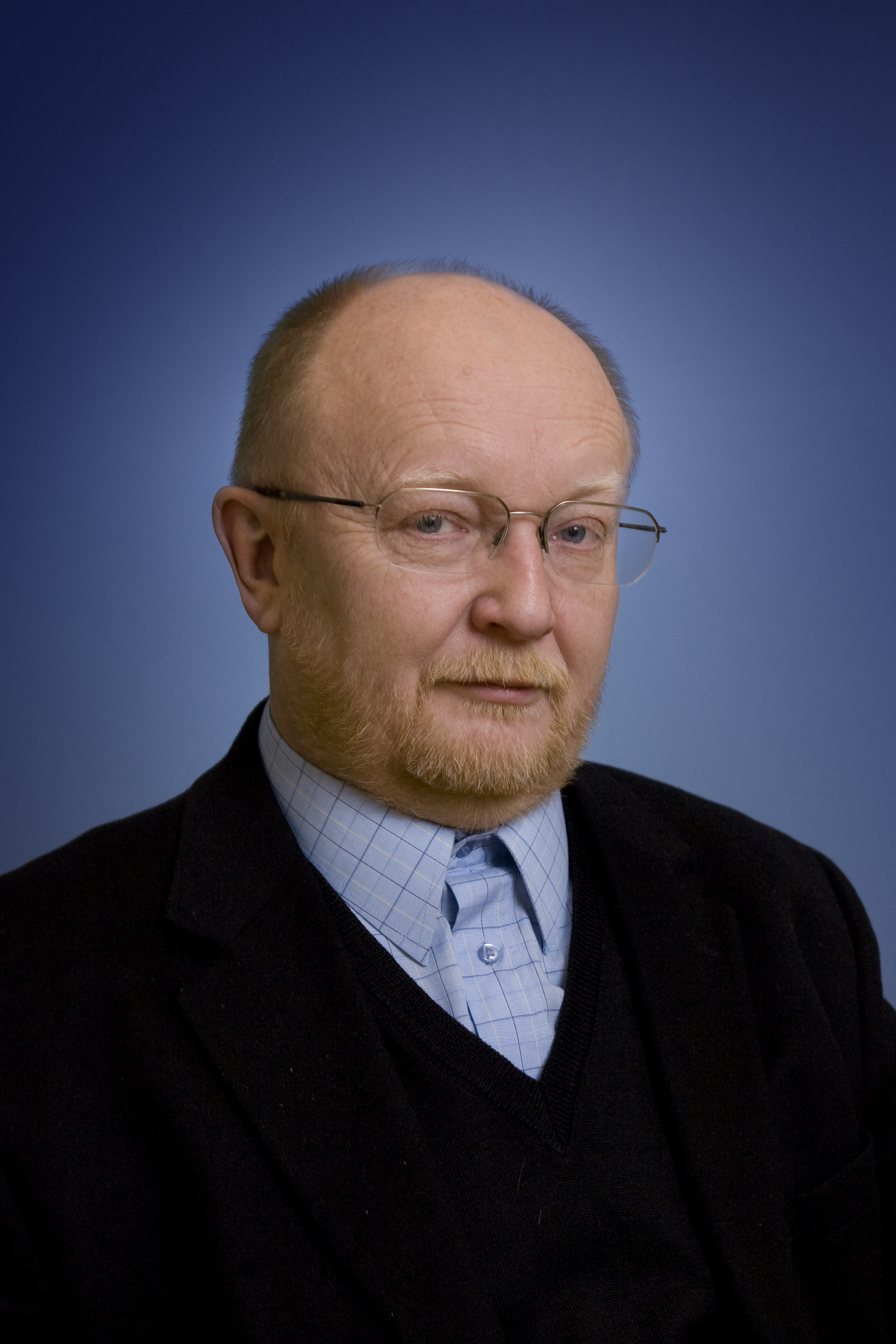
Former Scholar in Residence, Religion, Society, and Security Program
Malashenko is a former chair of the Carnegie Moscow Center’s Religion, Society, and Security Program.
Recent Work
Alexey Malashenko
Alexey Malashenko
Carnegie India does not take institutional positions on public policy issues; the views represented herein are those of the author(s) and do not necessarily reflect the views of Carnegie, its staff, or its trustees.

This piece argues that India’s central challenge is not managing a single flashpoint but resolving the underlying tension between expansion and institutional coherency of the BRICS grouping.

Vrinda Sahai

A partnership between India, a country of subcontinental size, and Africa, a continent of fifty-four countries, may seem asymmetric until one notes that both are home to nearly the same number of people—1.4 billion. This essay spells out the existing challenges to the partnership, its optimal potential, and the possible pathways to realize it over the next quarter-century.

Rajiv Bhatia

The India–EU Free Trade Agreement (FTA) is shaping up to be one of the most consequential trade negotiations, both economically and strategically. But, what’s in the agreement, what’s missing, and what will determine its success in the years ahead
Vrinda Sahai, Nicolas Köhler-Suzuki
Trump 2.0 has unsettled India’s external environment—but has not overturned its foreign policy strategy, which continues to rely on diversification, hedging, and calibrated partnerships across a fractured order.



Milan Vaishnav, ed., Sameer Lalwani, Tanvi Madan, …

This piece examines India’s response to U.S. sanctions and tariffs, specifically assessing the immediate market consequences, such as alterations in import costs, and the broader strategic implications for India’s energy security and foreign policy orientation.
Vrinda Sahai