

Q&A
Christopher Boucek
{
  "authors": [
    "Christopher Boucek"
  ],
  "type": "legacyinthemedia",
  "centerAffiliationAll": "dc",
  "centers": [
    "Carnegie Endowment for International Peace"
  ],
  "collections": [],
  "englishNewsletterAll": "menaTransitions",
  "nonEnglishNewsletterAll": "",
  "primaryCenter": "Carnegie Endowment for International Peace",
  "programAffiliation": "MEP",
  "programs": [
    "Middle East"
  ],
  "projects": [],
  "regions": [
    "North America",
    "United States",
    "Middle East",
    "North Africa"
  ],
  "topics": [
    "Security",
    "Military"
  ]
}
Source: Getty
Just as Guantánamo's legal and geographic isolation from the United States denies its prisoners recourse to the American judicial system, it also denies its military administrators the benefits of the most current research on how to de-radicalize prisoners and reintegrate them into society.
Source: International Herald Tribune

Just as Guantánamo's legal and geographic isolation from the United States denies its prisoners recourse to the American judicial system, it also denies its military administrators the benefits of the most current research on how to de-radicalize prisoners and reintegrate them into society.
The problem is that the U.S. government looks at Guantánamo as the destination rather than as part of a process. The base's military authorities talk a lot about "the battlefield of the mind," but they seem to be doing more to provide the prisoners with distractions than to prepare the profoundly alienated men for whatever future awaits them. Geology classes, Game Boys and crayons may provide diversion, but they do not provide alternatives to Islamic extremism.
For instance, officials of Joint Task Force Guantánamo, the military unit that runs the detention center, state that the facility employs no outside religious guides for its prisoners, instead allowing them to choose religious authorities from their ranks.
Yet research from around the world demonstrates that one of the most successful ways to engage religious extremists is through religious debate and dialogue, challenging the underlying beliefs that support and encourage violence. In Saudi Arabia, Singapore and Iraq religious authorities are used to arguing against violence with security offenders.
When asked about this, JTF officials replied that the detainees are not interested in speaking with outside religious scholars. Yet detainees who have been repatriated to Saudi Arabia, for example, go through an intensive rehabilitation process incorporating large amounts of religious instruction and discussion. There are a number of knowledgeable scholars and imams, including former radicals with credibility and legitimacy who could be deployed in Guantánamo to work with the detainees.
There is a growing body of work on how to deal with offenders preparing to leave custody, and this research needs to be put to use in Guantánamo. But despite the refrain that Guantánamo is a battlefield of the mind, it seems we have all but given up in that fight, ceding victory to violent extremists.
According to officials here, there is an active Al Qaeda cell among the detainees that includes a religious authority. It is unclear what steps have been taken to isolate this leader from his followers, but present policies all but assure that the cell will continue its activities.
Separating or segregating prisoners is not enough. Any successful counter-radicalization effort must offer a positive in addition to the removal of a negative. Religiously motivated prisoners must be given a way to practice their faith in a way that includes being challenged on the premise that faith can be used to justify violence and terror.
Under the present system at Guantánamo, detainees are housed according to their behavior and perceived importance, from medium security to high security. Fifteen or so "High Value Detainees" are held separately in Camp 7. (The existence of this has been acknowledged, but its precise location remains secret.) Prisoners of different ethnic and national groups are mixed together.
Grouping detainees by risk may make sense for a normal prison, but it complicates successful deradicalization and preparation for repatriation at Guantánamo. If the government were to separate detainees first by their nations of origin, and then by their behavior, it could use more specific cultural factors to influence their behavior.
This could also facilitate greater participation by officials from a detainee's home country. In addition, the current arrangement reinforces the notion of a global jihad. Officials claim there about 40 different nationalities represented here, making separation difficult. But surely not impossible.
Officials should at least try to break down the social groups that radicalized these men and replace them with different forms of social reinforcement. To date, there have been no such efforts.
Though the exact number remains classified, there are probably about 250 detainees currently at Guantánamo. Under the solution President-elect Barack Obama is exploring, the United States would charge those who can be charged and repatriate others to their countries of origin, where they would be charged or rehabilitated.
That leaves those whom the government cannot or will not charge, but whose release is believed to pose serious risks. The goal is to make that number as small as possible, and, to that end, the government must conduct a thorough review of all the cases as soon as possible.
Closing Guantánamo will not be the end of all detentions of extremists. As long as the United States and its allies continue to detain individuals around the world in the struggle again Islamist violence, they will need a comprehensive and international approach on how to hold and process extremists. The ultimate goal should be to send these prisoners back to their home countries to be charged, housed and reintegrated.
Reliable figures are difficult to come by. The Saudi re-arrest rate is under 10 percent, and in Iraq, counter-radicalization and rehabilitation have been credited with drastic reductions in the number of detainees. There is always the risk that some of the men released from Guantánamo will resume violent activities, but these early indicators suggest positive results. And indefinite detention is simply not an option.
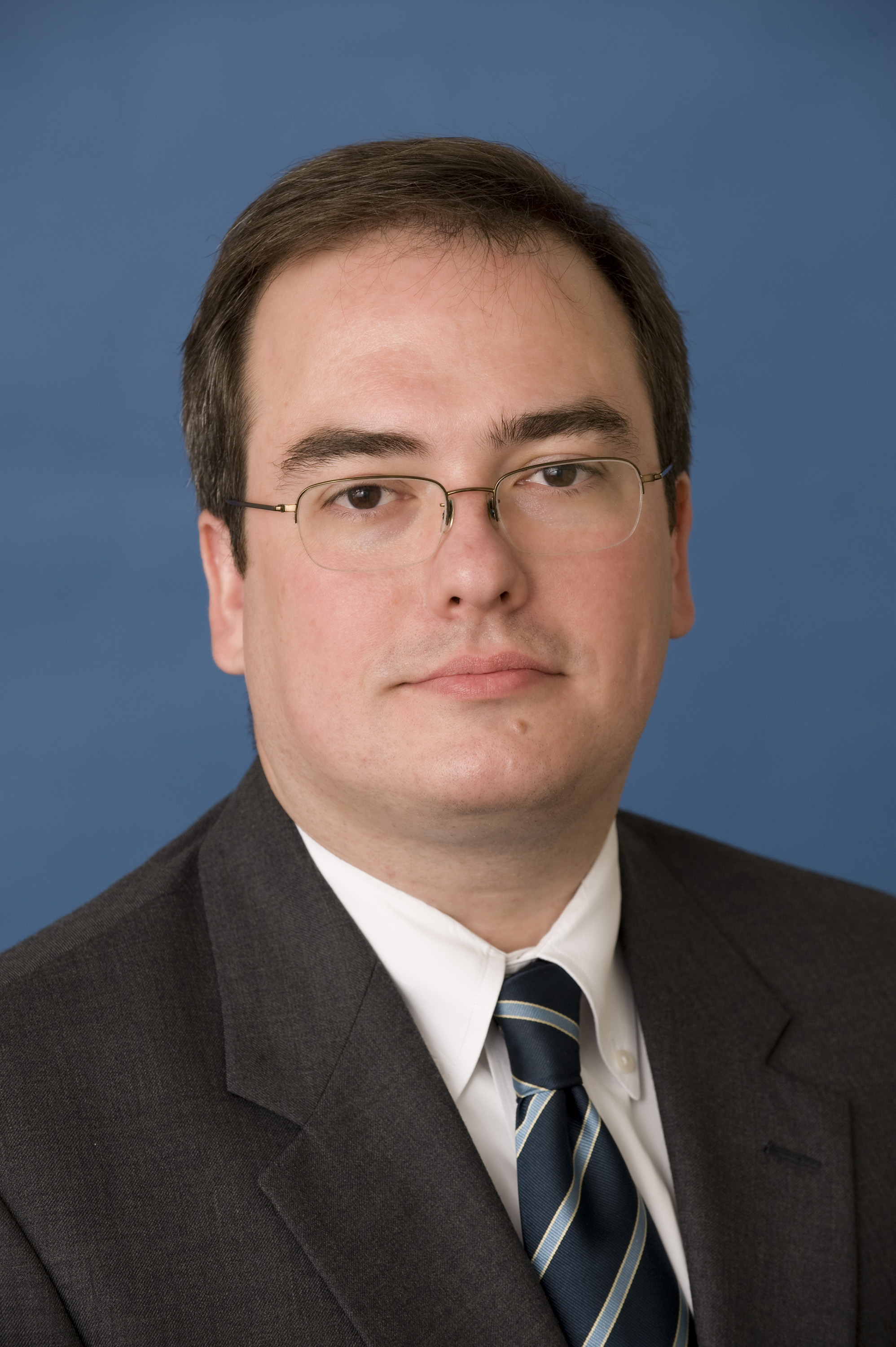
Former Associate, Middle East Program
Boucek was an associate in the Carnegie Middle East Program where his research focused on security challenges in the Arabian Peninsula and Northern Africa.
Recent Work
Christopher Boucek

Christopher Boucek, Karim Sadjadpour
Carnegie India does not take institutional positions on public policy issues; the views represented herein are those of the author(s) and do not necessarily reflect the views of Carnegie, its staff, or its trustees.

In any defense establishment, change is an ongoing process. However, despite the best of intentions, existing bureaucracies, bound by habit and years of socialization, have their limits in implementing transformative change.

Anit Mukherjee

How is AI reshaping space security, creating governance challenges, and where does international diplomacy stand today?


Tejas Bharadwaj, Almudena Azcárate Ortega

After the chill in ties between 2020 and 2024 that brought India–China relations to their lowest point in several decades, the two countries have engaged each other afresh. This paper argues that there are predominantly four imperatives guiding India’s approach to China, and they exist in an order of priority.

Saheb Singh Chadha

A partnership between India, a country of subcontinental size, and Africa, a continent of fifty-four countries, may seem asymmetric until one notes that both are home to nearly the same number of people—1.4 billion. This essay spells out the existing challenges to the partnership, its optimal potential, and the possible pathways to realize it over the next quarter-century.

Rajiv Bhatia

The U.S.–India semiconductor cooperation story is well-stocked with top-level strategic intent. What remains unresolved, however, are some underlying challenges that will determine whether the cooperation actually functions. Three such friction points stand out.

Shruti Mittal