• Research
  • About
  • Experts
Carnegie India logoCarnegie lettermark logo
AI
{
  "authors": [
    "Nikolay Petrov"
  ],
  "type": "legacyinthemedia",
  "centerAffiliationAll": "",
  "centers": [
    "Carnegie Endowment for International Peace",
    "Carnegie Russia Eurasia Center"
  ],
  "collections": [],
  "englishNewsletterAll": "",
  "nonEnglishNewsletterAll": "",
  "primaryCenter": "Carnegie Russia Eurasia Center",
  "programAffiliation": "",
  "programs": [],
  "projects": [],
  "regions": [
    "Caucasus",
    "Russia"
  ],
  "topics": [
    "Political Reform"
  ]
}
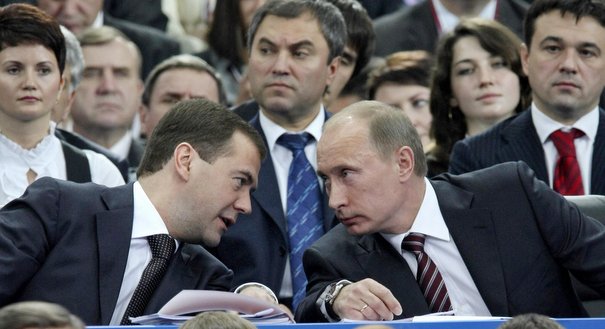
Source: Getty

In The Media
Carnegie Russia Eurasia Center

Governors Know Their Herring From Subs

The recent gubernatorial changes in Murmansk showcase that governors are increasingly judged by to their loyalty to the Kremlin, rather than how effectively they can manage their region.

Link Copied
By Nikolay Petrov
Published on Mar 31, 2009

Source: The Moscow Times

Governors Know Their Herring From SubsThe replacement of Murmansk Governor Yury Yevdokimov was the fifth such sacking of a regional leader this year. Yevdokimov was forced to resign "by his own free will" following the scandal surrounding the election of the Murmansk mayor. In that incident, Deputy Governor Sergei Subbotin beat out United Russia's official candidate. It is not so important to know the reasons why a governor who has held his post since Soviet times chose to wage a public conflict against the ruling party. What is important is that he won in an open political contest, earned the support of the people and paid for his victory with his job.

Governorships have increasingly become a high-risk venture. The crisis has placed the governors between a rock and a hard place. They are forced to make a tough choice between demonstrating loyalty to Moscow at any price or breaking with the Kremlin enough to maintain control over the situation in their region. 
 
The Kremlin long ago chose the path of least resistance in establishing its relations with regional leaders. The first transition was from relatively free gubernatorial elections to managed elections and then to hashing out a deal with the local political elite. Now it has come to the point where the federal clans are involved in the negotiations. The devolution from a more complex method of selecting governors to a more primitive one is the direct result of Moscow's iron grip over the regional siloviki. This has made it possible for the Kremlin to force through its staffing choices without regard to the wishes of the local political elite. 
 
Before Yevdokimov's resignation, the Audit Chamber ordered a strict audit of regional finances at the request of United Russia deputies in the region. Having first rejected any reliance on the people, the Kremlin now turns its back on the regional political elite. That kind of narrowing of a regime's political power base is always risky, but it is twice as dangerous during a financial crisis. 
 
In its gubernatorial castling moves, the Kremlin likes to install outsiders with no experience in the regions they are called on to govern. Our top leaders take a primitive approach to appointing governors: When interviewing a candidate they might ask, "Can you tell the difference between a submarine and a pickled herring? Good, then you take the governorship of the Murmansk region near the sea." When interviewing another candidate, our leaders might also ask, "When you were a Komsomol, did you ever gather cabbage on a kolkhoz? Yes? Then we have a nice agrarian region for you to run." 
 
By handpicking outsiders for governorships and ignoring the opinion of the regional political elite, the Kremlin impairs the at least nominally functioning system of selecting candidates at the regional level and gaining their endorsement from the region's presidential envoy. In the process, Moscow also alienates the local political elite and turns it against the federal government.
 
A mobilization model of crisis management has motivated the recent gubernatorial changes. Governors are judged according to their loyalty to the Kremlin, not as to whether they can manage the complex regional political machine under their charge. The country is viewed as one gigantic corporation where crisis conditions call for greater discipline and loyalty to the Kremlin.
 
The events in Murmansk remind me of how Moscow riot police suppressed demonstrations in Vladivostok in December. While crises make it easier for the opposition to usurp power, they also make holding power less attractive because this kind of power carries tremendous responsibility. 
 
This article first appeared in The Moscow Times

About the Author

Nikolay Petrov

Former Scholar-in-Residence, Society and Regions Program, Moscow Center

Nikolay Petrov was the chair of the Carnegie Moscow Center’s Society and Regions Program. Until 2006, he also worked at the Institute of Geography at the Russian Academy of Sciences, where he started to work in 1982.

    Recent Work

  • Commentary
    Moscow Elections: Winners and Losers

      Nikolay Petrov

  • Commentary
    September 8 Election As a New Phase of the Society and Authorities' Coevolution

      Nikolay Petrov

Nikolay Petrov
Former Scholar-in-Residence, Society and Regions Program, Moscow Center
Nikolay Petrov
Political ReformCaucasusRussia

Carnegie India does not take institutional positions on public policy issues; the views represented herein are those of the author(s) and do not necessarily reflect the views of Carnegie, its staff, or its trustees.

More Work from Carnegie India

  • Paper
    India’s Sustained Economic Recovery Will Require Changes to Its Bankruptcy Law

    As India’s economy recovers from the coronavirus pandemic, Indian businesses need efficient financial structures to regain their ground. Key reforms to India’s Insolvency and Bankruptcy Code could fill these gaps.

      Anirudh Burman

  • Paper
    Cross-Border Data Access for Law Enforcement: What Are India’s Strategic Options?

    Access to cross-border data is an integral piece of the law enforcement puzzle. India is well placed to lead the discussions on international data agreements subject to undertaking necessary surveillance reforms.

      Smriti Parsheera, Prateek Jha
  • Article
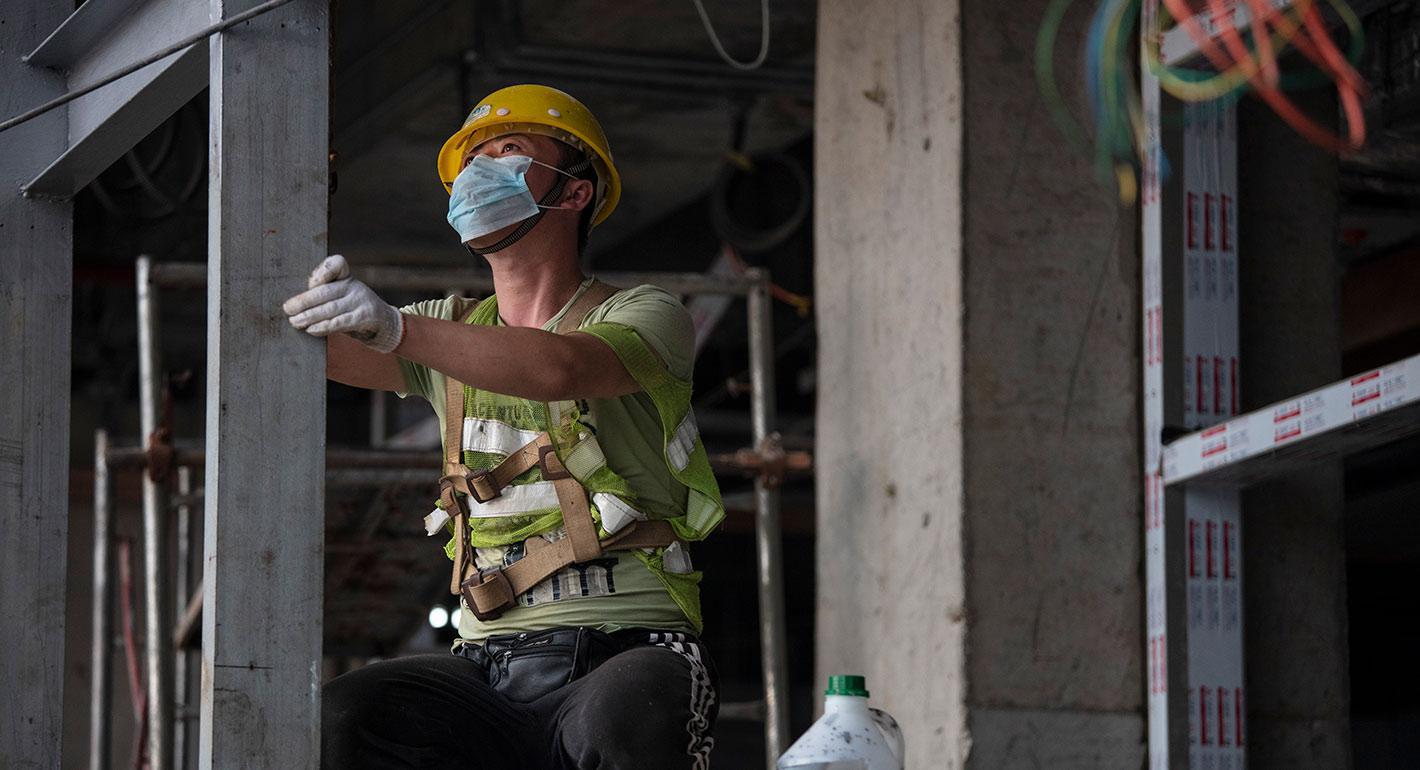
    The BRI in Post-Coronavirus South Asia

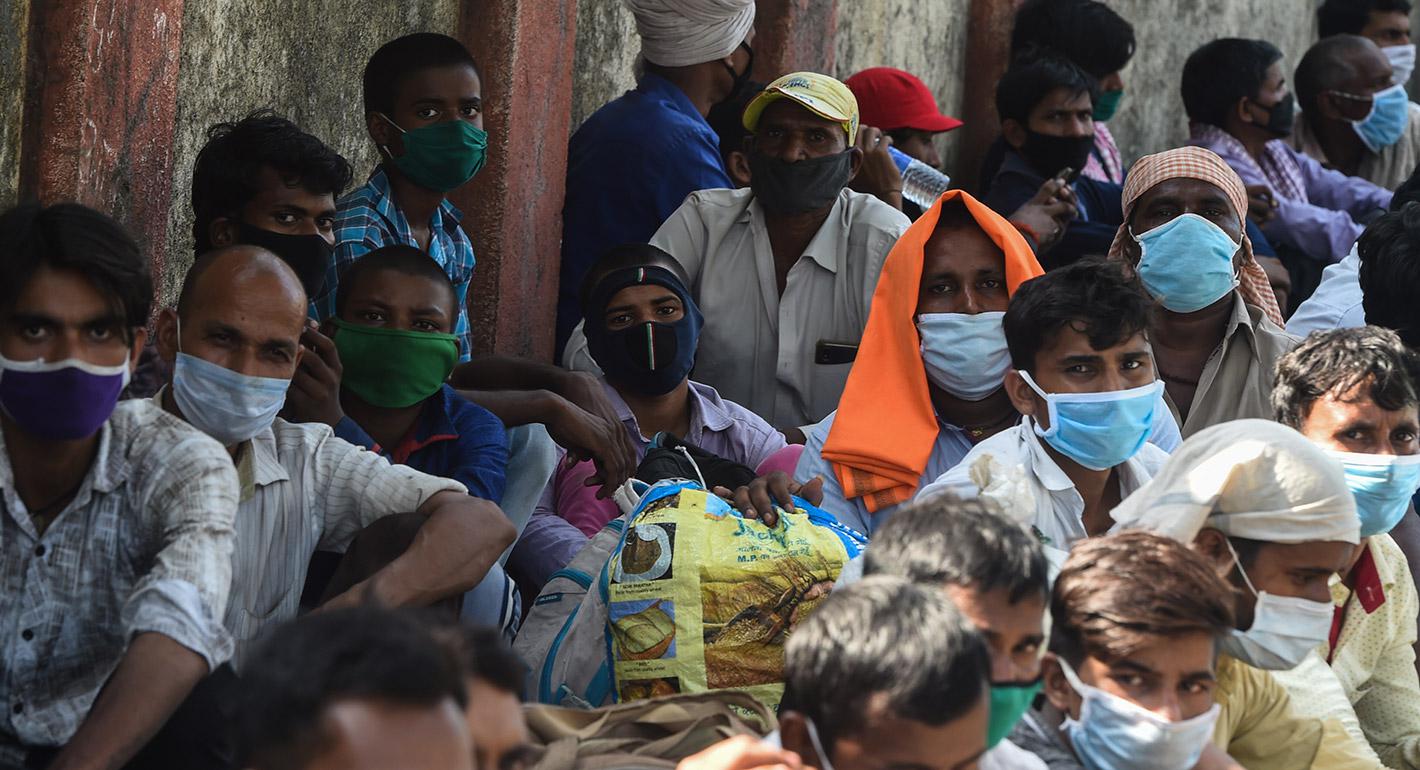
    After the coronavirus pandemic wanes, how will China’s reorientation of the Belt and Road Initiative to address global health concerns influence its relationships with South Asian countries?
      Deep Pal, Rahul Bhatia
  • Commentary
    India’s Unheeded Coronavirus Warning

    Early in the outbreak, government researchers forecast several high-risk scenarios that were downplayed or ignored in public messaging.

      Gautam I. Menon

  • Article
    Intrusive Pandemic-Era Monitoring Is the Same Old Surveillance State, Not a New One

    Governments around the world are turning to new forms of digital surveillance to monitor the spread of the coronavirus, though they are mostly using existing laws to do so.

      Anirudh Burman

Get more news and analysis from
Carnegie India
Carnegie India logo, white
Unit C-4, 5, 6, EdenparkShaheed Jeet Singh MargNew Delhi – 110016, IndiaPhone: 011-40078687
  • Research
  • About
  • Experts
  • Projects
  • Events
  • Contact
  • Careers
  • Privacy
  • For Media
Get more news and analysis from
Carnegie India
© 2026 Carnegie Endowment for International Peace. All rights reserved.