

Commentary
How is AI reshaping space security, creating governance challenges, and where does international diplomacy stand today?
Tejas Bharadwaj, Almudena Azcárate Ortega
{
  "authors": [
    "Godfried van Benthem van den Bergh"
  ],
  "type": "other",
  "centerAffiliationAll": "dc",
  "centers": [
    "Carnegie Endowment for International Peace"
  ],
  "collections": [
    "U.S. Nuclear Policy"
  ],
  "englishNewsletterAll": "ctw",
  "nonEnglishNewsletterAll": "",
  "primaryCenter": "Carnegie Endowment for International Peace",
  "programAffiliation": "NPP",
  "programs": [
    "Nuclear Policy"
  ],
  "projects": [],
  "regions": [
    "North America",
    "United States",
    "East Asia",
    "China",
    "Caucasus",
    "Russia"
  ],
  "topics": [
    "Nuclear Policy"
  ]
}
Source: Getty
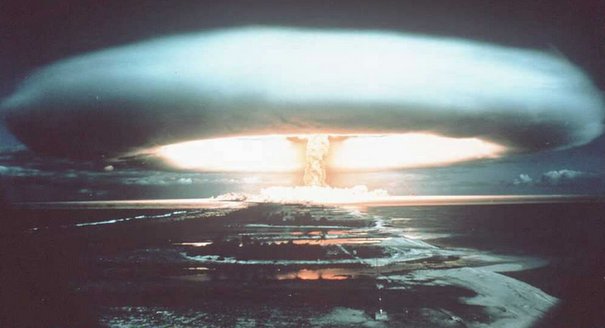
Nuclear weapons have unintended beneficial consequences, argues Godfried van Benthem van den Bergh. They can make the intended development of a more peaceful global and political order possible. The Carnegie Nonproliferation Program presents this paper in hopes of furthering international dialogue and debate on the nuclear order, including the abolition of nuclear weapons.
In this Policy Outlook Godfried van Benthem van den Bergh, an eminent Dutch scholar, argues that nuclear weapons have unintended beneficial consequences. They can make the intended development of a more peaceful global and political order possible. The Carnegie Nonproliferation Program presents this paper in hopes of furthering international dialogue and debate on the nuclear order, including the abolition of nuclear weapons.
Summary
About the Author
Godfried van Benthem van den Bergh was professor of international relations at Erasmus University, Rotterdam, and the Institute of Social Studies, The Hague. He has been a Harkness Fellow at Harvard University and the University of California at Berkeley; chairman of the Board of the Netherlands Association for International Affairs; and member of the Advisory Council for International Affairs of the Dutch Ministries of Foreign Affairs and Defense. Among his publications are The Nuclear Revolution and the End of the Cold War: Forced Restraint (Basingstoke and London, 1992) and Naar een Nucleaire Wereldorde (Amsterdam, 2008).
Godfried van Benthem van den Bergh
Carnegie India does not take institutional positions on public policy issues; the views represented herein are those of the author(s) and do not necessarily reflect the views of Carnegie, its staff, or its trustees.

How is AI reshaping space security, creating governance challenges, and where does international diplomacy stand today?


Tejas Bharadwaj, Almudena Azcárate Ortega

After the chill in ties between 2020 and 2024 that brought India–China relations to their lowest point in several decades, the two countries have engaged each other afresh. This paper argues that there are predominantly four imperatives guiding India’s approach to China, and they exist in an order of priority.

Saheb Singh Chadha

This piece argues that India’s central challenge is not managing a single flashpoint but resolving the underlying tension between expansion and institutional coherency of the BRICS grouping.

Vrinda Sahai

The U.S.–India semiconductor cooperation story is well-stocked with top-level strategic intent. What remains unresolved, however, are some underlying challenges that will determine whether the cooperation actually functions. Three such friction points stand out.

Shruti Mittal
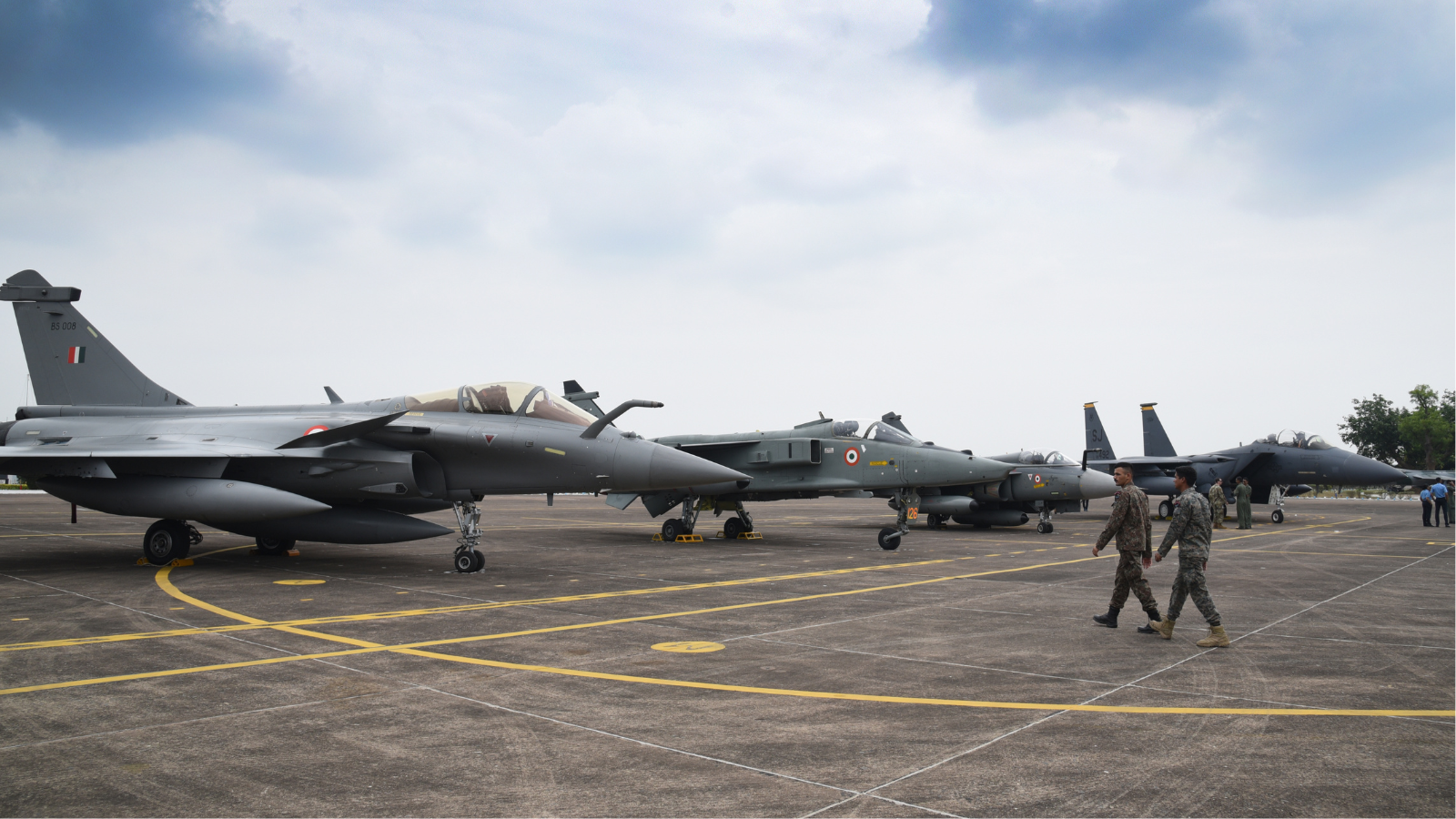
India and the United States are close to concluding a Reciprocal Defense Procurement Agreement (RDPA) that will allow firms from the two countries to sell to each other’s defense establishments more easily. While this may not remedy the specific grievances both sides may have regarding larger bilateral issues, an RDPA could restore some momentum, following the trade deal announcement.

Konark Bhandari