

In The Media
John Judis
{
  "authors": [
    "John Judis"
  ],
  "type": "legacyinthemedia",
  "centerAffiliationAll": "",
  "centers": [
    "Carnegie Endowment for International Peace"
  ],
  "collections": [],
  "englishNewsletterAll": "",
  "nonEnglishNewsletterAll": "",
  "primaryCenter": "Carnegie Endowment for International Peace",
  "programAffiliation": "",
  "programs": [],
  "projects": [],
  "regions": [
    "North America",
    "United States"
  ],
  "topics": [
    "Political Reform"
  ]
}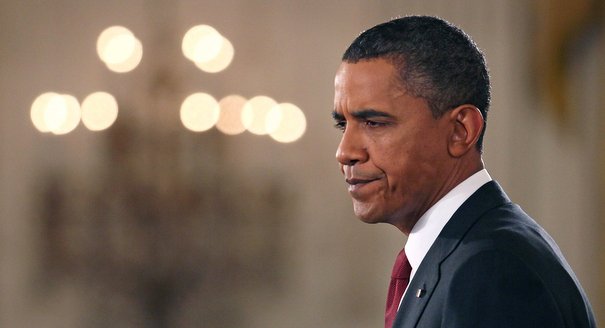
Source: Getty
Despite all he has done, the tasks that President Obama faces in fixing the economy remain daunting. If signs of real growth do not emerge soon the president’s popularity will soon begin to fall, even plummet.
Source: The New Republic

The Obama administration and Federal Reserve Chief Ben Bernanke have recently been citing "green shoots"--signs of healthy economic plant life amidst the frozen global tundra--to encourage optimism that the recession would soon be over. Though the political benefit of such jubilation is clear, there is a good economic rationale for doing so. Investment rests in part on expectations, and expectations depend not merely on whether a particular manufacturer thinks he can sell more widgets in 2010, but also on whether he thinks the economy in general will pick up. So there is some point to the confidence game that the administration is playing when it rejoices in what are merely slower rates of economic decline.
But confidence talk can backfire if actual, rather than virtual, growth in employment and output doesn't materialize. Herbert Hoover found that out after the Crash of 1929. So did Ronald Reagan in his first two years in office, when his and his aides' "rosy scenarios" about an imminent economic revival were ridiculed. Reagan's approval went from 73 percent in March 1981 to 42 percent the next year, when unemployment rate rose to nearly 11 percent. His popularity and his party's standing only began to recover when the economy did in late 1983.
There is reason to be worried that we're still a long way from seeing growth rather than slower decline. Much of a recovery will rest on a growth in consumer demand, but the most recent figures show a 0.4 percent decline in retail spending from March to April--and an 11.4 percent decline from the previous April. That's not the stuff of growth.
Obama and his Treasury secretary Timothy Geithner are betting a lot on the bank bailout. Geithner announced yesterday that the financial system is "healing," but a Wall Street Journal study last month of the big banks that received massive government funds showed a drop in lending. I am agnostic on the subject, but tend to agree with Financial Times columnist Martin Wolf that the best one can hope for from the bailout is that it will allow the banking system to tread water rather than drown, and that the key to getting the economy ashore is the stimulus program. But while Obama pumps billions of dollars into the bailout, it is starting to look like the stimulus program may not be large enough, and could take a long time to get going.
According to The New York Times yesterday, the Department of Transportation has spent only $11 million on highway projects through the first week of May. And Alec MacGillis reports that in spite of the $135 billion in the stimulus package to prevent states from laying off workers, many states continue to furlough workers. Writes MacGillis:
The state of Washington settled on a budget two weeks ago that will mean 1,000 layoffs at public colleges and several times that many in elementary and high schools.
The governor of Massachusetts, who cut 1,000 positions late last year, just announced 250 layoffs, with more likely to come soon.
Arizona has already laid off 800 social service workers this year and is facing the likelihood of deeper cuts over the next two. The state no longer investigates all complaints of child or elder abuse.
There was even crowing last week about the decline in the decline in jobless growth. "The gears of our economic engine are slowly beginning to turn," Obama declared. But private sector lost 611,000 jobs last month. The totals, which made an apparent case for optimism, were lowered by the 66,000 bump in federal employment largely due to the hiring of temporary census workers. According to the Bureau of Labor Statistics, there are less job openings now than at any time since it began recording these figures.
None of this suggests that the stimulus, combined with Obama's new budget, combined with another stimulus and another big deficit, won't work. They should--but it might take another year or two to produce the kind of results that will convince Americans that we are on the way back. As consumer demand continues to plummet and actual joblessness continues to soar, I expect Obama's popularity to suffer.
Obama's real test of leadership may not turn out to have been his first 100 days, but those 100 or 200 days that begin sometime late next fall. If unemployment is still rising, will he still be able to convince Congress, which will have become grey-haired over growing deficits, to pass another equally large stimulus program? If the bank bailout doesn't merely get a "C," but fails, will he be able to resist pressure from the American Bankers Association and take the next step of nationalizing failing banks? One can only wait and hope.
This article originally appeared in The New Republic.

Former Visiting Scholar
As a visiting scholar at Carnegie, Judis wrote The Folly of Empire: What George W. Bush Could Learn from Theodore Roosevelt and Woodrow Wilson.
Recent Work
John Judis
John Judis
Carnegie India does not take institutional positions on public policy issues; the views represented herein are those of the author(s) and do not necessarily reflect the views of Carnegie, its staff, or its trustees.

How is AI reshaping space security, creating governance challenges, and where does international diplomacy stand today?


Tejas Bharadwaj, Almudena Azcárate Ortega

The U.S.–India semiconductor cooperation story is well-stocked with top-level strategic intent. What remains unresolved, however, are some underlying challenges that will determine whether the cooperation actually functions. Three such friction points stand out.

Shruti Mittal

India and the United States are close to concluding a Reciprocal Defense Procurement Agreement (RDPA) that will allow firms from the two countries to sell to each other’s defense establishments more easily. While this may not remedy the specific grievances both sides may have regarding larger bilateral issues, an RDPA could restore some momentum, following the trade deal announcement.

Konark Bhandari

On the last day of the India AI Impact Summit, India signed Pax Silica, a U.S.-led declaration seemingly focused on semiconductors. While India’s accession to the same was not entirely unforeseen, becoming a signatory nation this quickly was not on the cards either.
Konark Bhandari

This piece examines India’s response to U.S. sanctions and tariffs, specifically assessing the immediate market consequences, such as alterations in import costs, and the broader strategic implications for India’s energy security and foreign policy orientation.

Vrinda Sahai