• Research
  • About
  • Experts
Carnegie India logoCarnegie lettermark logo
{
  "authors": [
    "Nikolay Petrov"
  ],
  "type": "legacyinthemedia",
  "centerAffiliationAll": "",
  "centers": [
    "Carnegie Endowment for International Peace",
    "Carnegie Russia Eurasia Center"
  ],
  "collections": [],
  "englishNewsletterAll": "",
  "nonEnglishNewsletterAll": "",
  "primaryCenter": "Carnegie Russia Eurasia Center",
  "programAffiliation": "",
  "programs": [],
  "projects": [],
  "regions": [
    "Caucasus",
    "Russia"
  ],
  "topics": [
    "Political Reform"
  ]
}
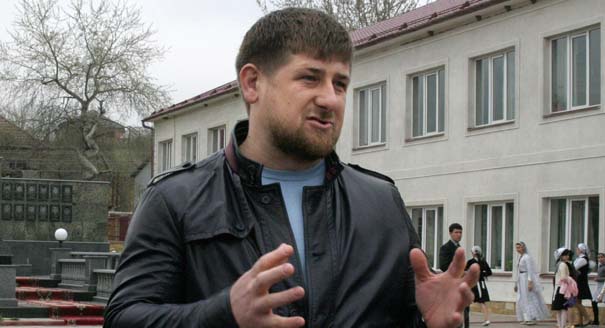
Source: Getty

In The Media
Carnegie Russia Eurasia Center

Kadyrov Nears Abkhaz-Like Independence

Chechen leader Ramzan Kadyrov’s consolidation or power, and Moscow’s pre-occupation with Russia’s economic and political crisis will force the Kremlin to reconsider Putin’s policy of appeasing Chechnya.

Link Copied
By Nikolay Petrov
Published on Jul 21, 2009

Source: The Moscow Times

Kadyrov Nears Abkhaz-Like IndependenceOpponents of Chechen President Ramzan Kadyrov — both real and imagined — have been mowed down like grass in recent years. The victims include Novaya Gazeta journalist Anna Politkovskaya, Chechen commander Movladi Baisarov, the brothers Ruslan and Sulim Yamadayev, former Kadyrov bodyguard Umar Israilov and now human rights activist Natalya Estemirova. The murders have taken place all over the world: in Grozny, Moscow, Vienna and Dubai. At the same time, a host of prominent Chechen expatriates have voiced support for Kadyrov and his regime. Even as the Kremlin continues to regularly allocate huge sums from the federal budget to finance Chechnya despite the economic crisis, Kadyrov squeezes Kremlin loyalists out of his domain, becoming in the process an absolute dictator of the republic — and now, in part, of Ingushetia as well. Kadyrov commands a personal army that largely consists of former insurgents and special forces that carry out fully official reprisal missions in Chechnya, Moscow and, less officially for now, in other countries.

For a long time, Kadyrov failed to exercise complete control over Chechen counterterrorism operations and the actions of the federal law enforcement agencies connected with them. The Chechen law enforcement agencies also did not monitor violations committed by the federal forces, and vice versa. What’s more, Memorial — the only independent organization providing the world community with reliable information about events in that part of the Caucasus — is leaving Chechnya.
 
On Kadyrov’s list of unfulfilled demands to Moscow is a completely independent budget giving him control over all proceeds from resource extraction and oil refinement as well as more autonomy in carrying out external relations — specifically, the right to build an international airport and set up his own customs service. The process to receive all that during the crisis might take anywhere from a few months to a year. Chechnya then would be transformed from a de facto independent state associated with Russia into a de jure independent state that could request and — after the precedent of last year’s Russia-Georgia war — receive recognition of its independence from other countries. Kadyrov might choose not to request such recognition, pointing instead to his “good behavior” and his nominal demonstration of loyalty to Moscow to gain additional concessions from the Kremlin. That is essentially what has been happening all along, with then-President Vladimir Putin instituting a policy of appeasing Kadyrov with money and power and giving him all the trappings of real authority. The result is that the territorial reach of Kadyrov’s authority has now spread into Ingushetia, eliminating all competition and obstacles in the way. At the same time, Moscow has fewer carrots to offer, with less money in its coffers and few powers left to grant Kadyrov. What’s next? All that remains is for Kadyrov to further consolidate his power by either signing a agreement with Moscow on the delineation of powers after the model of Tatarstan — only with far greater powers in Chechnya’s case — or for Kadyrov to pursue the same goal without Moscow’s consent.
 
The economic and political crisis into which Russia has fallen, largely because of its own errant policies, especially in relation to the Caucasus, provides Kadyrov with additional maneuvering room and restricts Moscow’s options.
 
At some point, Moscow will inevitably be forced to reconsider Putin’s policy of appeasing Chechnya, and that time might come sooner rather than later.
 
This comment first appeared in The Moscow Times

About the Author

Nikolay Petrov

Former Scholar-in-Residence, Society and Regions Program, Moscow Center

Nikolay Petrov was the chair of the Carnegie Moscow Center’s Society and Regions Program. Until 2006, he also worked at the Institute of Geography at the Russian Academy of Sciences, where he started to work in 1982.

    Recent Work

  • Commentary
    Moscow Elections: Winners and Losers

      Nikolay Petrov

  • Commentary
    September 8 Election As a New Phase of the Society and Authorities' Coevolution

      Nikolay Petrov

Nikolay Petrov
Former Scholar-in-Residence, Society and Regions Program, Moscow Center
Nikolay Petrov
Political ReformCaucasusRussia

Carnegie India does not take institutional positions on public policy issues; the views represented herein are those of the author(s) and do not necessarily reflect the views of Carnegie, its staff, or its trustees.

More Work from Carnegie India

  • Paper
    India’s Sustained Economic Recovery Will Require Changes to Its Bankruptcy Law

    As India’s economy recovers from the coronavirus pandemic, Indian businesses need efficient financial structures to regain their ground. Key reforms to India’s Insolvency and Bankruptcy Code could fill these gaps.

      Anirudh Burman
  • Paper
    Cross-Border Data Access for Law Enforcement: What Are India’s Strategic Options?

    Access to cross-border data is an integral piece of the law enforcement puzzle. India is well placed to lead the discussions on international data agreements subject to undertaking necessary surveillance reforms.
      Smriti Parsheera, Prateek Jha
  • Article
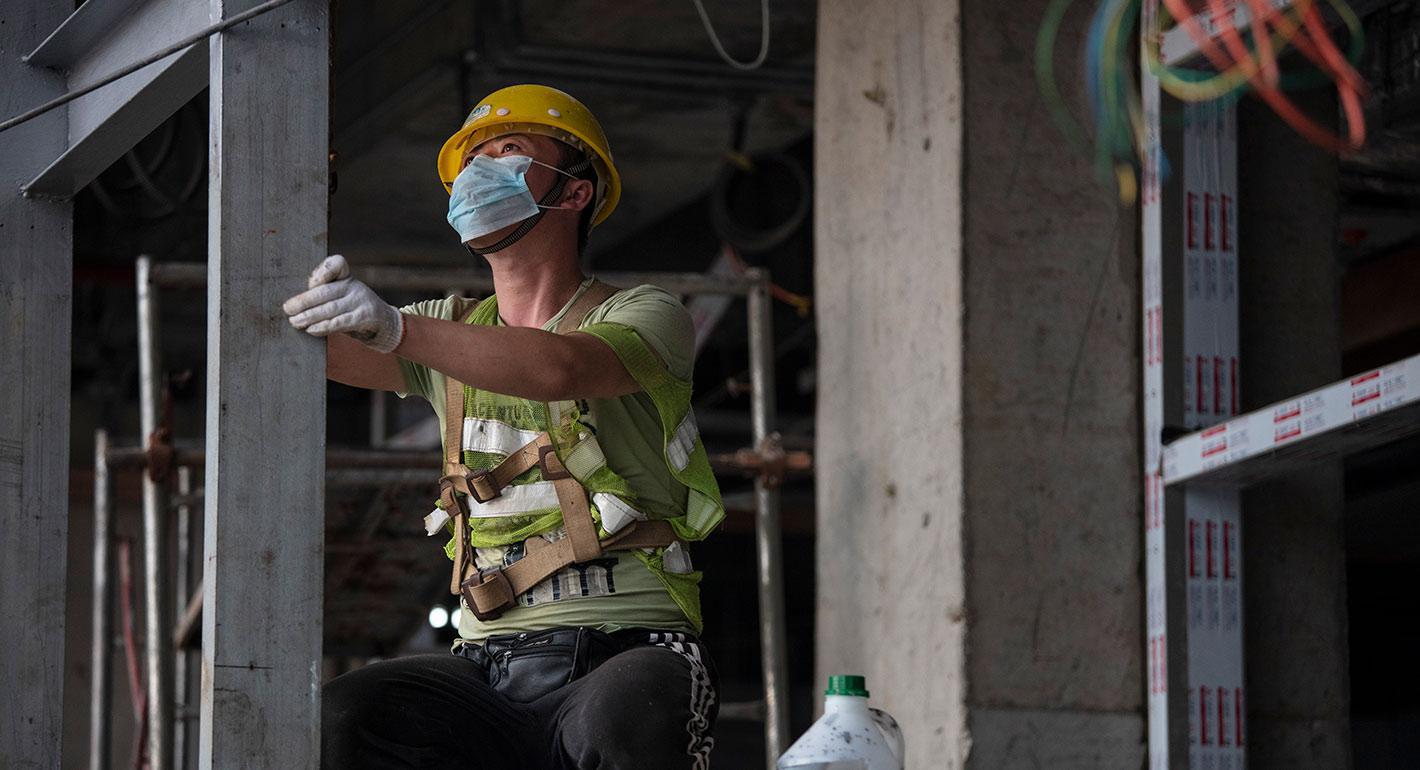
    The BRI in Post-Coronavirus South Asia

    After the coronavirus pandemic wanes, how will China’s reorientation of the Belt and Road Initiative to address global health concerns influence its relationships with South Asian countries?
      Deep Pal, Rahul Bhatia
  • Commentary
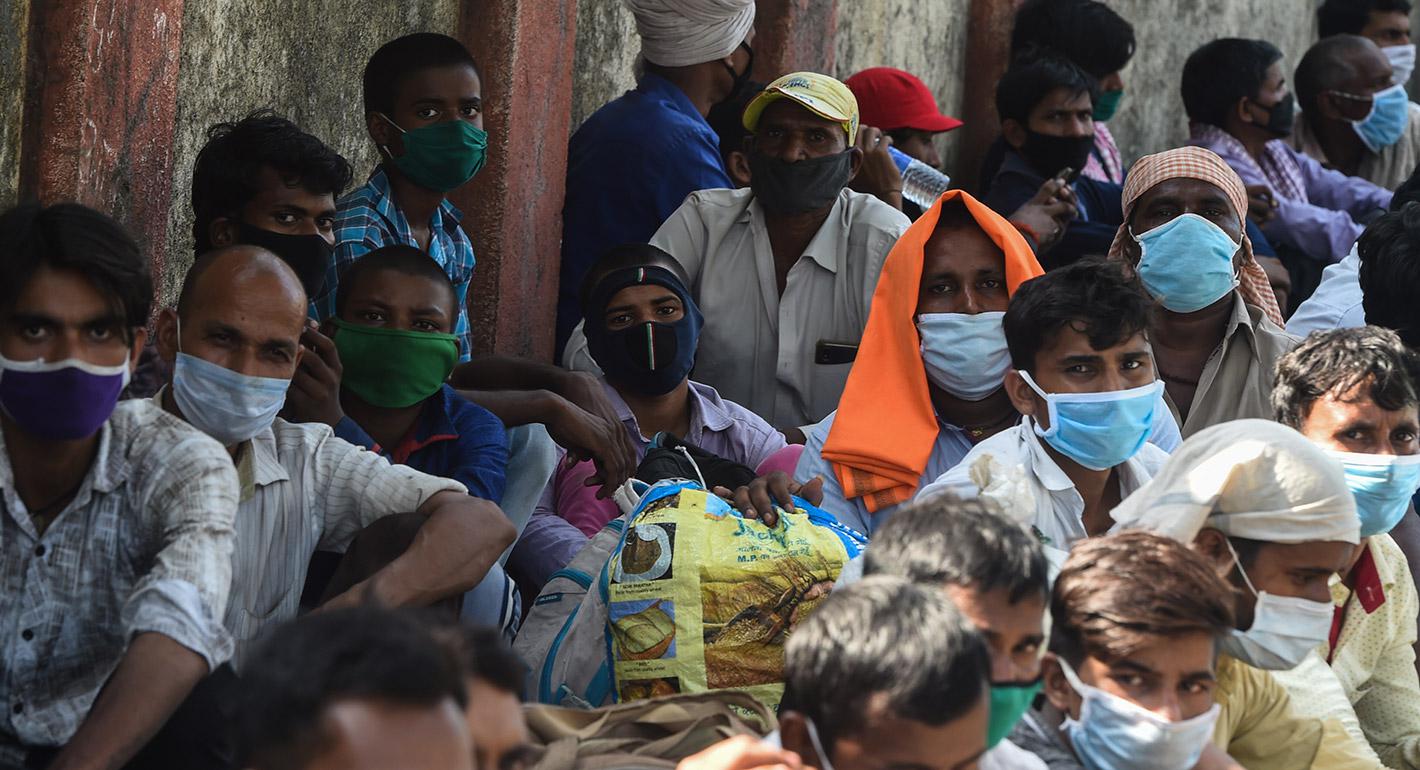
    India’s Unheeded Coronavirus Warning

    Early in the outbreak, government researchers forecast several high-risk scenarios that were downplayed or ignored in public messaging.

      Gautam I. Menon

  • Article
    Intrusive Pandemic-Era Monitoring Is the Same Old Surveillance State, Not a New One

    Governments around the world are turning to new forms of digital surveillance to monitor the spread of the coronavirus, though they are mostly using existing laws to do so.

      Anirudh Burman

Get more news and analysis from
Carnegie India
Carnegie India logo, white
Unit C-4, 5, 6, EdenparkShaheed Jeet Singh MargNew Delhi – 110016, IndiaPhone: 011-40078687
  • Research
  • About
  • Experts
  • Projects
  • Events
  • Contact
  • Careers
  • Privacy
  • For Media
Get more news and analysis from
Carnegie India
© 2026 Carnegie Endowment for International Peace. All rights reserved.