• Research
  • About
  • Experts
Carnegie India logoCarnegie lettermark logo
{
  "authors": [
    "Nikolay Petrov"
  ],
  "type": "legacyinthemedia",
  "centerAffiliationAll": "",
  "centers": [
    "Carnegie Endowment for International Peace",
    "Carnegie Russia Eurasia Center"
  ],
  "collections": [],
  "englishNewsletterAll": "",
  "nonEnglishNewsletterAll": "",
  "primaryCenter": "Carnegie Russia Eurasia Center",
  "programAffiliation": "",
  "programs": [],
  "projects": [],
  "regions": [
    "Caucasus",
    "Russia"
  ],
  "topics": [
    "Political Reform",
    "Economy"
  ]
}
Source: Getty

In The Media
Carnegie Russia Eurasia Center

The People Want Direct Elections

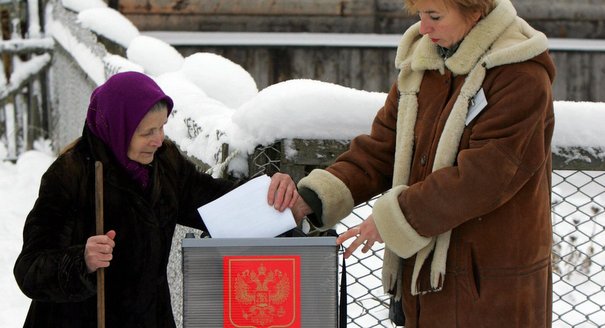
A recent poll showing that 60 percent of Russians support the return of direct elections for regional governors, indicates a growing realization that the authorities are in no condition to fulfill their obligations.

Link Copied
By Nikolay Petrov
Published on Jul 7, 2009

Source: The Moscow Times

The People Want Direct Elections According to a poll just conducted by the Levada Center, 60 percent of Russians support the return of direct elections for regional governors, while only 20 percent oppose it. In addition, 40 percent of respondents were in favor of returning single-mandate districts for State Duma elections.

Does that mean that Russians have changed their mood as a result of the crisis? It would seem so, although not to a significant degree. By comparison, when people were surveyed to gauge their opinions of then-President Vladimir Putin’s new political program after the 2004 terrorist attack in Beslan, 40 percent of respondents were opposed to the canceling of direct gubernatorial elections, while slightly more than 40 percent were in favor. Later, people grew accustomed to the new arrangement and the number opposing the move decreased.
 
What does all of this mean for the “social contract” that many observers are now claiming has been canceled?
 
By coincidence, Putin came to power at the same time as energy prices begin to rise. The influx of petrodollars enabled Putin to strengthen the centralization of the state and to create the illusion — first in the minds of the people and later among the rulers themselves — that the economy’s growth was proof of the correctness of the country’s course and the political system as a whole. It was clear what the people got out of the arrangement: much-valued order and stability and an increase in the standard of living that even outpaced the country’s economic growth. They also received a return to the familiar paternalistic relationship with regard to state leaders and the impression that social justice had been restored as applied to both small-time business owners and the oligarchs.
 
What did the people lose in this bargain? Free elections and democratic institutions? Perhaps. But Russians’ short experience with both only led to disillusionment with the process itself and with its results. From the people’s point of view, the social contract means that the country’s leaders have a free hand to resolve their own problems in return for providing citizens with an orderly life and a decent standard of living. And the people received all of this without having to actually give anything in return. They simply did not resist when the authorities took something away, such as the free election of governors. But as a rule, these were things the people did not value highly in the first place.
 
The latest Levada Center survey offers evidence of significant changes in the public’s consciousness — not radical changes, perhaps, but still important. The shift boils down to the growing realization in the public mind that the old social contract no longer operates and that the authorities are in no condition to fulfill their obligations.
 
The results of the Levada Center survey look especially interesting against the backdrop of a survey measuring trust in regional and federal authorities that was conducted by the Kremlin-connected Public Opinion Foundation and “declassified” in May. It is only natural that citizens who are dissatisfied with the effectiveness of the authorities begin to ask themselves why those officials are ineffective. From there, it isn’t long before they begin challenging the foundation of that system — first in words and later in deeds.
 
This commentary first appeared in The Moscow Times.

About the Author

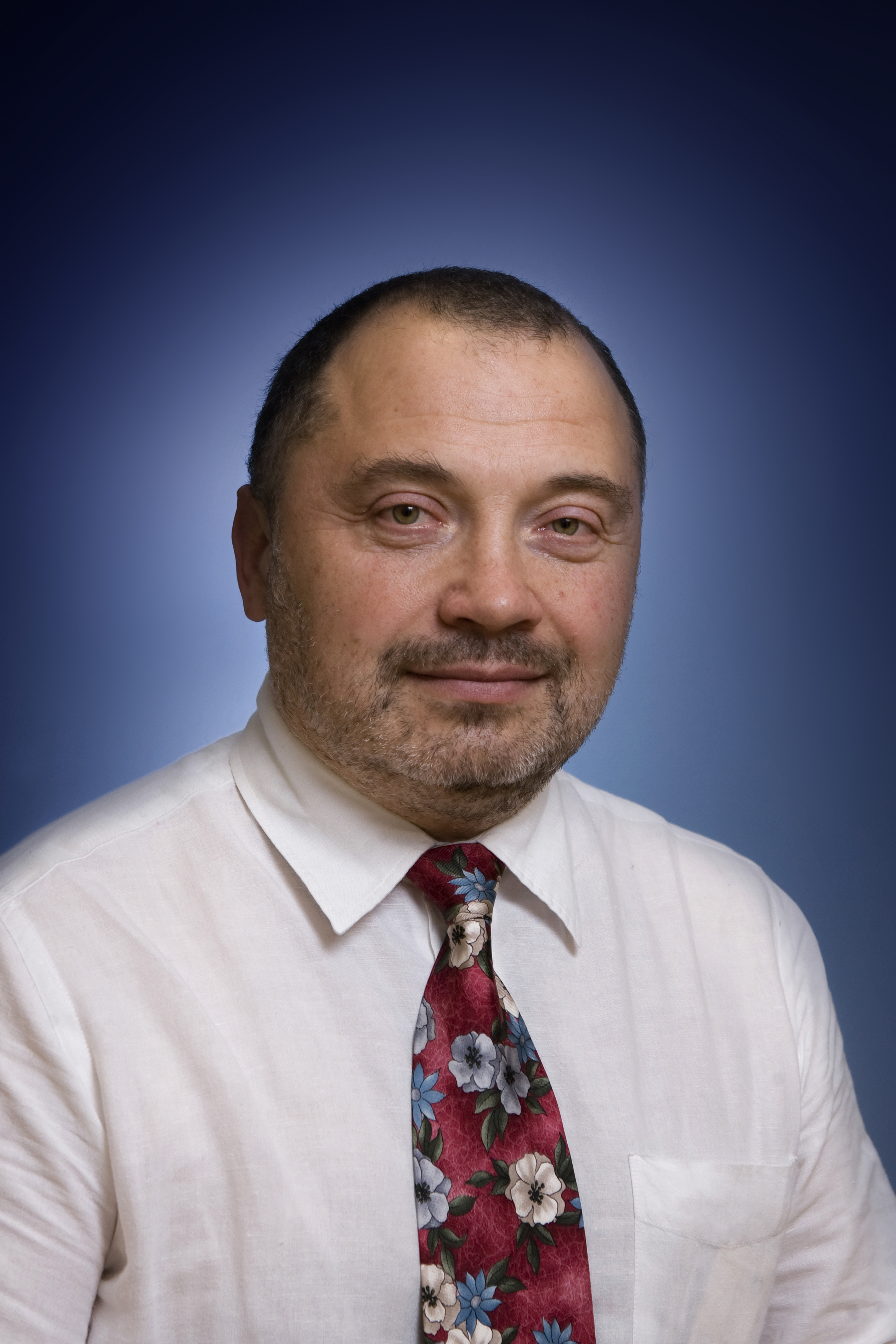
Nikolay Petrov

Former Scholar-in-Residence, Society and Regions Program, Moscow Center

Nikolay Petrov was the chair of the Carnegie Moscow Center’s Society and Regions Program. Until 2006, he also worked at the Institute of Geography at the Russian Academy of Sciences, where he started to work in 1982.

    Recent Work

  • Commentary
    Moscow Elections: Winners and Losers

      Nikolay Petrov

  • Commentary
    September 8 Election As a New Phase of the Society and Authorities' Coevolution

      Nikolay Petrov

Nikolay Petrov
Former Scholar-in-Residence, Society and Regions Program, Moscow Center
Nikolay Petrov
Political ReformEconomyCaucasusRussia

Carnegie India does not take institutional positions on public policy issues; the views represented herein are those of the author(s) and do not necessarily reflect the views of Carnegie, its staff, or its trustees.

More Work from Carnegie India

  • Commentary
    The Impact of U.S. Sanctions and Tariffs on India’s Russian Oil Imports

    This piece examines India’s response to U.S. sanctions and tariffs, specifically assessing the immediate market consequences, such as alterations in import costs, and the broader strategic implications for India’s energy security and foreign policy orientation.

      Vrinda Sahai

  • Paper
    India-China Economic Ties: Determinants and Possibilities

    This paper examines the evolution of India-China economic ties from 2005 to 2025. It explores the impact of global events, bilateral political ties, and domestic policies on distinct spheres of the economic relationship.

      Santosh Pai
  • Commentary
    TRUST and Tariffs

    The India-U.S. relationship currently appears buffeted between three “Ts”—TRUST, Tariffs, and Trump.
      Arun K. Singh

  • Article
    Can Geopolitical Alignment Seal the India-EU FTA?

    This article argues that the geopolitical circumstances have never been more conducive, not merely for the early conclusion of the free trade agreement (FTA) between India and the EU, but also for crafting a substantive and comprehensive strategic partnership.

      Mohan Kumar

  • Article
    A Path Out of Tunisia’s Economic Crisis

    President Kais Saied has won a second term in office, but his country is facing a host of problems that necessitate urgent reforms, above all preventing the possibility of a financial meltdown. 

      Ishac Diwan, Hachemi Alaya, Hamza Meddeb

Get more news and analysis from
Carnegie India
Carnegie India logo, white
Unit C-4, 5, 6, EdenparkShaheed Jeet Singh MargNew Delhi – 110016, IndiaPhone: 011-40078687
  • Research
  • About
  • Experts
  • Projects
  • Events
  • Contact
  • Careers
  • Privacy
  • For Media
Get more news and analysis from
Carnegie India
© 2026 Carnegie Endowment for International Peace. All rights reserved.