

Commentary
Nikolay Petrov
{
  "authors": [
    "Nikolay Petrov"
  ],
  "type": "legacyinthemedia",
  "centerAffiliationAll": "",
  "centers": [
    "Carnegie Endowment for International Peace",
    "Carnegie Russia Eurasia Center"
  ],
  "collections": [],
  "englishNewsletterAll": "",
  "nonEnglishNewsletterAll": "",
  "primaryCenter": "Carnegie Russia Eurasia Center",
  "programAffiliation": "",
  "programs": [],
  "projects": [],
  "regions": [
    "Caucasus",
    "Russia"
  ],
  "topics": [
    "Political Reform",
    "Democracy"
  ]
}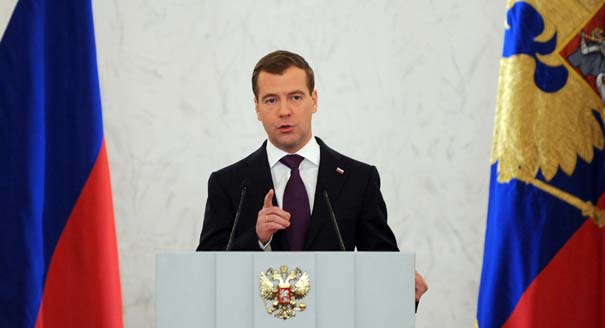
Source: Getty
Federal and regional authorities in Russia are abusing new amendments to the federal law on local government to centralize power and dismantle whatever still remains of the separation of powers.
Source: The Moscow Times

Chirkunov justified his decision based on the “inactivity” of Vostrikov and his administration in providing for the city’s vital needs. Specifically, local utilities companies did not pay their energy bills, leaving the city without hot water for three straight months.
A majority vote by the City Duma deputies supported the governor’s initiative and ousted the mayor. It should be noted that Vostrikov has served as mayor about as long as Chirkunov has been governor of the region. One interesting aspect of this story is that when Vostrikov was re-elected to his post last fall, he beat out the United Russia candidate. It is also worth noting that regional officials consider the Chaikovsky area to be second only to Perm for its growth potential.
According to journalists, the newly appointed governor of Murmansk, Dmitry Dmitriyenko, wants to follow Chirkunov’s example. Dmitriyenko has differences with Mikhail Antropov, the Communist mayor of one of the region’s key cities, Apatity. Antropov also beat out the United Russia candidate. Criminal charges are already being prepared against Antropov, who has also been accused of making inadequate preparations for the coming winter.
Two mayors had already been removed using the new law — in Suzdal (Vladimir region) and in Ozersk (Chelyabinsk region) — but in both those cases it was City Duma deputies, and not governors, who initiated the process. Interestingly, the Ozersk mayor contested the decision in court and was reinstated, but City Duma deputies are once again working to have him removed.
In direct violation of the article on federalism in the Constitution, the new amendments effectively place elected local governments within the federal power vertical. The new arrangement makes it easier to oust mayors for political motives or simply to carry out a personal vendetta. By invoking this law, the authorities are not so much creating a new trend as strengthening an existing one. According to the Public Chamber, every three days last year a mayor was fired somewhere in Russia or criminal charges were filed against one. Mayors are especially vulnerable during an economic crisis because the budgets of most municipalities are running deep deficits and are dependent on subsidies from the regional budget.
But the main problem is that under the pretext of responding to the crisis and creating a more effective system of government, we are witnessing the dismantling of whatever still remains of the separation of powers. In their place, elements of “emergency rule” and a highly centralized authority have emerged at all levels. This cannot help but have a negative effect on the quality of the decisions made by the country’s leaders at both the federal and regional levels.
This comment first appeared in The Moscow Times

Former Scholar-in-Residence, Society and Regions Program, Moscow Center
Nikolay Petrov was the chair of the Carnegie Moscow Center’s Society and Regions Program. Until 2006, he also worked at the Institute of Geography at the Russian Academy of Sciences, where he started to work in 1982.
Recent Work
Nikolay Petrov
Nikolay Petrov
Carnegie India does not take institutional positions on public policy issues; the views represented herein are those of the author(s) and do not necessarily reflect the views of Carnegie, its staff, or its trustees.

This piece argues that India’s central challenge is not managing a single flashpoint but resolving the underlying tension between expansion and institutional coherency of the BRICS grouping.

Vrinda Sahai

Experts weigh in on whether the United States is too hostile toward China.
Stephen Wertheim, Evan S. Medeiros, Vijay Gokhale
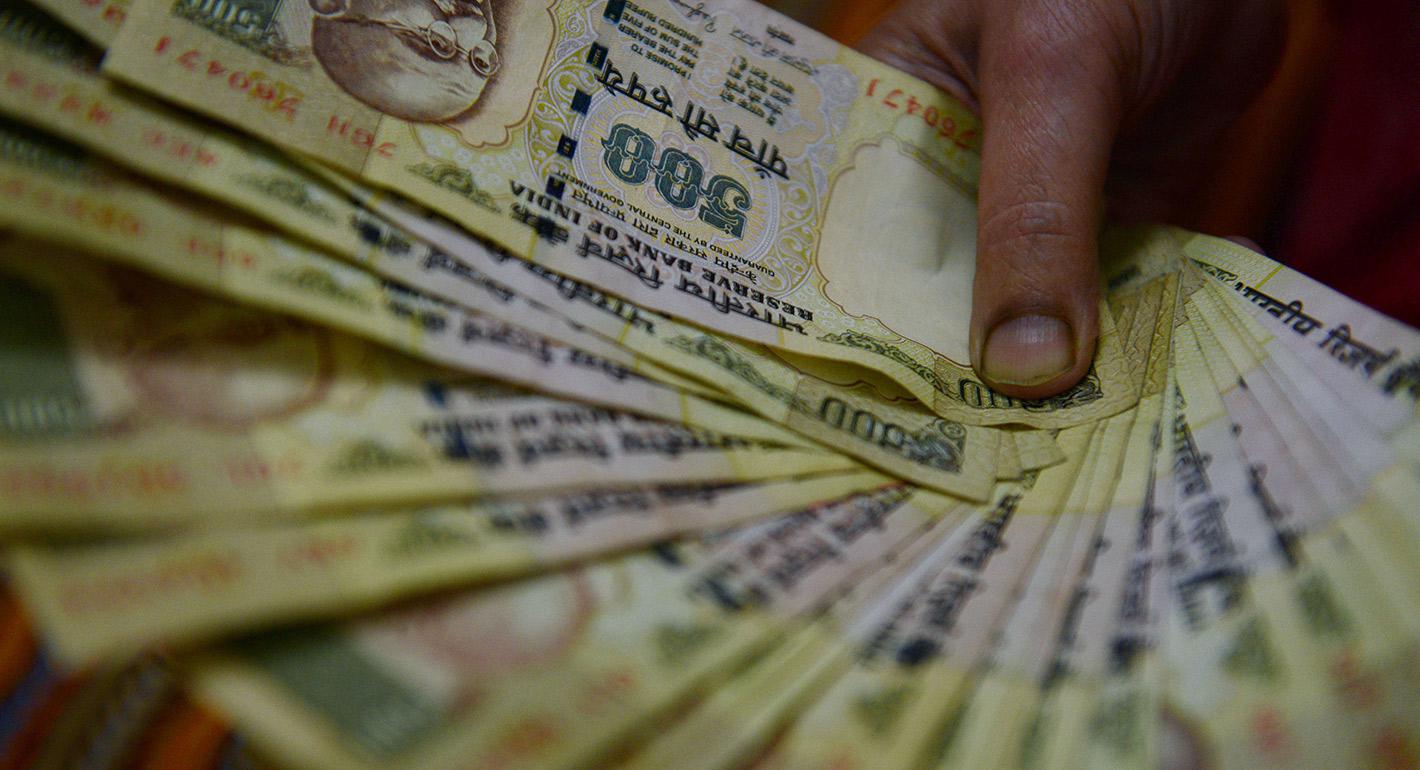
As India’s economy recovers from the coronavirus pandemic, Indian businesses need efficient financial structures to regain their ground. Key reforms to India’s Insolvency and Bankruptcy Code could fill these gaps.

Anirudh Burman

Access to cross-border data is an integral piece of the law enforcement puzzle. India is well placed to lead the discussions on international data agreements subject to undertaking necessary surveillance reforms.

Smriti Parsheera, Prateek Jha
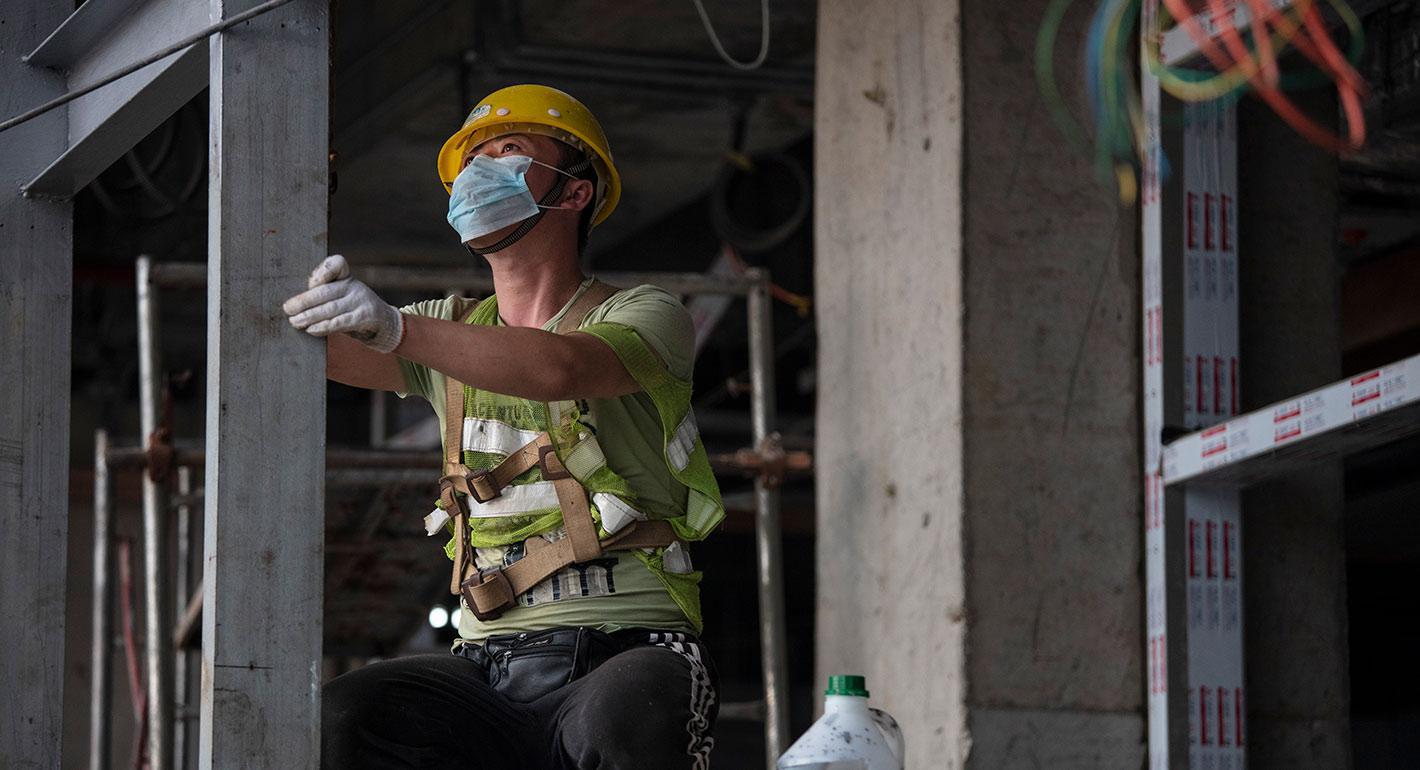
After the coronavirus pandemic wanes, how will China’s reorientation of the Belt and Road Initiative to address global health concerns influence its relationships with South Asian countries?
Deep Pal, Rahul Bhatia