

Paper
Paul Salem
{
  "authors": [
    "Paul Salem"
  ],
  "type": "legacyinthemedia",
  "centerAffiliationAll": "",
  "centers": [
    "Carnegie Endowment for International Peace",
    "Malcolm H. Kerr Carnegie Middle East Center"
  ],
  "collections": [],
  "englishNewsletterAll": "",
  "nonEnglishNewsletterAll": "",
  "primaryCenter": "Malcolm H. Kerr Carnegie Middle East Center",
  "programAffiliation": "",
  "programs": [],
  "projects": [],
  "regions": [
    "Gulf",
    "Levant",
    "Middle East"
  ],
  "topics": [
    "Political Reform"
  ]
}
Source: Getty
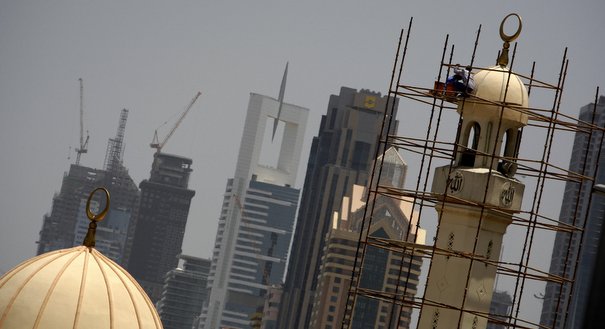
While Barack Obama has re-launched Israeli-Palestinian talks and begun negotiations with Iran, the Arab world has remained virtually absent.
Source: Al Hayat

Israeli Prime Minister Benjamin Netanyahu has won the first round against Obama. In a direct confrontation over the settlements issue, Netanyahu held his ground, and Obama backed down. The right wing in Israel and the US is declaring victory and predicting an early collapse of the Obama administration. They hope that with difficulties in Israel, Iran, Iraq, and Afghanistan, as well as with difficulties in passing health care and other reforms domestically, the Obama administration will run out of steam and lose the congressional elections of the fall of 2010.
Obama however is a tenacious politician with surprising capacities. His performance in New York and Pittsburgh has confirmed his international stature, and opinion polls within the US indicate a swing back in his favor and against the Republicans. In New York he consolidated a breakthrough with Russia and passed a historic resolution on nuclear weapons reduction; in Pittsburgh he led a restructuring of the global economic governance structure to include China, India, Brazil, Turkey, Saudi Arabia and other developing countries and to replace the G-7 and G-8 with the G-20.
Nevertheless, the prospects for progress on the Israeli-Palestinian front appear dim. The Israeli government has made clear its opposition to almost every aspect of a realistic two-state solution, and the Obama administration has proven unable or unwilling to put real pressure on Israel to moderate its stance. The Palestinians have few cards in their hands, with Abu Mazen finding no choice but to go along with negotiations which appear to promise very little, and Hamas probably correctly predicting that these talks will get nowhere. Obama’s attempt to get other Arab countries to join the process came to nothing when Israel wouldn’t even agree to a temporary freeze. It is possible that Israeli-Syrian talks might resume, perhaps again indirectly, but without progress on the Israeli-Palestinian track, a breakthrough with Syria is unlikely.
Obama can draw small consolation that he got Netanyahu to mouth acceptance of some form of two state solution, and that he has drawn him into a negotiation process. Down the line, Obama as well as special envoy George Mitchell will look for ways to achieve gradual progress, hoping that political developments might still shift to make a future breakthrough possible. The key question might be which government will falter first, Netanyahu’s or Obama’s. If Obama manages health care reform and economic recovery in the US he is likely to be in power until early 2017. In politics that is a very long time. Netanyahu will be lucky to survive into 2011. Of course, if Obama fails in passing health care and turning the US economy around over the next year, his administration might be dead in the water, and the right wing in Israel and the US would have the upper hand.
The negotiations with Iran also appear unpromising. Like the right wing in Israel, the right wing in Iran seems unwilling to offer the compromises necessary in any successful negotiation process, but rather appears to prefer using the atmosphere of tension and confrontation to consolidate military and political advantages. The Iranian right wing stuck to its hard-line position before and after the June Elections there, and seemed more troubled than relieved by the election of Obama last fall. While the centrists and reformers in Iran have revolted in favor of more pragmatic and moderate domestic and foreign policies, the right wing there appears to only have hardened its position.
The recent disclosure of the nuclear reactor in Qum makes the situation more difficult. Iran will be more on the defensive and the talks will drag into the details of inspecting yet another reactor, without any progress being made on the prospects for a wider understanding. Iran and the international community have numerous common interests in security, energy, Afghanistan, Iraq, drug control, and economic growth. However, the confrontation seems set to continue over the nuclear issue.
It is troubling that in both of the difficult Arab-Israeli and Iranian tracks, whose outcome—positive or negative—will greatly impact the Arab world, the Arab states seem all but absent. On both issues the Arab world is virtually paralyzed. While most Arab states favor a negotiated settlement with Israel they have not found a way to turn their economic power into pressure, nor have they devised innovative diplomatic initiatives that would weaken the Israeli right wing. They have left Abu Mazen to confront Netanyahu alone, neither joining him nor providing him with political ammunition, and they have put their fate in the hands of the US. On Iran, the Arab world is more divided, with some states viewing Iran as a friend and ally and others, such as a number of Gulf countries and Egypt, viewing it as a serious threat. There too the initiative has been left to the US and Europe. There will be no Arab states in the talks with Iran and no Arab states in the talks between Israel and the Palestinians. But unless the Arab states have some alternative military option, like the Bush administration—disastrously—did, then politics, economics, and diplomacy are the only tools and have to be used more vigorously.
The real danger is that if these two tracks end in failure, possibly by the spring of next year, the Middle East could be in for another round of serious military confrontations. Despite the difficulties of both tracks, the international community—and the Arab states—should to do more to make even limited progress along both tracks and to weaken and moderate the positions of entrenched right wing governments in Israel and Iran.

Senior Fellow at the Middle East Institute
Paul Salem is a senior fellow at the Middle East Institute.
Recent Work
Paul Salem
Paul Salem
Carnegie India does not take institutional positions on public policy issues; the views represented herein are those of the author(s) and do not necessarily reflect the views of Carnegie, its staff, or its trustees.
An Israeli response to Iran’s October 1 attack is imminent. The key question is of its intensity and potential fallout, both within Iran, in terms of nuclear security policy changes, and across the broader region. The coming days are likely to reshape West Asia irreversibly.
Gaddam Dharmendra
As India’s economy recovers from the coronavirus pandemic, Indian businesses need efficient financial structures to regain their ground. Key reforms to India’s Insolvency and Bankruptcy Code could fill these gaps.

Anirudh Burman

Access to cross-border data is an integral piece of the law enforcement puzzle. India is well placed to lead the discussions on international data agreements subject to undertaking necessary surveillance reforms.

Smriti Parsheera, Prateek Jha
After the coronavirus pandemic wanes, how will China’s reorientation of the Belt and Road Initiative to address global health concerns influence its relationships with South Asian countries?

Deep Pal, Rahul Bhatia
Early in the outbreak, government researchers forecast several high-risk scenarios that were downplayed or ignored in public messaging.
Gautam I. Menon