

Commentary
Nikolay Petrov
{
  "authors": [
    "Nikolay Petrov"
  ],
  "type": "legacyinthemedia",
  "centerAffiliationAll": "",
  "centers": [
    "Carnegie Endowment for International Peace",
    "Carnegie Russia Eurasia Center"
  ],
  "collections": [],
  "englishNewsletterAll": "",
  "nonEnglishNewsletterAll": "",
  "primaryCenter": "Carnegie Russia Eurasia Center",
  "programAffiliation": "",
  "programs": [],
  "projects": [],
  "regions": [
    "Caucasus",
    "Russia"
  ],
  "topics": [
    "Political Reform",
    "Economy"
  ]
}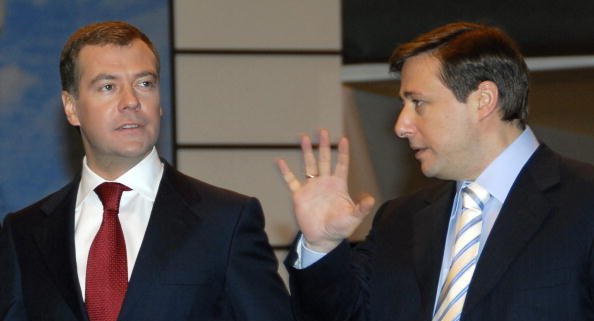
Source: Getty
By combining the posts of presidential envoy and deputy prime minister for the newly created North Caucasus Federal District, the Kremlin is taking strong political measures to end the violence in the North Caucasus.
Source: The Moscow Times

The biggest novelty in this appointment is that by combining the posts of presidential envoy and deputy prime minister, Khloponin will be an envoy of the Putin-Medvedev tandem and will answer to both leaders. This makes sense. Of all the regions, Prime Minister Vladimir Putin has always been most concerned about the Southern Federal District, with the Far East Federal District in second place. As a matter of record, the envoys of these two regions have been dropped and reappointed more frequently than in any other regions.
By choosing Khloponin, the Kremlin has opted for a business model over the siloviki model. It has decided that it would make sense to apply Khloponin’s Krasnoyarsk business model to another region badly in need of investment and efficient management.
The Krasnoyarsk region is renowned for its successful leadership under Khloponin. It outperformed Moscow and St. Petersburg in terms of attracting investment in 2007, an amazing accomplishment for a remote region, albeit one rich in natural resources. It is also noteworthy that one of Russia’s largest economic forums is held in Krasnoyarsk every year.
In recent years, the government in the Krasnoyarsk region has become a training ground for the export of effective managers. A former head of the Krasnoyarsk government, Alexander Novak, serves as a deputy to Finance Minister Alexei Kudrin, and is charged with supervising major federal programs. Former Deputy Governor Anatoly Tikhonov became first deputy chairman of Vneshekonombank responsible for major investment projects, and Deputy Governor Sergei Sokol was once sent to strengthen the Irkutsk administration and is now a strong candidate for a gubernatorial post in another region.
Putin is a big fan of Khloponin. Putin supported him in disputed the gubernatorial election in 2002, and Putin reappointed him as governor in 2007. What’s more, Khloponin is a classmate and friend of pro-modernization oligarch Mikhail Prokhorov. Ambitious and eager to rise through the ranks, Khloponin has long been discussed as a candidate for a high-ranking position in Moscow.
There is no doubt that Khloponin is highly effective as a crisis manager. He has strong business experience and connections, understands the institutions needed for development and how to use them, and knows how to rely on a qualified team for support. But those skills alone are no guarantee of success at his new post. Although Khloponin has a strong track record in attracting large investment projects, ensuring the proper and transparent expenditure of funds and battling corruption, his expertise and personality do not match the previous presidential envoys to the region in dealing with the deeply rooted tensions and conflicts between various ethnic groups and clans, as well as extremism in the North Caucasus.
As envoy to the North Caucasus Federal District, Khloponin will face a Herculean managerial task that is split between three levels: at the top, navigating between Putin, Medvedev, federal ministers and the Kremlin; at the bottom, handling the tricky relations with North Caucasus leaders; and in the middle, trying to bring his own team aboard. I am afraid that the interests of the various influential groups in both Moscow and the region are too much at odds — or in outright conflict — for Khloponin to cope with them effectively, no matter how much independent authority and power he is given.
Much will become clear during his first weeks on the job, when Khloponin, a young, aggressive and modern manager, will have to establish relations with conservative North Caucasus leaders. Will he be perceived as a brash, upstart Moscow emissary and coldly accepted by Chechen President Ramzan Kadyrov and others leaders in the region? In the Caucasus, after all, it is usually conservative military types, like Kadyrov —who was recently given the rank of general — who carry the most weight.
The refined, Moscow-bred Khloponin was excellent at running Norilsk Nickel while in his 30s. Let’s hope that he can achieve the same level of success in the North Caucasus.

Former Scholar-in-Residence, Society and Regions Program, Moscow Center
Nikolay Petrov was the chair of the Carnegie Moscow Center’s Society and Regions Program. Until 2006, he also worked at the Institute of Geography at the Russian Academy of Sciences, where he started to work in 1982.
Recent Work
Nikolay Petrov
Nikolay Petrov
Carnegie India does not take institutional positions on public policy issues; the views represented herein are those of the author(s) and do not necessarily reflect the views of Carnegie, its staff, or its trustees.

This piece argues that India’s central challenge is not managing a single flashpoint but resolving the underlying tension between expansion and institutional coherency of the BRICS grouping.

Vrinda Sahai

On March 10, 2026, India’s Union Cabinet approved amendments to Press Note 3, a regulation that mandated government approval on all foreign direct investment (FDI) from countries sharing a land border with India. This amendment raises questions primarily about whether its stated benefits will materialize and if the risks have been adequately weighed. This piece will address the same.

Konark Bhandari

This piece examines India’s response to U.S. sanctions and tariffs, specifically assessing the immediate market consequences, such as alterations in import costs, and the broader strategic implications for India’s energy security and foreign policy orientation.
Vrinda Sahai

This paper examines the evolution of India-China economic ties from 2005 to 2025. It explores the impact of global events, bilateral political ties, and domestic policies on distinct spheres of the economic relationship.

Santosh Pai
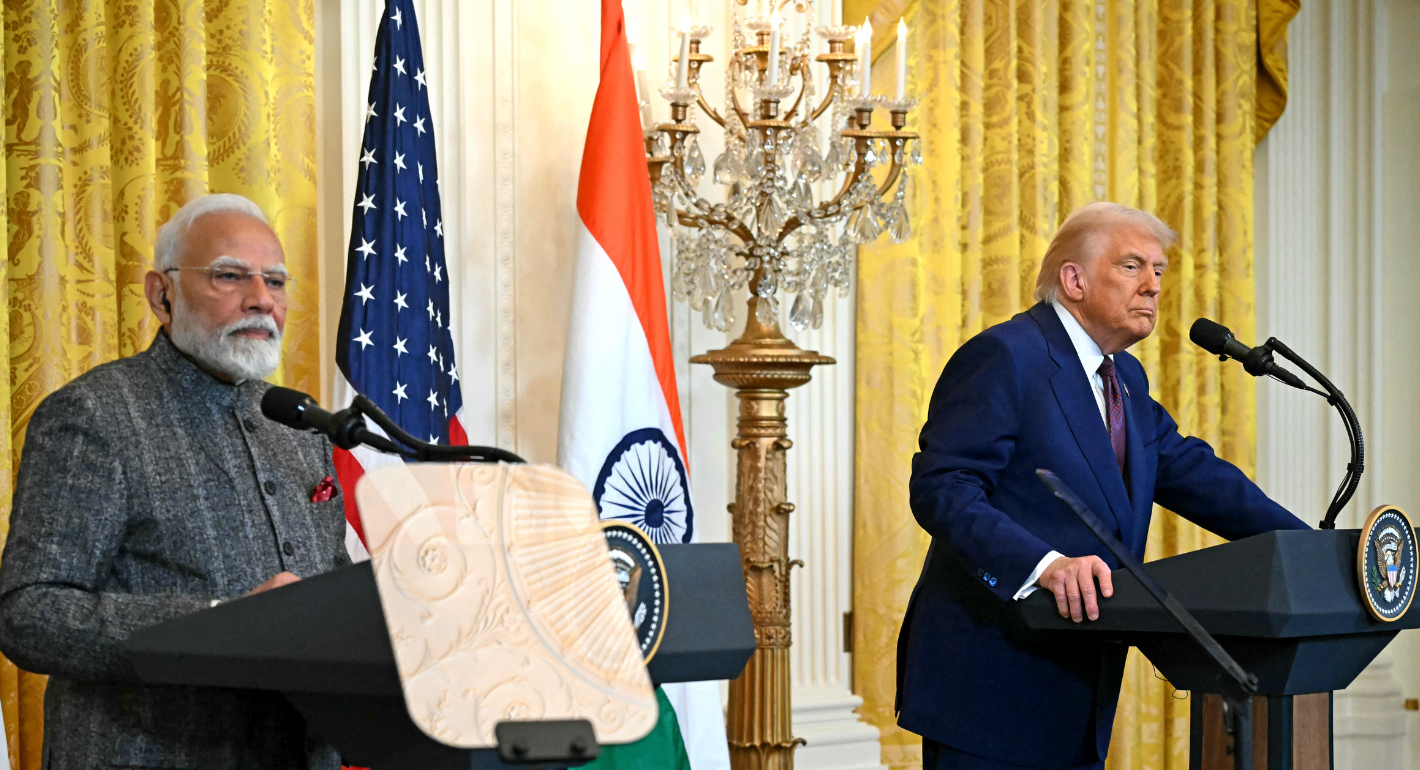
The India-U.S. relationship currently appears buffeted between three “Ts”—TRUST, Tariffs, and Trump.
Arun K. Singh