

Paper
Adam Baczko, Gilles Dorronsoro, Arthur Quesnay
{
  "authors": [
    "Gilles Dorronsoro"
  ],
  "type": "legacyinthemedia",
  "centerAffiliationAll": "dc",
  "centers": [
    "Carnegie Endowment for International Peace",
    "Carnegie Europe",
    "Carnegie Russia Eurasia Center"
  ],
  "collections": [],
  "englishNewsletterAll": "ctw",
  "nonEnglishNewsletterAll": "",
  "primaryCenter": "Carnegie Endowment for International Peace",
  "programAffiliation": "SAP",
  "programs": [
    "South Asia"
  ],
  "projects": [],
  "regions": [
    "North America",
    "United States",
    "South Asia",
    "Afghanistan",
    "Asia"
  ],
  "topics": [
    "Foreign Policy"
  ]
}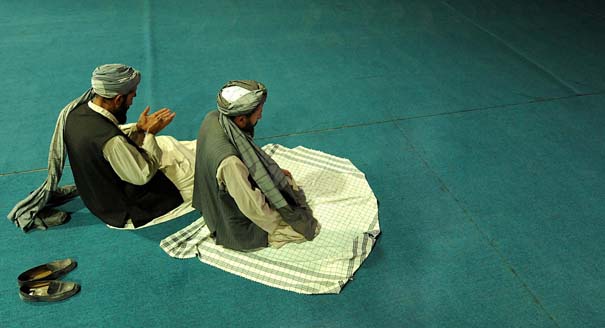
Source: Getty
The conference in London failed to suggest viable solutions to the real problems facing Afghanistan, including President Karzai’s lack of credibility, the prevalence of local corruption, and the fragmentation of power into the hands of armed local militias.
Source: Foreign Policy

Yet the coalition is systematically undermining what's left of the Afghan state. The New York Times reports that the Shinwari tribes have agreed to fight the Taliban -- in exchange for about $1 million. What's lesser known and less understood is that Washington didn't even feel obligated to notify the Karzai government of this decision.
Since last summer, the United States has supported all manner of militias in Afghanistan, creating fragmentation and a dangerous degree of competition in the security sphere. Critics rightly observe that this is a formula for an even weaker government in Kabul. In a number of cases, the U.S. is dealing directly with armed groups that are beyond the control of the central government, including the group that was reportedly responsible for the killing of the Kandahar police chief in 2009.
In restive provinces like Helmand and Kandahar, rallying the foot soldiers of the insurgency is simply never going to work, because they are fighting in defense of values -- such as Islam, and freedom from foreign occupation -- that they see under attack. Even if the coalition achieves limited tactical successes, the Taliban will quickly replace the fighters it loses, and it can easily target the "traitors." These coalition tactics are not new and have never worked before. Why does the White House think they'll work now, with the insurgency stronger than ever?
Washington's gravest error, however, is its manifest lack of interest in shoring up the Afghan central government. Whatever the official word about fighting corruption, the international coalition is bypassing Kabul in favor of local strong-men, on whom it is growing more and more dependent for protection and logistics, especially in the south. Worse, the population rejects the militias, which are often brutal toward civilians, and do little to increase support for Karzai or the coalition.
The so-called "tribal policy" has been tried before in the eastern provinces, with no results, between 2006 and 2008, when the Taliban were much weaker than they are today. Even inside the Afghan legal system, the coalition is choosing its partners at a local level, skirting the political center. NATO's Provincial Reconstruction Teams act with total independence from Kabul, which is often not even informed of their actions.
The big problem the London conference failed to tackle is the Karzai government's lack of credibility with the Afghan people, especially since the flawed election of August 2009. Working with essentially the same networks, and more and more alienated from Washington -- which has repeatedly and unceremoniously criticized him in public -- Karzai will not deliver on his political reforms.
And the return of the old Uzbek warlord Abdul Rashid Dostum, whom the coalition opposes but who supported Karzai in the latest election, signals that Karzai will become even more independent from Washington. As Generals David Petraeus and Stanley McChrystal have said, the U.S. cannot shoot its way to victory in Afghanistan, so with no prospect of building Afghan institutions for the foreseeable future, the coalition has less of an exit strategy each day.
The real game now is negotiating with the Taliban leadership in Quetta. Karzai and the Afghan government are trying to open some negotiations with the head of the Afghan Taliban Mullah Omar, as is the U.N., through special representative Kai Eide. The U.S. should also pursue direct negotiations, as it has very direct interests in a larger agreement with the Taliban -- namely, a guarantee that al Qaeda does not return to Afghanistan. If the U.S. cannot reach such a resolution, who else will?
The London conference, sadly, gave little confidence that NATO is moving any closer to its objectives in Afghanistan. A few days before leaders met here, we learned that the Afghan National Army and Police forces will be substantially increased: from 97,000 to 171,000, and 94,000 to 160,000, respectively, by the end of 2011. The security of a growing number of provinces will also come under the responsibility of the Afghan army after 2011. It all sounds nice on paper, but these policies are not remotely realistic, and as Anand Gopal reported in the Christian Science Monitor in April 2009, they have all been tried and found wanting already.
The number of ANA troops who are capable of combat is about 60,000, and turnover is reported to be as high as 25 percent per year. Given the insufficient number of Western military trainers, NATO will almost certainly miss its target numbers for the ANA. The key problem is training officers, which requires a lot of time the coalition doesn't have. And it is extremely difficult to build an army when the structures of the state are crumbling around it on all sides.
U.S. strategy in Afghanistan has become almost bewilderingly self-destructive. The White House has constantly slapped Hamid Karzai in public, demanding that he make reforms that would be difficult at the best of times, while performing an end run around him that diminishes his standing even further.
At this rate, when it withdraws, Washington may leave nothing behind in Afghanistan but warring factions -- a mess not unlike the one that precipitated the Taliban's rise to power in the first place.
Former Nonresident Scholar, South Asia Program
Dorronsoro’s research focuses on security and political development in Afghanistan. He was a professor of political science at the Sorbonne in Paris and the Institute of Political Studies of Rennes.
Recent Work
Adam Baczko, Gilles Dorronsoro, Arthur Quesnay
Gilles Dorronsoro
Carnegie India does not take institutional positions on public policy issues; the views represented herein are those of the author(s) and do not necessarily reflect the views of Carnegie, its staff, or its trustees.

How is AI reshaping space security, creating governance challenges, and where does international diplomacy stand today?


Tejas Bharadwaj, Almudena Azcárate Ortega

After the chill in ties between 2020 and 2024 that brought India–China relations to their lowest point in several decades, the two countries have engaged each other afresh. This paper argues that there are predominantly four imperatives guiding India’s approach to China, and they exist in an order of priority.

Saheb Singh Chadha

This piece argues that India’s central challenge is not managing a single flashpoint but resolving the underlying tension between expansion and institutional coherency of the BRICS grouping.

Vrinda Sahai

A partnership between India, a country of subcontinental size, and Africa, a continent of fifty-four countries, may seem asymmetric until one notes that both are home to nearly the same number of people—1.4 billion. This essay spells out the existing challenges to the partnership, its optimal potential, and the possible pathways to realize it over the next quarter-century.

Rajiv Bhatia

The U.S.–India semiconductor cooperation story is well-stocked with top-level strategic intent. What remains unresolved, however, are some underlying challenges that will determine whether the cooperation actually functions. Three such friction points stand out.

Shruti Mittal