• Research
  • About
  • Experts
Carnegie India logoCarnegie lettermark logo
{
  "authors": [],
  "type": "pressRelease",
  "centerAffiliationAll": "dc",
  "centers": [
    "Carnegie Endowment for International Peace"
  ],
  "collections": [],
  "englishNewsletterAll": "menaTransitions",
  "nonEnglishNewsletterAll": "",
  "primaryCenter": "Carnegie Endowment for International Peace",
  "programAffiliation": "MEP",
  "programs": [
    "Middle East"
  ],
  "projects": [],
  "regions": [
    "Egypt"
  ],
  "topics": []
}
REQUIRED IMAGE

REQUIRED IMAGE

Press Release

U.S. silence on Egypt’s democratic façade is misguided

The Obama administration’s silence on Egypt’s political crackdown only emboldens the regime and erodes U.S. credibility in the region.

Link Copied
Published on Feb 25, 2010

WASHINGTON, Feb 25—Egypt’s upcoming election cycle—parliamentary elections in June and November and the September 2011 presidential election—will have no impact on the internal distribution of power. While it is too late to influence the upcoming elections, the Obama administration’s silence on Egypt’s political crackdown only emboldens the regime and erodes U.S. credibility in the region, explains a new commentary by Marina Ottaway.

Key conclusions:

  • Egypt’s ostensibly multiparty system is in reality a single party regime. The country’s constitution and the National Democratic Party’s close ties to the security apparatus ensure that it will retain control of the parliament and presidency.
  • There is no viable opposition in Egypt. Leftist and liberal parties remain weak and ineffective, and protests, though numerous, have failed to translate into cohesive organizations. The Muslim Brotherhood is deeply divided, and its internal elections in January 2010 saw reformers pushed out in favor of conservative leaders.
  • A more vocal United States is unlikely to damage the bilateral relationship or Egypt’s policies toward Israel or Hizbollah and Hamas.
  • At this stage, U.S. involvement will not change the upcoming elections—it is too late to rebuild political opposition. Instead, the United States should focus on a long-term strategy.

A three-step process for the United States:

  1. Candidly outline the principles for political reform and signal that Egypt’s elections have nothing to do with democracy.
  2. Get to know all political organizations and protest movements and open a dialogue with them on how the United States can effectively aid in democracy promotion.
  3. After the first two steps, engage with the Egyptian government in an open debate on the political system, with a willingness to frankly discuss U.S. policies in the region.

“None of the steps envisaged here is going to make the elections in the forthcoming cycle into meaningful expressions of citizen choice. It is already too late to overcome the one-dimensionality of the Egyptian political scene,” writes Ottaway. “But if steps are not taken now, we will find ourselves facing a new cycle of meaningless elections five years from now.”

###


NOTES

  • Click here to read the commentary online
  • Marina Ottaway, director of the Carnegie Middle East Program, specializes in democracy and post-conflict reconstruction issues, with special focus on problems of political transformation in the Middle East.
  • The Carnegie Middle East Program combines in-depth local knowledge with incisive comparative analysis to examine economic, socio-political, and strategic interests in the Arab world to provide analysis and recommendations in both English and Arabic that are deeply informed by knowledge and views from the region.
  • The Carnegie Middle East Center based in Beirut, Lebanon, aims to better inform the process of political change in the Middle East.
  • Carnegie's Arab Reform Bulletin offers a monthly analysis of political and economic developments in Arab countries.
  • Press Contact: David Kampf, 202/939-2233, dkampf@ceip.org
Egypt

Carnegie India does not take institutional positions on public policy issues; the views represented herein are those of the author(s) and do not necessarily reflect the views of Carnegie, its staff, or its trustees.
More Work from Carnegie India

  • Commentary
    A Reunion of Friends

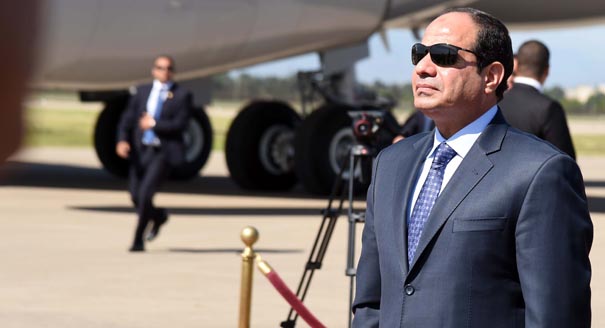
    The relationship between India and Egypt has declined over the years. But, Indian Prime Minister Narendra Modi and Egyptian President Abdel Fattah al-Sisi should rebuild the friendship between Nehru and Nasser.

      C. Raja Mohan
  • Commentary
    India and the Middle East: Delhi Begins a Re-think

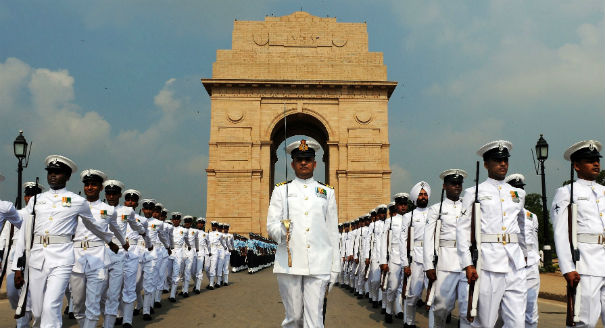
    A comprehensive approach to the Middle East should also allow Delhi to recast the anti-Western framework that has long guided India’s regional policy.

      C. Raja Mohan
  • Commentary
    The Arab Divide on Syria

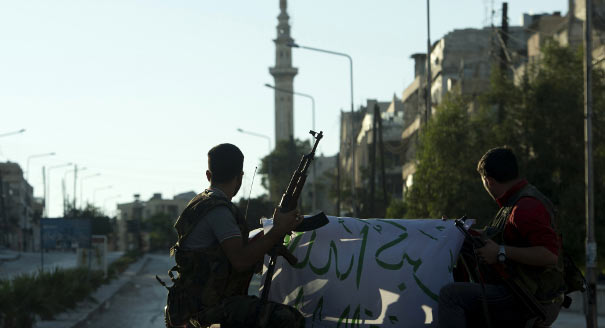
    As Obama seeks support for a bombing campaign against Syria, the Arab League has held the Assad regime responsible for the use of chemical weapons and called for international action.

      C. Raja Mohan
  • Commentary
    New Middle East

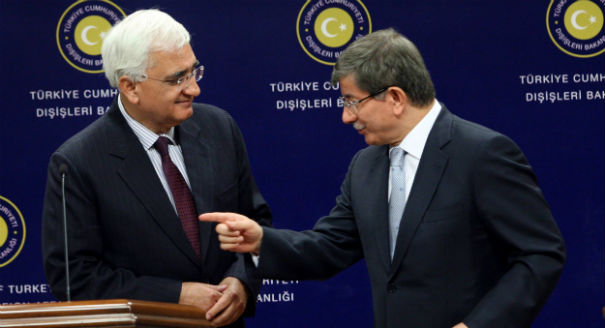
    If there ever was a moment for India to stick by the principle of non-intervention in the internal affairs of other nations, this is it in the Middle East.

      C. Raja Mohan

Get more news and analysis from
Carnegie India
Carnegie India logo, white
Unit C-4, 5, 6, EdenparkShaheed Jeet Singh MargNew Delhi – 110016, IndiaPhone: 011-40078687
  • Research
  • About
  • Experts
  • Projects
  • Events
  • Contact
  • Careers
  • Privacy
  • For Media
Get more news and analysis from
Carnegie India
© 2026 Carnegie Endowment for International Peace. All rights reserved.