

Article
James F. Collins
{
  "authors": [
    "James F. Collins"
  ],
  "type": "legacyinthemedia",
  "centerAffiliationAll": "dc",
  "centers": [
    "Carnegie Endowment for International Peace",
    "Carnegie Russia Eurasia Center"
  ],
  "collections": [
    "U.S. Nuclear Policy"
  ],
  "englishNewsletterAll": "ctw",
  "nonEnglishNewsletterAll": "",
  "primaryCenter": "Carnegie Endowment for International Peace",
  "programAffiliation": "russia",
  "programs": [
    "Russia and Eurasia",
    "Nuclear Policy"
  ],
  "projects": [
    "U.S.-Russia Bilateral Presidential Commission"
  ],
  "regions": [
    "North America",
    "United States",
    "Caucasus",
    "Russia"
  ],
  "topics": [
    "Nuclear Policy",
    "Nuclear Energy"
  ]
}
Source: Getty
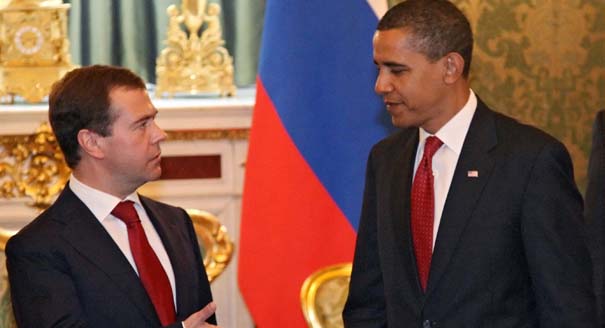
The most significant aspect of the new START treaty is its preservation of a legally binding framework for the U.S.-Russian strategic relationship.
Source: PBS NewsHour

The most significant aspect of this treaty is its preservation of a legally binding framework for the U.S.-Russian strategic relationship. The treaty's reduction of deployed warhead and delivery vehicle numbers is modest compared with its START I predecessor in 1991, and it does not take the levels much below the SORT agreement signed by President Bush and President Putin in 2002.
But the new START does accomplish a reduction that will be monitored, inspected, and verified. The treaty will thus help preserve the ability of the United States and Russia to know what the other is doing with its strategic weapons, promote transparency, and build confidence that the strategic relationship will proceed in predictable and mutually understood ways. This is clearly in the interest of the United States.
On another level, this agreement will strengthen the case America and Russia can take to the nonproliferation table. Most observers agree that we are at a critical moment in the history of the nonproliferation treaty's existence and that its effectiveness can be eroded without a successful review conference in May.
The new START will strengthen the position of Washington and Moscow in the debate over the future of disarmament and nonproliferation. It demonstrates their commitment to reducing nuclear weapons and will strengthen President Obama's ability to promote his vision of a world without nuclear weapons.
The United States' knowledge of Russia's nuclear arsenal will be the best assurance Americans can have that our own defenses and nuclear posture are adequate to deter any threat. Moreover, in improving the prospects for progress at the upcoming NPT review conference, the treaty will support American efforts to enhance our own security by inhibiting the further spread of nuclear weapons. These objectives improve U.S. national security and the safety of the American people.
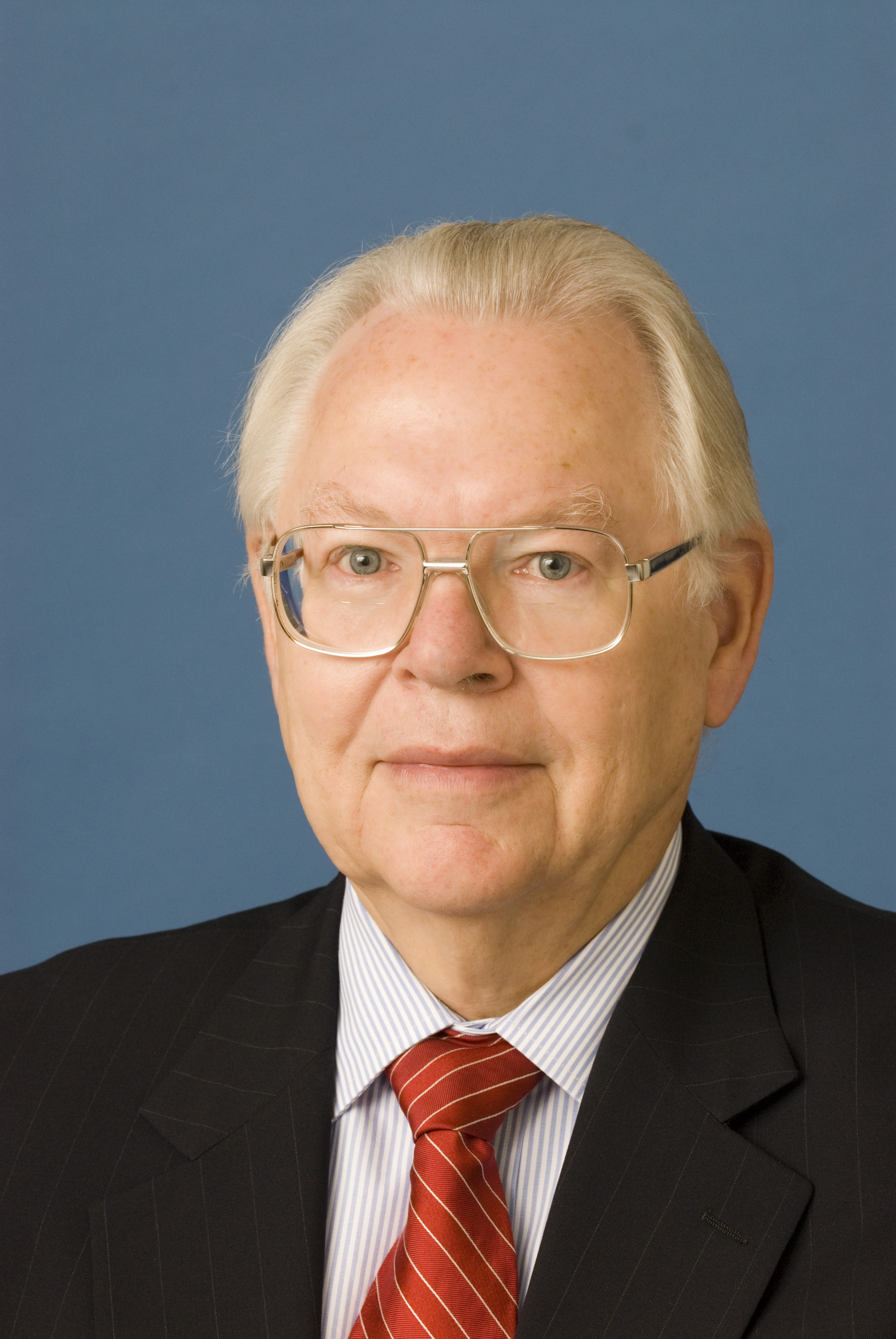
Nonresident Senior Fellow, Russia and Eurasia Program; Diplomat in Residence
Ambassador Collins was the U.S. ambassador to the Russian Federation from 1997 to 2001 and is an expert on the former Soviet Union, its successor states, and the Middle East.
Recent Work
James F. Collins
Dmitri Trenin, James F. Collins
Carnegie India does not take institutional positions on public policy issues; the views represented herein are those of the author(s) and do not necessarily reflect the views of Carnegie, its staff, or its trustees.

How is AI reshaping space security, creating governance challenges, and where does international diplomacy stand today?


Tejas Bharadwaj, Almudena Azcárate Ortega

This piece argues that India’s central challenge is not managing a single flashpoint but resolving the underlying tension between expansion and institutional coherency of the BRICS grouping.

Vrinda Sahai

The U.S.–India semiconductor cooperation story is well-stocked with top-level strategic intent. What remains unresolved, however, are some underlying challenges that will determine whether the cooperation actually functions. Three such friction points stand out.

Shruti Mittal
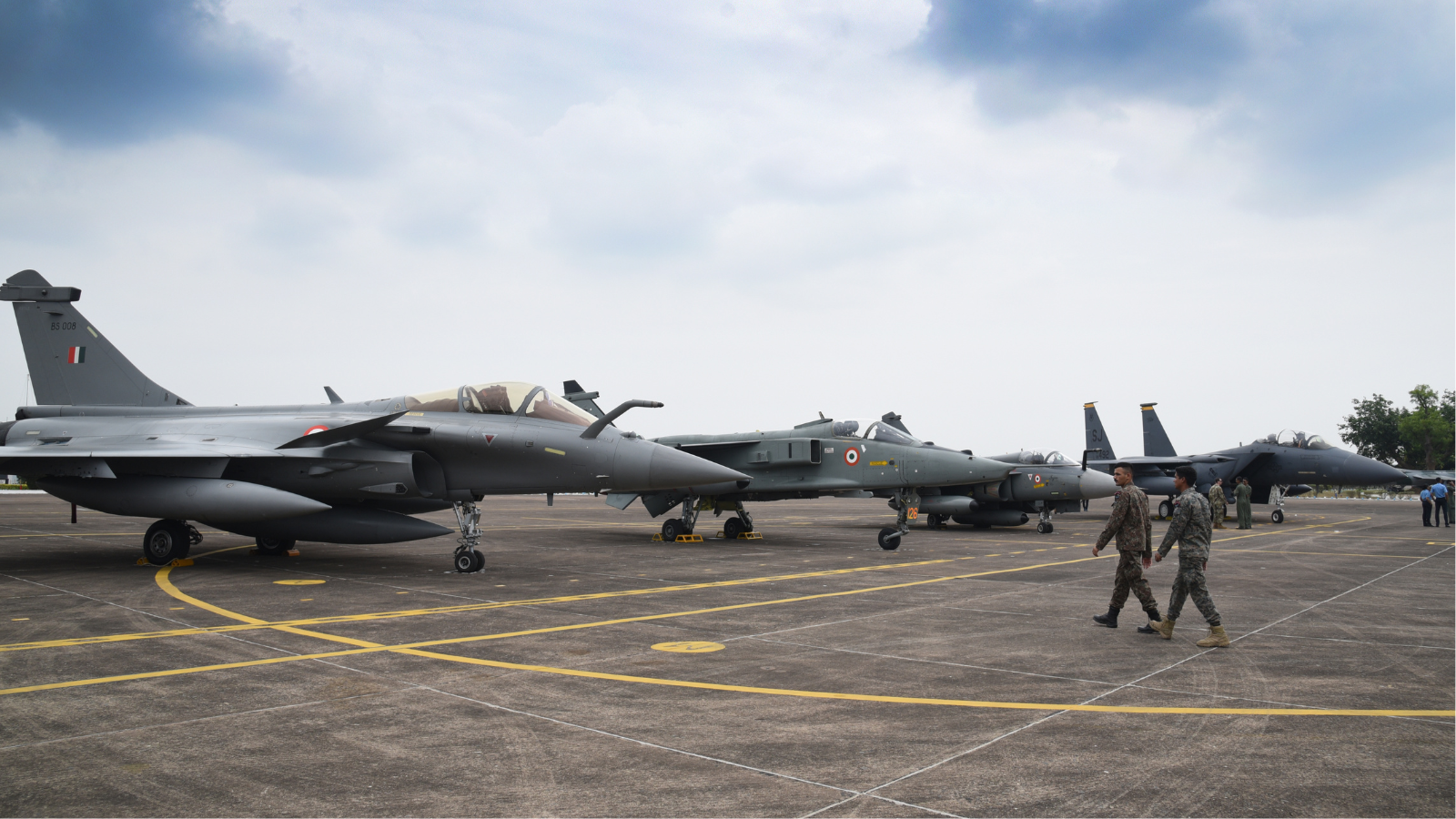
India and the United States are close to concluding a Reciprocal Defense Procurement Agreement (RDPA) that will allow firms from the two countries to sell to each other’s defense establishments more easily. While this may not remedy the specific grievances both sides may have regarding larger bilateral issues, an RDPA could restore some momentum, following the trade deal announcement.

Konark Bhandari

On the last day of the India AI Impact Summit, India signed Pax Silica, a U.S.-led declaration seemingly focused on semiconductors. While India’s accession to the same was not entirely unforeseen, becoming a signatory nation this quickly was not on the cards either.
Konark Bhandari