• Research
  • About
  • Experts
Carnegie India logoCarnegie lettermark logo
AI
{
  "authors": [
    "Paul Salem"
  ],
  "type": "legacyinthemedia",
  "centerAffiliationAll": "",
  "centers": [
    "Carnegie Endowment for International Peace",
    "Malcolm H. Kerr Carnegie Middle East Center"
  ],
  "collections": [
    "Arab Awakening"
  ],
  "englishNewsletterAll": "",
  "nonEnglishNewsletterAll": "",
  "primaryCenter": "Malcolm H. Kerr Carnegie Middle East Center",
  "programAffiliation": "",
  "programs": [],
  "projects": [],
  "regions": [
    "Egypt",
    "Levant",
    "Maghreb",
    "Lebanon",
    "Tunisia",
    "Middle East",
    "North Africa"
  ],
  "topics": [
    "Political Reform",
    "Foreign Policy"
  ]
}

Source: Getty

In The Media
Malcolm H. Kerr Carnegie Middle East Center

Middle East: Brave New World For The U.S.?

As the popular uprising against Egyptian President Hosni Mubarak continues and the pro-western government of Lebanese Prime Minister Saad Hariri is replaced by a government supported by Hezbollah, the United States is losing key allies in the region.

Link Copied
By Paul Salem
Published on Feb 1, 2011

Source: Fox News

Lebanon recently swung away from the United States and towards Syria and Iran, when Hezbollah forced the pro-western government of Saad Hariri to fall. The new Prime Minister-designate, Najib Mikati, may be a billionaire businessman, but he is one who comes with the approval of Hezbollah – which is not good news for the foreign policy of the United States.
 
What should be even more troubling to the U.S. is the uncertainty about Egypt’s future. The U.S. is pushing for “orderly transition” which translates into: “Our long-time ally Hosni Mubarak should go, but peacefully, and without any radical replacement.”
 
As the transition takes place, how peaceful will it be, and how moderate will the new Middle East look? The U.S. is certainly going to lose some allies.  “These regimes that are faltering happen to be all on the U.S. side at this point,” Carnegie’s Paul Salem noted. “This certainly puts the regional policy into question.”
 
Salem said that if the situation in Egypt would veer toward the Muslim Brotherhood – which it has not yet done– it would “certainly re-shuffle all of America’s calculations and plans in the region in a major way.” At this point, though, Salem noted, the Brotherhood is only one of the players in the uprising in Egypt, and has been careful not to overplay its hand.

About the Author

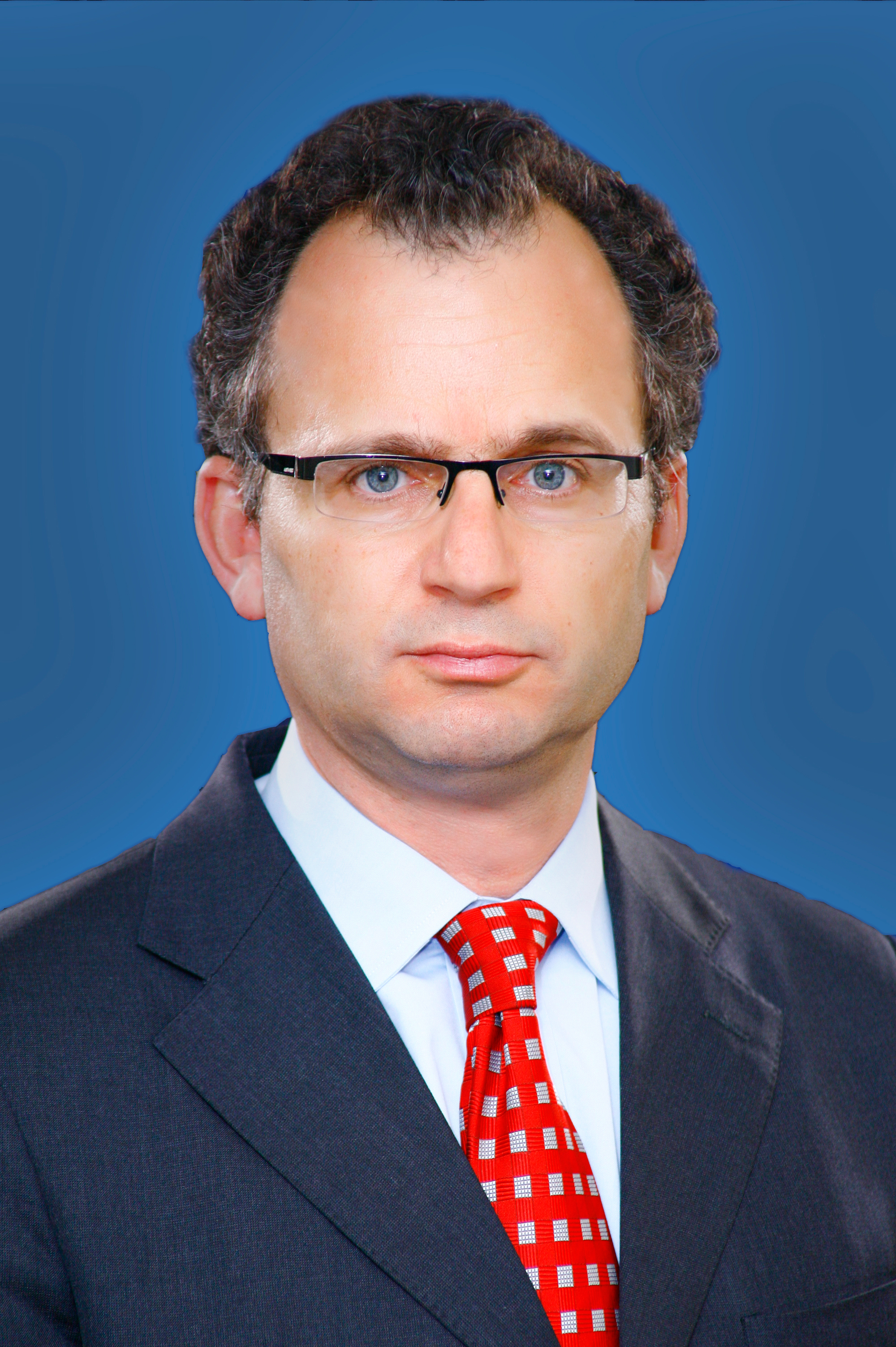
Paul Salem

Senior Fellow at the Middle East Institute

Paul Salem is a senior fellow at the Middle East Institute.

    Recent Work

  • Paper
    Iraq’s Tangled Foreign Interests and Relations

      Paul Salem

  • Article
    Bracing for Impact in Syria

      Paul Salem

Paul Salem
Senior Fellow at the Middle East Institute
Paul Salem
Political ReformForeign PolicyEgyptLevantMaghrebLebanonTunisiaMiddle EastNorth Africa

Carnegie India does not take institutional positions on public policy issues; the views represented herein are those of the author(s) and do not necessarily reflect the views of Carnegie, its staff, or its trustees.

More Work from Carnegie India

  • Commentary
    The Impact of U.S. Sanctions and Tariffs on India’s Russian Oil Imports

    This piece examines India’s response to U.S. sanctions and tariffs, specifically assessing the immediate market consequences, such as alterations in import costs, and the broader strategic implications for India’s energy security and foreign policy orientation.

      Vrinda Sahai

  • Commentary
    NISAR Soars While India-U.S. Tariff Tensions Simmer

    On July 30, 2025, the United States announced 25 percent tariffs on Indian goods. While diplomatic tensions simmered on the trade front, a cosmic calm prevailed at the Sriharikota launch range. Officials from NASA and ISRO were preparing to launch an engineering marvel into space—the NASA-ISRO Synthetic Aperture Radar (NISAR), marking a significant milestone in the India-U.S. bilateral partnership.

      Tejas Bharadwaj

  • Commentary
    Indian Airstrikes in Pakistan: May 7, 2025

    On May 7, 2025, between 1:05 and 1:30 a.m. (IST), airstrikes carried out by the Indian Air Force hit nine locations inside Pakistan and Pakistan occupied Kashmir (PoK). It was codenamed Operation Sindoor.

      Rudra Chaudhuri

  • Research
    Views From Taipei: Essays by Young Indian Scholars on China

    This compendium brings together three essays by scholars who participated in Carnegie India's Security Studies Dialogue in 2024, each examining a different aspect of China’s policies. Drawing on their expertise and research, the authors offer fresh perspectives on key geopolitical challenges.

      • +1

      Vijay Gokhale, Suyash Desai, Amit Kumar, …

  • Commentary
    The India-U.S. TRUST Initiative: Advancing Semiconductor Supply Chain Cooperation

    As part of the TRUST initiative, leaders of the two countries committed to building trusted and resilient supply chains, including for semiconductors and critical minerals. India and the United States have made steady progress in this area over the years. This essay explores the takeaways from discussions on semiconductor supply chains that took place at Carnegie India’s 9th Global Technology Summit.

      Konark Bhandari

Get more news and analysis from
Carnegie India
Carnegie India logo, white
Unit C-4, 5, 6, EdenparkShaheed Jeet Singh MargNew Delhi – 110016, IndiaPhone: 011-40078687
  • Research
  • About
  • Experts
  • Projects
  • Events
  • Contact
  • Careers
  • Privacy
  • For Media
Get more news and analysis from
Carnegie India
© 2026 Carnegie Endowment for International Peace. All rights reserved.