• Research
  • About
  • Experts
Carnegie India logoCarnegie lettermark logo
AI
{
  "authors": [
    "Michele Dunne"
  ],
  "type": "legacyinthemedia",
  "centerAffiliationAll": "dc",
  "centers": [
    "Carnegie Endowment for International Peace",
    "Malcolm H. Kerr Carnegie Middle East Center"
  ],
  "collections": [
    "Arab Awakening"
  ],
  "englishNewsletterAll": "menaTransitions",
  "nonEnglishNewsletterAll": "",
  "primaryCenter": "Carnegie Endowment for International Peace",
  "programAffiliation": "MEP",
  "programs": [
    "Middle East"
  ],
  "projects": [],
  "regions": [
    "North Africa",
    "Egypt"
  ],
  "topics": [
    "Political Reform"
  ]
}
Source: Getty

In The Media

Egypt's Political Future

The gap between Egyptian society, particularly the younger element, and the government has been widening over the past several years and has greatly contributed to the current protests in Egypt.

Link Copied
By Michele Dunne
Published on Feb 5, 2011

Source: CNN

WHITFIELD: One Middle East expert saw the uprising in Egypt coming three years ago. Her telling prediction and her take on how the U.S. should move forward in just a moment. 

But first, a look at these top stories. The leadership of Egypt's ruling National Democratic Party has resigned, including the son of President Hosni Mubarak. Gamal Mubarak has stepped down from all his posts within the party, making him ineligible to run for president of Egypt. 
 
And this as anti-government protesters stood against army tanks to prevent them from crossing a barricade in Tahrir Square. Witnesses say scuffles broke out when soldiers knocked down some of the barricades. 
 
And Egyptian-Americans and others in the U.S. are being quite vocal in their support for the anti-Mubarak protests. Rallies are taking place in cities across the U.S. today. Protesters in Washington, D.C., are marching to the White House, and in New York they're gathering outside the U.N. to show solidarity with protesters overseas. 
 
And Great Britain is still trying to get its citizens out of harm's way. Many British nationals were evacuated from Cairo earlier this week, and now the British government is setting up another charter flight. The U.S. state department is urging Americans to take advantage of U.S. charter flights out of Cairo as well. Other nations are evacuating their people as well. 
 
And well before these 12 days of protests, violence, and revolt in Egypt, at least one expert on the region says she saw this coming. In 2008 Michelle Dunne of the Carnegie Endowment for International Peace wrote that Egyptian president Hosni Mubarak would leave office by 2011. Earlier I asked her to break down the developments that helped her make this prediction back in 2008. 
 
MICHELLE DUNNE, CARNEGIE ENDOWMENT FOR INTERNATIONAL PEACE: There have been changes underway in Egyptian society that I and other scholars as well have been following. There's a youth bulge in Egyptian society as in a lot of other Arab societies, and this young generation has grown up with satellite television, with Internet. They've become increasingly active in social and political causes.
 
And, frankly, they just weren't really willing to play by the old rules, to play by the rules of authoritarian government. And so it was clear that, you know, there was a growing gap between Egyptian society, particularly between this younger he element in the Egyptian society and the government, a widening gap. And I think it was only a matter of time before it broke wide open, and we saw that 12 days ago. 
 
WHITFIELD: You also wrote the western world has not been paying attention. What were some of the things that the western world has overlooked? 
 
DUNNE: I think that what happened was in the west, you know, we're used to dealing pretty much government to government with these governments in the Middle East, and Hosni Mubarak was a close ally of the United States throughout his presidency. 
 
President Mubarak was himself pretty deaf to the demands that were rising up within his society. The United States did try to nudge him a bit. President Bush particularly for a few years during his administration tried to persuade Mubarak to carry out some political reforms. Mubarak did a couple of small things, but thing really started resisting. The Bush administration backed off.
 
And the Obama administration, too, made some sort of I would say timid efforts to persuade Mubarak to undertake reforms, but he just wasn't hearing it. He really turned the Obama administration down flat. 
 
WHITFIELD: But then something happened in the last week where the Obama administration changed its tone. Initially, as you mentioned, kind of tepid, saying you should allow people to protest peacefully. And then it became we need to see a transition of power. And then it became a transition of power now, not yesterday, but now. 
 
So what happened in that week that would make this administration or the U.S. posture different? 
 
DUNNE: Well, they saw the writing on the wall. I mean, they saw that change is coming. It's coming fast. No matter what kind of a transition is worked out, Egypt is not going to back to the way it was before. And I think president Obama did not want to be on the wrong side of history here. 
 
Now, I was critical of some of the statements the administration made a week or so ago, but I think particularly in the statement that Obama made yesterday he finally nailed it, you know, the importance of a transition to real democracy and that the United States would not stand by and approve it if this just -- if all these protests were to result in nothing more than, say, a different version of the Egyptian authoritarian regime. 

About the Author

Michele Dunne

Former Nonresident Scholar, Middle East Program

Michele Dunne was a nonresident scholar in Carnegie’s Middle East Program, where her research focuses on political and economic change in Arab countries, particularly Egypt, as well as U.S. policy in the Middle East.

    Recent Work

  • Research
    Islamic Institutions in Arab States: Mapping the Dynamics of Control, Co-option, and Contention
      • +6

      Yasmine Farouk, Nathan J. Brown, Maysaa Shuja Al-Deen, …
  • Research
    From Hardware to Holism: Rebalancing America’s Security Engagement With Arab States
      • +8

      Robert Springborg, Emile Hokayem, Becca Wasser, …

Michele Dunne
Former Nonresident Scholar, Middle East Program
Michele Dunne
Political ReformNorth AfricaEgypt

Carnegie India does not take institutional positions on public policy issues; the views represented herein are those of the author(s) and do not necessarily reflect the views of Carnegie, its staff, or its trustees.

More Work from Carnegie India

  • Paper
    India’s Sustained Economic Recovery Will Require Changes to Its Bankruptcy Law

    As India’s economy recovers from the coronavirus pandemic, Indian businesses need efficient financial structures to regain their ground. Key reforms to India’s Insolvency and Bankruptcy Code could fill these gaps.

      Anirudh Burman
  • Paper
    Cross-Border Data Access for Law Enforcement: What Are India’s Strategic Options?

    Access to cross-border data is an integral piece of the law enforcement puzzle. India is well placed to lead the discussions on international data agreements subject to undertaking necessary surveillance reforms.
      Smriti Parsheera, Prateek Jha
  • Article
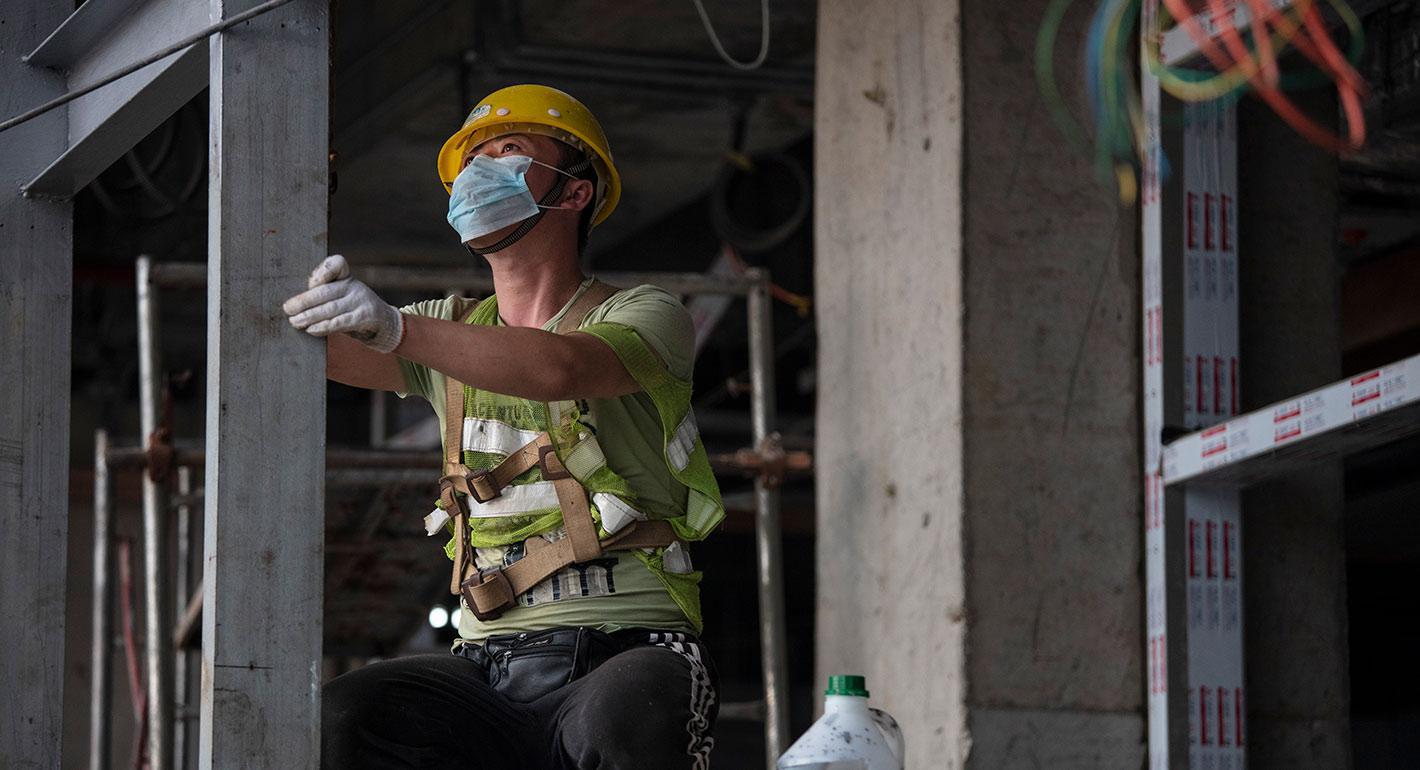
    The BRI in Post-Coronavirus South Asia

    After the coronavirus pandemic wanes, how will China’s reorientation of the Belt and Road Initiative to address global health concerns influence its relationships with South Asian countries?
      Deep Pal, Rahul Bhatia
  • Commentary
    India’s Unheeded Coronavirus Warning

    Early in the outbreak, government researchers forecast several high-risk scenarios that were downplayed or ignored in public messaging.

      Gautam I. Menon

  • Article
    Intrusive Pandemic-Era Monitoring Is the Same Old Surveillance State, Not a New One

    Governments around the world are turning to new forms of digital surveillance to monitor the spread of the coronavirus, though they are mostly using existing laws to do so.

      Anirudh Burman

Get more news and analysis from
Carnegie India
Carnegie India logo, white
Unit C-4, 5, 6, EdenparkShaheed Jeet Singh MargNew Delhi – 110016, IndiaPhone: 011-40078687
  • Research
  • About
  • Experts
  • Projects
  • Events
  • Contact
  • Careers
  • Privacy
  • For Media
Get more news and analysis from
Carnegie India
© 2026 Carnegie Endowment for International Peace. All rights reserved.