

In The Media
Minxin Pei
{
  "authors": [
    "Minxin Pei"
  ],
  "type": "legacyinthemedia",
  "centerAffiliationAll": "dc",
  "centers": [
    "Carnegie Endowment for International Peace",
    "Carnegie China"
  ],
  "collections": [],
  "englishNewsletterAll": "asia",
  "nonEnglishNewsletterAll": "",
  "primaryCenter": "Carnegie China",
  "programAffiliation": "AP",
  "programs": [
    "Asia"
  ],
  "projects": [],
  "regions": [
    "North America",
    "United States",
    "East Asia",
    "China"
  ],
  "topics": [
    "Economy",
    "Trade"
  ]
}
Source: Getty
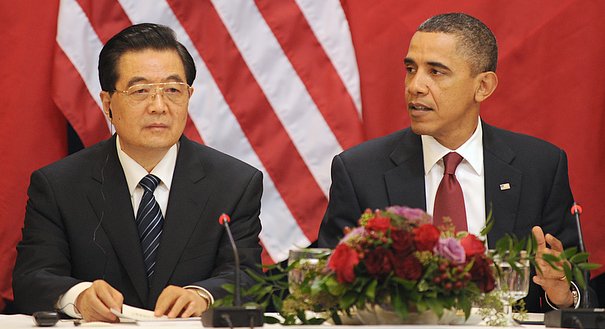
Although President Hu Jintao's state visit to Washington helped stabilize U.S.-China relations, Beijing needs to prevent future bilateral tensions by pressuring North Korea to change its behavior, scaling back its own economic protectionism, and reassuring its neighbors.
Source: South China Morning Post

On the economic track, things are looking up as well. Commercial contracts worth US$45 billion signed or announced during Hu’s visit helped. More importantly, with the renminbi steadily appreciating in real terms, the political pressure on the Obama administration and the Chinese government is abating.
However, these encouraging developments have not changed the underlying dynamics that have greatly increased mutual distrust and caused a steady deterioration of relations in recent years. China cannot afford to be complacent.
While it requires efforts by both sides to further stabilise US-China ties, Beijing needs to do more to show that it has learned the lessons from its diplomatic missteps last year and that it is deeply committed to maintaining a constructive relationship with Washington.
Perhaps the most critical task in the immediate future for China in this regard is to fulfil the commitments Hu made while in Washington. Pressuring the reckless Pyongyang regime to roll back its uranium enrichment programme will be extremely difficult, if not impossible. But China has no choice but to try.
It can no longer credibly claim an inability to make North Korea change its aggressive behaviour, since in recent months Chinese pressure on Pyongyang seems to have been remarkably effective in making the Kim Jong-il regime behave better.
Chinese leaders need to understand that it is in their own interest to rein in Pyongyang on the nuclear front. A key cause of China’s troubles with the United States, Japan and South Korea last year was Beijing’s relative tolerance of Pyongyang’s misbehaviour. More importantly, North Korean escalation in expanding its nuclear arsenal will elicit a firm US response that will certainly cause fresh Sino-American friction.
Economically, dismantling protectionist measures to make China’s fast-growing market more accessible to foreign companies is another test. Promising not to force foreign companies to transfer technology to Chinese firms if they want to get government contracts is an excellent start. But as veteran watchers of China all know, the devil is in the implementation. Given the power wielded by the bureaucracy and local governments, most of them foes of open competition, the odds are high that Beijing will have to work extra hard to ensure that its commitments to Washington are not just pleasant rhetoric.
In fact, winning back the goodwill and support of American corporations is in China’s self-interest. Without the lobbying of the powerful business community, China probably would not have got into the World Trade Organisation, and its ties with the US would have been in far worse shape. But in recent years, as China grows stronger economically, Chinese leaders have alienated their friends in the American corporate world with arrogance, outright protectionist measures and poor protection of intellectual property rights. It is time to make amends.
In addition to action designed to shore up its ties with America, China should also actively repair the damage its recent assertiveness has done to relations with its Asian neighbours. Chinese leaders often operate under the mistaken assumption that closer ties with the US give them a stronger hand in dealing with their neighbours.
In truth, the logic is in the opposite. Better neighbourly ties allow China to enjoy stable relations with the US because, when faced with Chinese pressure, China’s neighbours naturally turn to Washington for help. As a strategic balancer, the US has no choice but to come to the aid of China’s neighbours, thus directly confronting China.
So Beijing urgently needs to take concrete steps to defuse the tensions with its key neighbours, principally Japan, India, South Korea and Vietnam. Ties with Seoul could conceivably improve if China acts more constructively in constraining North Korea. As for the other three countries, Beijing’s task is much harder because China has territorial disputes with all of them. To make matters worse, they all view China’s rise with trepidation.
However difficult the reconciliation process may be, the alternative scenario is simply too dreadful to contemplate. It is hard to imagine that sensible Chinese leaders are prepared to live with fearful and distrustful neighbours. So Chinese leaders may have to make some painful and politically difficult concessions and exercise extraordinary strategic restraint to put China’s ties with its neighbours, especially Japan and India, on a solid footing.
Only by taking these measures can China regain its regional standing and start altering the underlying, and dangerous, dynamics that have periodically brought Beijing and Washington to the brink of confrontation in the past.

Former Adjunct Senior Associate, Asia Program
Pei is Tom and Margot Pritzker ‘72 Professor of Government and the director of the Keck Center for International and Strategic Studies at Claremont McKenna College.
Recent Work
Minxin Pei
Minxin Pei
Carnegie India does not take institutional positions on public policy issues; the views represented herein are those of the author(s) and do not necessarily reflect the views of Carnegie, its staff, or its trustees.

How is AI reshaping space security, creating governance challenges, and where does international diplomacy stand today?


Tejas Bharadwaj, Almudena Azcárate Ortega

After the chill in ties between 2020 and 2024 that brought India–China relations to their lowest point in several decades, the two countries have engaged each other afresh. This paper argues that there are predominantly four imperatives guiding India’s approach to China, and they exist in an order of priority.

Saheb Singh Chadha

This piece argues that India’s central challenge is not managing a single flashpoint but resolving the underlying tension between expansion and institutional coherency of the BRICS grouping.

Vrinda Sahai

The U.S.–India semiconductor cooperation story is well-stocked with top-level strategic intent. What remains unresolved, however, are some underlying challenges that will determine whether the cooperation actually functions. Three such friction points stand out.

Shruti Mittal

On March 10, 2026, India’s Union Cabinet approved amendments to Press Note 3, a regulation that mandated government approval on all foreign direct investment (FDI) from countries sharing a land border with India. This amendment raises questions primarily about whether its stated benefits will materialize and if the risks have been adequately weighed. This piece will address the same.

Konark Bhandari