

In The Media
Minxin Pei
{
  "authors": [
    "Minxin Pei"
  ],
  "type": "legacyinthemedia",
  "centerAffiliationAll": "dc",
  "centers": [
    "Carnegie Endowment for International Peace",
    "Malcolm H. Kerr Carnegie Middle East Center"
  ],
  "collections": [],
  "englishNewsletterAll": "asia",
  "nonEnglishNewsletterAll": "",
  "primaryCenter": "Carnegie Endowment for International Peace",
  "programAffiliation": "AP",
  "programs": [
    "Asia"
  ],
  "projects": [],
  "regions": [
    "East Asia",
    "China",
    "Egypt"
  ],
  "topics": [
    "Political Reform",
    "Democracy"
  ]
}
Source: Getty
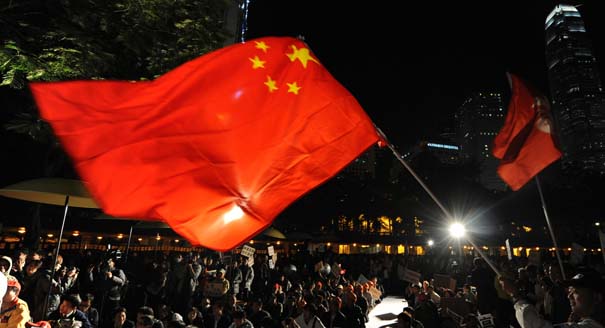
Although China's regime appears to be resilient, the recent demonstrations and upheaval in the Arab world show that support for authoritarian governments can dissolve rapidly.
Source: Financial Times

The insecurity displayed by China’s ruling elites may seem extreme. After all, unlike the Mubarak regime, the CCP has consistently delivered increasing standards of living and currently faces few threats to its authority at home. The conventional wisdom says China has a self-confident leadership that sees itself as a contender for global supremacy.
But look a little deeper and this ostensibly resilient regime is afflicted by many of the same pathologies as Egypt: repression, corruption, low accountability, a surprisingly narrow base of support and fast-rising inequality. Yes, growth and prosperity help the CCP maintain its legitimacy. But the regime knows that performance-based legitimacy is unreliable, at best. The same frustrations that drove Egyptians into the streets could be unleashed in China when its economy inevitably hits a speed bump.
With mounting developmental challenges, China’s continued economic prosperity is by no means guaranteed, while rising food price inflation is a particular cause of concern for the regime. For the CCP, meeting such challenges requires not only technocratic policy solutions but also ought to include political reforms that will open up participation, make the CCP more accountable, and create a new basis of legitimacy.
That said, it is likely that the CCP will conclude that Mr Mubarak’s regime should have practised even harsher repression, and nipped the revolt in the bud. Chinese leaders probably also blame western influence and conspiracy, as they did when the colour revolutions toppled unpopular regimes in Ukraine, Georgia and Kyrgyzstan a few years ago.
China’s leadership may also attribute Mr Mubarak’s fall to his mediocre economic record – particularly his failure to create jobs for college graduates. Rising unemployment of college graduates is a problem China shares with Egypt.
It is far from clear, however, that these are right lessons for Beijing to draw. Starting long-delayed democratic reforms from a position of relative political strength could actually be in the CCP’s self-interest. The peaceful and smooth democratic transitions in Taiwan, Mexico and Brazil show that authoritarian regimes that initiate political opening could fare better than those that do not.
Even so, the CCP is more likely to continue to rely on the survival strategy it has adopted when its solders crushed the Tiananmen pro-democracy movement in June 1989. But the sustainability of this strategy seems increasingly in doubt. In China today social frustrations rise almost as fast as economic growth.
If the Egyptian crisis teaches us anything, it is that the legitimacy of autocrats vanishes quickly when circumstances change, and such regimes’ flaws are laid bare. The durability of the CCP’s rule, rather than just China’s economic trajectory, should now again be a hot topic of speculation.
Such a conversation is certainly one Chinese leaders, long accustomed to basking in the international glow of their economic miracle, would prefer not to have. They may have no choice. Like financial contagion, the political contagion that originated in Tunisia and spread to Egypt has refocused the attention of the international community on the underlying political frailties of autocratic regimes. The more such regimes get scrutinised, the less attractive they look.
Here China’s recent history provides an apt lesson. Without Deng Xiaoping’s economic reforms, the CCP would certainly have not survived the devastation of the Cultural Revolution. But Deng’s reforms can take a fundamentally flawed political regime only so far. The more difficult of gradual democratisation still lies ahead. The unfolding Egyptian revolution of 2011 should remind Beijing that it is high time to confront this task.
Former Adjunct Senior Associate, Asia Program
Pei is Tom and Margot Pritzker ‘72 Professor of Government and the director of the Keck Center for International and Strategic Studies at Claremont McKenna College.
Recent Work
Minxin Pei
Minxin Pei
Carnegie India does not take institutional positions on public policy issues; the views represented herein are those of the author(s) and do not necessarily reflect the views of Carnegie, its staff, or its trustees.

After the chill in ties between 2020 and 2024 that brought India–China relations to their lowest point in several decades, the two countries have engaged each other afresh. This paper argues that there are predominantly four imperatives guiding India’s approach to China, and they exist in an order of priority.

Saheb Singh Chadha

This piece argues that India’s central challenge is not managing a single flashpoint but resolving the underlying tension between expansion and institutional coherency of the BRICS grouping.

Vrinda Sahai

This paper examines the evolution of India-China economic ties from 2005 to 2025. It explores the impact of global events, bilateral political ties, and domestic policies on distinct spheres of the economic relationship.

Santosh Pai
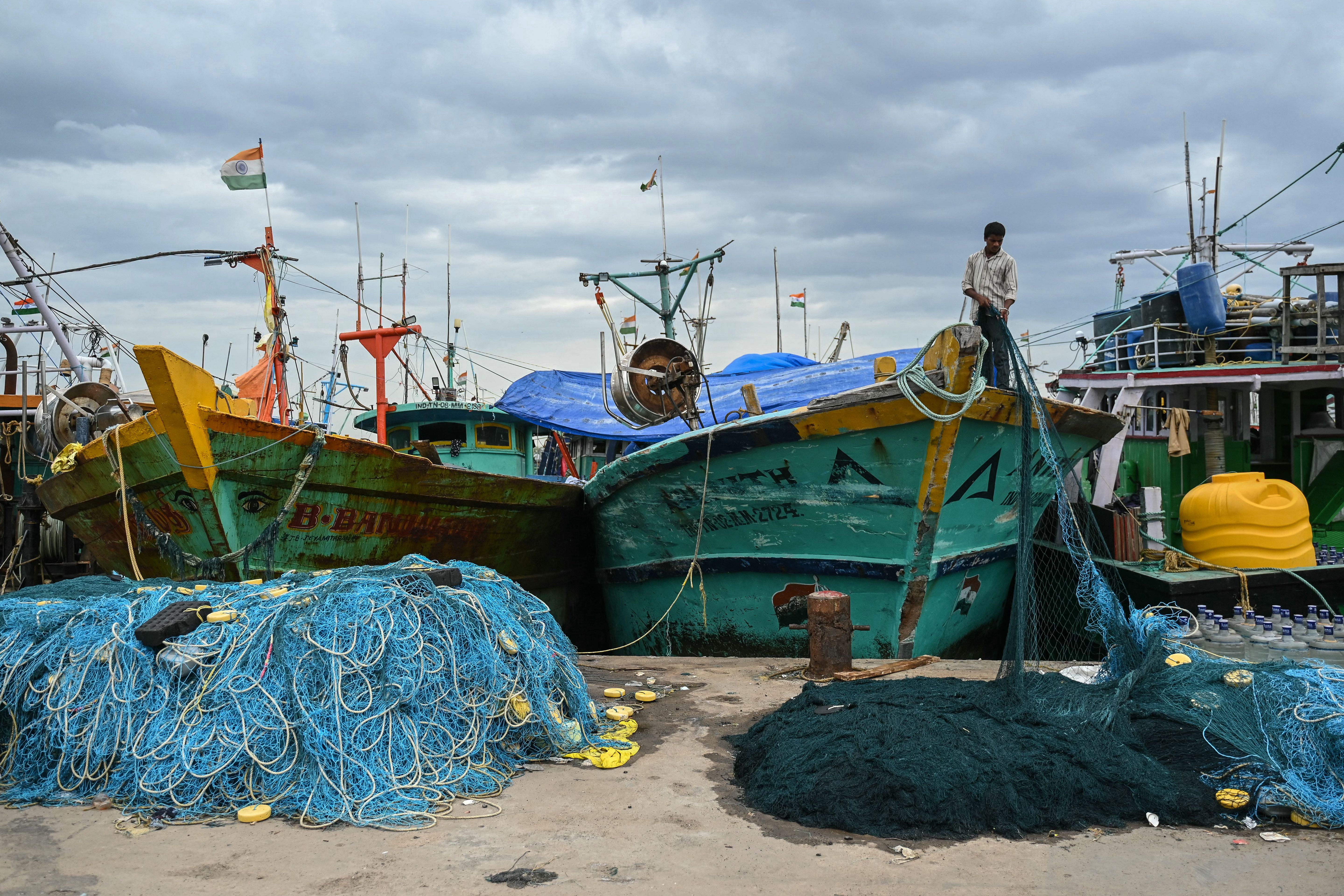
This article examines the scale and impact of Chinese IUU fishing operations globally and identifies the nature of the challenge posed by IUU fishing in the Indian Ocean Region (IOR). It also investigates why existing maritime law and international frameworks have struggled to address this growing threat.


Ajay Kumar, Charukeshi Bhatt

This compendium brings together three essays by scholars who participated in Carnegie India's Security Studies Dialogue in 2024, each examining a different aspect of China’s policies. Drawing on their expertise and research, the authors offer fresh perspectives on key geopolitical challenges.

Vijay Gokhale, Suyash Desai, Amit Kumar, …