

Article
This piece argues that India’s central challenge is not managing a single flashpoint but resolving the underlying tension between expansion and institutional coherency of the BRICS grouping.
Vrinda Sahai
{
  "authors": [
    "Dmitri Trenin",
    "Sergei Aleksashenko",
    "Sam Greene",
    "Adnan Vatansever"
  ],
  "type": "other",
  "centerAffiliationAll": "",
  "centers": [
    "Carnegie Endowment for International Peace",
    "Carnegie Europe",
    "Carnegie Russia Eurasia Center"
  ],
  "collections": [],
  "englishNewsletterAll": "",
  "nonEnglishNewsletterAll": "",
  "primaryCenter": "Carnegie Russia Eurasia Center",
  "programAffiliation": "",
  "programs": [],
  "projects": [],
  "regions": [
    "Caucasus",
    "Russia"
  ],
  "topics": [
    "Political Reform",
    "Economy"
  ]
}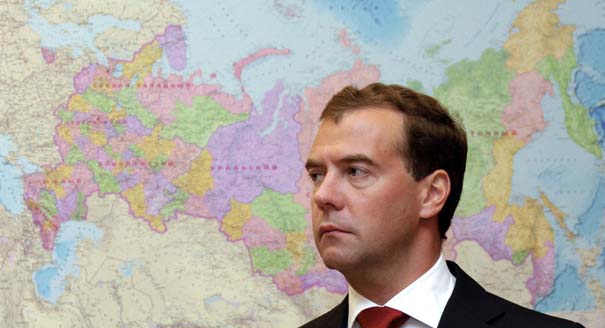
Source: Getty
Russia’s recovery from the global economic crisis has been slow, constrained by a number of economic and political structural problems. Until they are resolved, these issues will continue to hinder Russia’s development.
Russia’s recovery from the global economic crisis has been slow, constrained by a number of structural problems, both economic and political. That the oil price continues to play an inordinately big role in Russia’s economy is a symbol of these problems. Corruption, which has reached previously unheard-of levels, is a symptom, not the cause. Unless these fundamental factors change, Russia will not be able to start living up to its potential.
Russia’s population exhibits elements of unease, but this is unlikely to lead to unrest. Society, until now squarely focused on the private space, is maturing and beginning to structure itself as groups of interests, which can manifest themselves in joint actions. This “reawakening” does not yet suggest mass opposition to the government’s policies, but botched reforms—coupled with a sense that they are initiated by “thieves and swindlers”—could disrupt the social peace still reigning in Russia.
The start of a new political cycle in 2012 will be dominated by Prime Minister Vladimir Putin, whether he chooses to return to the presidency or not. Putin has vowed to almost double Russia’s per capita GDP within a decade. To do that, he will need both to implement reforms and maintain firm political control. The political field will probably be expanded to include loyal liberals whose job will be to publicly make the case for reforms, carry them out, and possibly be blamed for them later.
Russia’s foreign policy will continue to be guided by a desire to gain access to Western technology and expertise, which argues against confrontation or even serious political disagreement. At the same time, Russia will strive to establish itself as an independent strategic player with membership in many clubs, from the G8 to the BRICS (Brazil, Russia, India, China, and South Africa)—while building its own economic unit with a few post-Soviet states.
Traditionally Western-centric, Russia’s foreign policy is now rediscovering an Asia-Pacific focus. A number of factors are behind this change: the need to develop eastern Russian territories between the Urals and the Pacific; the opportunity to use the rise of China toward that goal; the need to manage China’s new might; and the opportunity to reach out to the advanced economies of Japan and South Korea, to name a few. Russia is not a European country; it is Euro-Pacific.
Former Director, Carnegie Moscow Center
Trenin was director of the Carnegie Moscow Center from 2008 to early 2022.
Former Scholar in Residence, Economic Policy Program, Moscow Center
Aleksashenko, former deputy minister of finance of the Russian Federation and former deputy governor of the Russian central bank, was a scholar-in-residence in the Carnegie Moscow Center’s Economic Policy Program.

Former Deputy Director for Operations, Moscow Center
Sam Greene was a deputy director for operations at the Moscow Center. He joined the Moscow Center in 2005. Previously, he was senior media program advisor for the New Eurasia Foundation, and a London and Moscow correspondent for FT Business.
Former Senior Associate, Energy and Climate Program
Vatansever was a senior associate in the Energy and Climate Program where he specializes in the energy sectors of the former Soviet republics and Eastern Europe.
Carnegie India does not take institutional positions on public policy issues; the views represented herein are those of the author(s) and do not necessarily reflect the views of Carnegie, its staff, or its trustees.

This piece argues that India’s central challenge is not managing a single flashpoint but resolving the underlying tension between expansion and institutional coherency of the BRICS grouping.

Vrinda Sahai

On March 10, 2026, India’s Union Cabinet approved amendments to Press Note 3, a regulation that mandated government approval on all foreign direct investment (FDI) from countries sharing a land border with India. This amendment raises questions primarily about whether its stated benefits will materialize and if the risks have been adequately weighed. This piece will address the same.

Konark Bhandari

This piece examines India’s response to U.S. sanctions and tariffs, specifically assessing the immediate market consequences, such as alterations in import costs, and the broader strategic implications for India’s energy security and foreign policy orientation.
Vrinda Sahai

This paper examines the evolution of India-China economic ties from 2005 to 2025. It explores the impact of global events, bilateral political ties, and domestic policies on distinct spheres of the economic relationship.

Santosh Pai
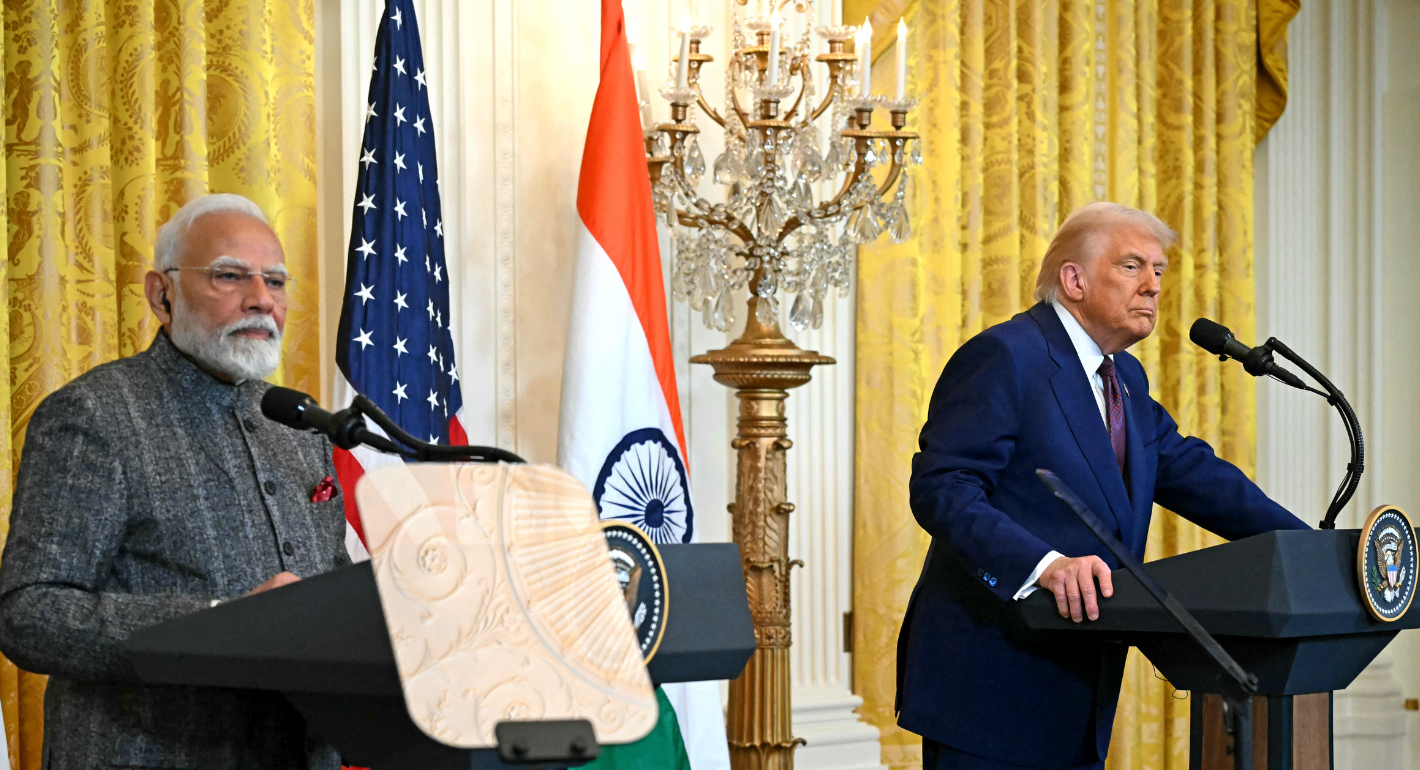
The India-U.S. relationship currently appears buffeted between three “Ts”—TRUST, Tariffs, and Trump.
Arun K. Singh