

Commentary
Olga Shumylo-Tapiola
{
  "authors": [
    "Olga Shumylo-Tapiola"
  ],
  "type": "other",
  "centerAffiliationAll": "",
  "centers": [
    "Carnegie Endowment for International Peace",
    "Carnegie Europe",
    "Carnegie Russia Eurasia Center"
  ],
  "collections": [
    "Europe’s Eastern Neighborhood"
  ],
  "englishNewsletterAll": "",
  "nonEnglishNewsletterAll": "",
  "primaryCenter": "Carnegie Europe",
  "programAffiliation": "",
  "programs": [],
  "projects": [],
  "regions": [
    "Russia",
    "Europe",
    "Eastern Europe",
    "Caucasus",
    "Ukraine"
  ],
  "topics": [
    "Economy",
    "Foreign Policy"
  ]
}
Source: Getty
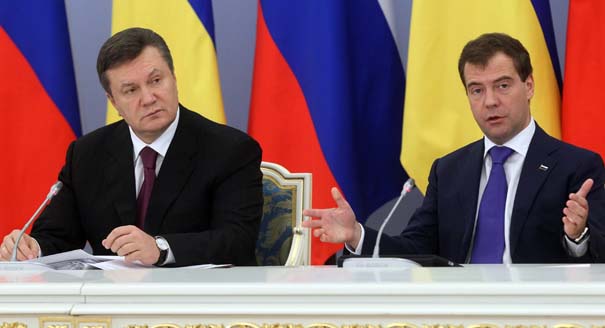
While there has been a reawakening of sorts between Russia and Ukraine, relations between the two remain essentially unbalanced and tensions over gas disputes and trade are likely to continue to undermine bilateral relations.
When he took power in the spring of 2010, Ukrainian President Viktor Yanukovych was widely seen as a pro-Russian politician inclined to seek compromises with Moscow. Both sides expected his presidency to result in a normalization and stabilization of relations between Russia and Ukraine. Symbolic gestures such as the signing of the Kharkiv agreement, Ukraine’s renunciation of its aspirations for NATO membership, and a number of high-level visits between the two capitals seemed to confirm this initial impression. It is becoming increasingly clear, however, that the current Ukrainian president, like all of his predecessors, will not toe Moscow’s line and relations between the two countries are slowly but surely sliding into deadlock.
Not long into Yanukovych’s first year in office it became apparent that Ukraine would be increasingly subjected to Russian pressure on integration projects, would be carried out on Russia’s terms, with Ukraine gaining in the short term, but losing out heavily in the long run. Yanukovych, however, began to seriously engage with the question of European integration, privileging negotiations on Ukraine’s Association Agreement with the European Union (EU), while snubbing the possibility of joining Moscow’s Customs Union, a project that is dear to Russia and especially to Prime Minister Putin. These European aspirations have caused considerable disquiet in the Kremlin and Russian experts now argue that Ukraine’s leadership and elite send confusing messages to Moscow and that the country remains Russia’s most unpredictable partner in the post-Soviet space.
In sum, while there has been a reawakening of sorts between Moscow and Kyiv, relations between the two remain essentially unbalanced. Russia consistently expects more of its neighbor to the west and is consistently disappointed. Ukraine has two main concerns—cheaper gas and less attention from Russia—neither of which have been forthcoming.
Whether Kyiv and Moscow will be able to overcome this deadlock and build a stable and healthy relationship remains open to question. The current level of expectations on both sides, the lack of strategy, and the mutual distrust all suggest that relations between Ukraine and Russia will be fraught in the coming years. The people-to-people contacts that exist between Ukraine and Russia will serve as a guarantee against any military intervention by Moscow. However, disputes over gas, prompted by the introduction of higher gas prices for Ukraine, or trade wars, prompted by the finalization of EU-Ukraine talks on the Deep and Comprehensive Free Trade Agreement (DCFTA), are likely to follow.
The nature of Ukraine’s agenda for Russia remains an open question, but ultimately Kyiv must find a vision in order to rebuild its relations with Moscow and end the tensions.

Former Nonresident Associate, Carnegie Europe
Shumylo-Tapiola is a nonresident associate at Carnegie Europe in Brussels, where her research focuses on Eastern Europe and Eurasia.
Recent Work
Olga Shumylo-Tapiola
Olga Shumylo-Tapiola
Carnegie India does not take institutional positions on public policy issues; the views represented herein are those of the author(s) and do not necessarily reflect the views of Carnegie, its staff, or its trustees.

After the chill in ties between 2020 and 2024 that brought India–China relations to their lowest point in several decades, the two countries have engaged each other afresh. This paper argues that there are predominantly four imperatives guiding India’s approach to China, and they exist in an order of priority.

Saheb Singh Chadha

This piece argues that India’s central challenge is not managing a single flashpoint but resolving the underlying tension between expansion and institutional coherency of the BRICS grouping.

Vrinda Sahai
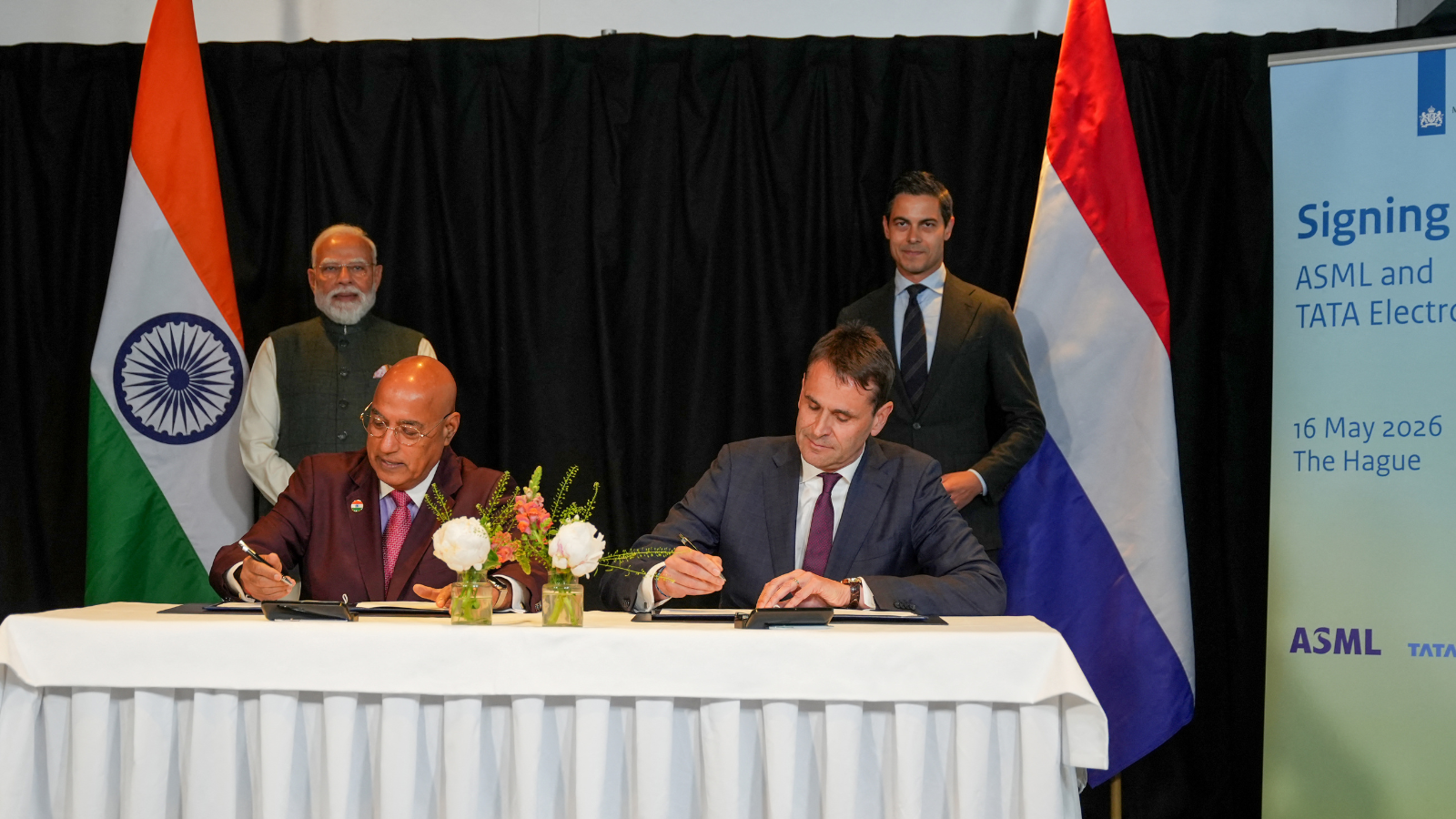
The ASML MoU with Tata Electronics is an indicator of how far the Indian semiconductor ecosystem has come. This ecosystem has been years in the making and represents real commercial logic.

Konark Bhandari

A partnership between India, a country of subcontinental size, and Africa, a continent of fifty-four countries, may seem asymmetric until one notes that both are home to nearly the same number of people—1.4 billion. This essay spells out the existing challenges to the partnership, its optimal potential, and the possible pathways to realize it over the next quarter-century.

Rajiv Bhatia

The India–EU Free Trade Agreement (FTA) is shaping up to be one of the most consequential trade negotiations, both economically and strategically. But, what’s in the agreement, what’s missing, and what will determine its success in the years ahead
Vrinda Sahai, Nicolas Köhler-Suzuki