

Paper
Paul Salem
{
  "authors": [
    "Paul Salem"
  ],
  "type": "legacyinthemedia",
  "centerAffiliationAll": "dc",
  "centers": [
    "Carnegie Endowment for International Peace",
    "Malcolm H. Kerr Carnegie Middle East Center"
  ],
  "collections": [
    "Arab Awakening"
  ],
  "englishNewsletterAll": "menaTransitions",
  "nonEnglishNewsletterAll": "",
  "primaryCenter": "Malcolm H. Kerr Carnegie Middle East Center",
  "programAffiliation": "MEP",
  "programs": [
    "Middle East"
  ],
  "projects": [],
  "regions": [
    "Lebanon",
    "Syria",
    "Middle East"
  ],
  "topics": [
    "Political Reform"
  ]
}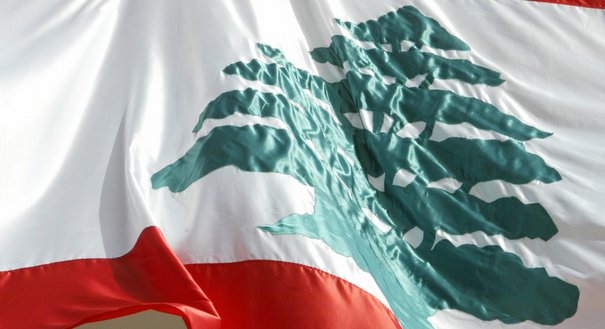
Source: Getty
Six years after the assassination of Prime Minister Rafik Hariri and four years after UN Security Council resolution 1757 established the special tribunal for Lebanon, the first indictments of the tribunal have been issued, naming four individuals from Hizbullah.
Source: Al-Hayat

The timing of the indictments came as a blow to the Mikati government as it had hoped to have some weeks or months of momentum before the tribunal issue fell upon it; and Nasrallah’s strong response—underlying that Mikati’s government would not be allowed to exercise national sovereignty or the rule of law—further embarrassed the government. Indeed, Lebanon has entered a new era when the repercussions of the indictments and the tribunal will escalate tensions and cast a long shadow on the country’s politics and security.
In procedural terms, the new government is claiming it will maintain cooperation with the tribunal. It moved to implement the arrest warrants but the four individuals could not be found. This situation could continue for years, as in the case of Bosnian Serb military leader Ratko Mladic who was indicted in 1995 but only captured sixteen years later in May 2011. Most of the names of the four indictees emerged in earlier leaks and they have surely been sent into hiding in Lebanon, Iran, or elsewhere. The government is also saying that it will maintain its share of payments to the tribunal and keep the Lebanese judges there. Mikati might be trying to find a middle ground where his government maintains cooperation with the tribunal but, without the ability to reach the four indictees, avoids a clash with Hizbullah and the tribunal only makes slow progress.
In any case, if the indictees are not found the tribunal will commence its proceedings and begin the trials in absentia. This process is likely to go on for years and the information and evidence that is uncovered will continue to have strong reverberations in Lebanon and the region. The proceedings could also lead to new indictments.
The indictments will also be part of a wider dynamic that could have even larger consequences. There were several unofficial news reports indicating that we have only seen the Lebanese portion of the indictments so far and that the tribunal could deliver another set of indictments later in the summer to the Syrian authorities, possibly naming high officials in the regime including Maher al-Assad and Assef Shawkat. There was also speculation that the tribunal might end up including names of Iranians as well.
The crisis in Syria has already put the regime in Damascus under intense pressure. And it has dramatically curtailed its ability to project its power in Lebanon, Iraq, Palestine, and other regional arenas. The emergence of the tribunal issue at this time—and especially if it also ends up including Syria—would be a powerful weapon in the hands of the international community and opponents of Iran, Syria, and Hizbullah in the region. In other words, the tribunal issue may not just be an internal Lebanese matter, but lead to a new round of international and regional escalation involving major regional and international players.
Syria would be at the heart of these pressures. Although it is impossible to tell what course the events in Syria will take, it is certain that a return to the status quo ante is not possible—and that the new Syria will have a new set of internal and foreign arrangements. In the process of pressuring and bargaining with Syria, the tribunal is likely to be used as one of the instruments. As in the case of the Lockerbie bombing, judicial proceedings could continue at the same time that political negotiations are taking place behind the scenes.
In terms of regional and international pressure on Syria, the tribunal could be used in several directions. Some powers want to preserve Bashar al-Assad’s regime, but are pushing the government to share more power with the Sunni majority, expand the scope of liberties and political participation, and put more distance between itself and Iran. Other powers, however, are beginning to conclude that the Assad regime is neither reformable nor salvageable and are considering paths toward a post-Assad transition—this could include encouraging the rebellion of high Syrian officers, the secession of certain towns and provinces (a la Benghazi), the creation of a transitional council of sorts, etc.
Indeed, the tribunal was used for political bargaining in late 2010 when Syria and Saudi Arabia were sponsoring talks to deal with the issue as part of a wider political and security settlement in Lebanon. The breakdown of these discussions led to the fall of Saad Hariri’s government, the naming of Mikati, and this period in Lebanon that is characterized by political confrontation. The confrontation escalated with a war of words between the March 14 movement and Prime Minister Mikati during stormy parliamentary sessions this week, although Mikati’s government finally won a vote of confidence with 68 votes out of the 128-seat parliament. Many members of the Mikati government chose their ministerial shares and portfolios in order to be well placed for the 2013 parliamentary elections and this government may not be long lived.
Tensions surrounding the tribunal and political developments relating to it and the situation in Syria could bring about new political agreements and power balances in the months ahead. The Syrian regime may strike a deal with the Sunni majority, brokered by Turkey and supported by Saudi Arabia, and such a deal would necessitate a similar deal in Lebanon. Or the regime could sink deeper into conflict and civil war—a confrontation that it is not likely to win. If there is a full change of regime and course in Damascus it would reverse the current balance of power in Lebanon. In all cases, change in Syria will immediately affect Lebanon. This means that like his previous government in 2005, Mikati’s current government may only hang on for a short time.
In any case, Lebanon has unquestionably entered a period of tension and potential change—the most visible issue is the special tribunal, but the more decisive factor is what ultimately ends up happening next door in Syria.
Senior Fellow at the Middle East Institute
Paul Salem is a senior fellow at the Middle East Institute.
Recent Work
Paul Salem
Paul Salem
Carnegie India does not take institutional positions on public policy issues; the views represented herein are those of the author(s) and do not necessarily reflect the views of Carnegie, its staff, or its trustees.
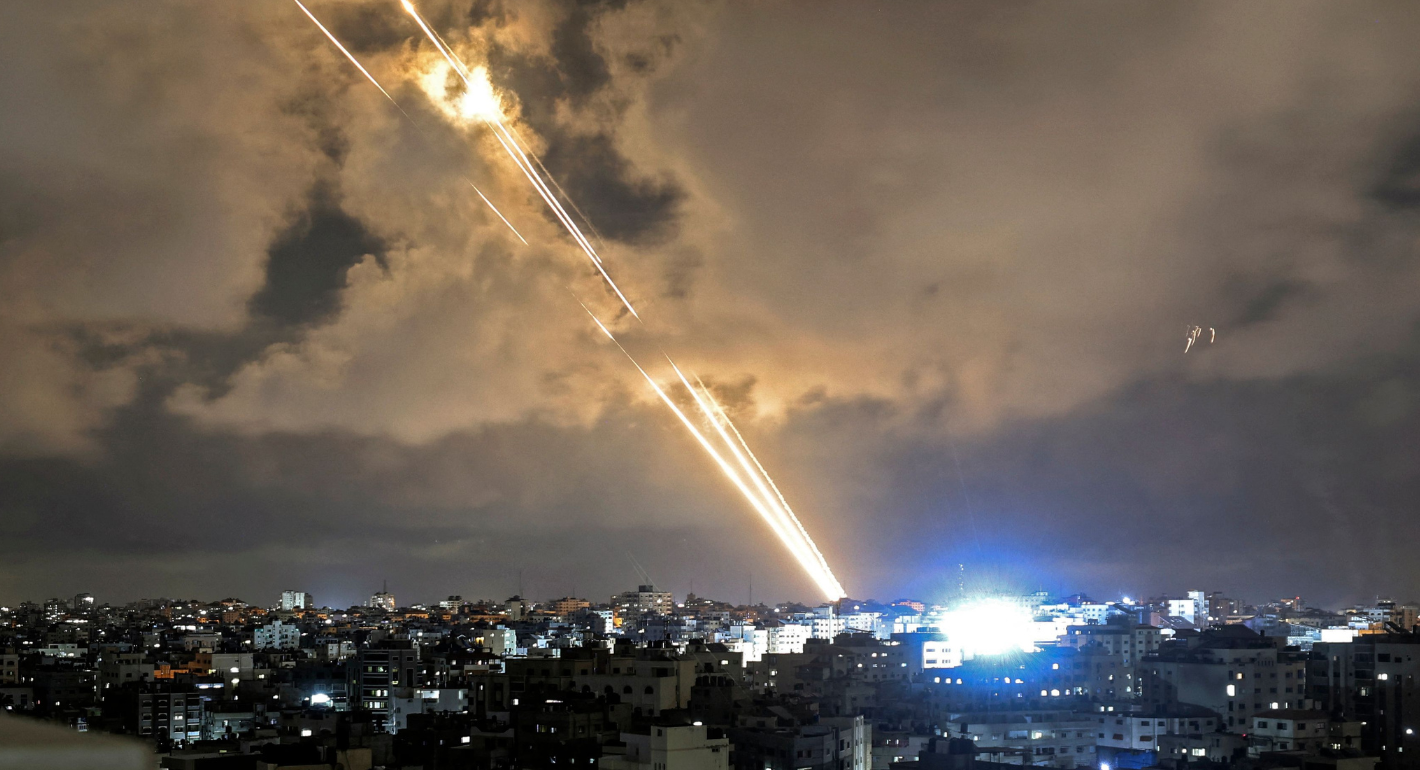
An Israeli response to Iran’s October 1 attack is imminent. The key question is of its intensity and potential fallout, both within Iran, in terms of nuclear security policy changes, and across the broader region. The coming days are likely to reshape West Asia irreversibly.
Gaddam Dharmendra
As India’s economy recovers from the coronavirus pandemic, Indian businesses need efficient financial structures to regain their ground. Key reforms to India’s Insolvency and Bankruptcy Code could fill these gaps.

Anirudh Burman
Access to cross-border data is an integral piece of the law enforcement puzzle. India is well placed to lead the discussions on international data agreements subject to undertaking necessary surveillance reforms.
Smriti Parsheera, Prateek Jha
After the coronavirus pandemic wanes, how will China’s reorientation of the Belt and Road Initiative to address global health concerns influence its relationships with South Asian countries?
Deep Pal, Rahul Bhatia
Early in the outbreak, government researchers forecast several high-risk scenarios that were downplayed or ignored in public messaging.
Gautam I. Menon